










Home > Industries > SEO For B2B
Drive predictable pipeline growth, attract high-intent decision-makers, and increase revenue with Infidigit, a B2B SEO agency built for complex sales cycles.

Driving Growth for Mid-Market & Enterprise Ecommerce Brands



Clients
Know The Basics
B2B SEO involves exposing a business site to search engines to draw the attention of other businesses that are effectively searching the web for related services. Compared to B2C SEO, which is usually targeted at broad consumer markets, B2B SEO targets niche decision-makers, stakeholders, and high-intent purchasers.
A successful B2B SEO strategy goes beyond the rankings. Its primary objective is to target commercially valuable keywords, become topical, optimize technical performance, and generate content that meets different stages of the buyer journey. The existing interactions in the B2B purchase journey necessitate the importance of SEO. Best B2B SEO agency helps to lure potential businesses that are more likely to purchase.
BenEfits
Enhance search visibility in key industry terms where business-level buyers are actively considering solutions and vendors.
Appeal to intent-driven B2B buyers by search methods addressing more intricate buying and research behavioral patterns.
Create industry dominance with professional content, improved rankings, and a consistent presence across competitive B2B searches.
Educate prospects, persuade decision-makers, and cultivate long-cycle B2B purchase paths through strategic content.
Enhance crawlability, site speed, and search accessibility to improve rankings and deliver smoother enterprise user experiences.
Create long-term organic visibility, obtain qualified leads, and reduce customer acquisition costs.
Process
Any effective B2B SEO solution starts with a comprehension of what is hindering organic visibility, lead generation, and search performance. Through our SEO audit service, you have a thorough examination of the technical infrastructure of your site, the quality of content, the visibility of your website on search engines, and the conversion channels to determine the opportunities that are affecting business growth.
We examine key SEO factors such as:
B2B websites tend to miss qualified opportunities due to a poor technical base of their site, old-fashioned content designs, or ineffective search results matching the intent of the user. We focus our audit process on making improvements that will affect the business instead of vanity SEO fixes. This establishes a devoted optimization roadmap that aims to enhance rankings, find qualified leads, enhance engagement, and help to grow revenues over time with scalable organic acquisition.
The success of B2B SEO is largely reliant on the comprehension of how competitors are targeting, cultivating, and transforming decision-makers using search. The competitor research process determines the strategies that are propelling visibility and acquisition of leads within your industry, and also reveals gaps that your business can leverage.
We examine competitor performance in:
We do not just copy competitor strategies, but find out their weaknesses, underserved areas, and high-value search areas that competitors may be missing. This enables companies to enhance market positioning, organic visibility, and compete more strategically for commercially valuable searches that are directly related to revenue and pipeline development. Good competitor intelligence can also assist in ranking investments in SEO, where the greatest acquisition potentials lie.
Technical SEO will provide the basis of scalable B2B organic growth. The best content strategies and keywords may produce bad rankings in case search engines fail to crawl, interpret, or index your site effectively. Our technical optimization process aims at enhancing search access, usability, and performance on all devices and platforms.
We optimize important technical areas, including:
For B2B customers, a frictionless and fast digital experience is a key factor in their purchasing decision while comparing solutions. If your website has any technical issues, it will drive away qualified traffic from your website and lower your conversion rates. With our technical SEO services, search engines are able to crawl and understand your key conversion pages, improving their visibility. And with the enhanced user experience of our B2B SEO agency, the quality of engagement goes up, ensuring that qualified leads advance their buyer journey on your website.
For search engines to properly comprehend and correctly index your pages, you need to have strong on-page SEO. Our B2B SEO agency ensures that B2B customers visiting your site are able to locate relevant details easily when making complicated purchasing decisions. Our goal with on-page SEO services is to boost your relevance on search engines, improve user engagement, and enhance the conversion potential across all key pages.
We optimize on-page factors such as:
B2B on-page optimization has to facilitate the various steps of the buyer process at the same time as compared to generic SEO strategies that are only concerned with rankings. Before conversion, decision-makers tend to consider solutions by comparing them in detail, conducting research, and technical validation. We organize content strategically to enhance discoverability and more effectively direct prospects towards valuable actions like demo requests, consultations, inquiries, or sales conversations.
B2B consumers do not make purchases after the first contact. Before making any buying decisions, they study solutions, shop providers, analyze trust clues, and read numerous content materials. Our content approach is to develop specific assets that are in tandem with each level of the B2B sales funnel to aid visibility, lead nurturing, and revenue generation.
We create strategic content such as:
This, along with a strategic content marketing service approach, assists businesses in establishing topical authority and simultaneously drawing qualified decision-makers in an organic manner. We specialize in the development of content ecosystems that are not only better at rankings and encouraging purchase decisions, but also at building credibility and driving longer sales cycles more efficiently in competitive B2B markets.
The search behavior is quickly changing away to other forms of search other than search engines. Increasingly, AI-based search engines such as ChatGPT, Google AI Overviews, Gemini, and other answer engines are being used by decision-makers when researching B2B solutions today. Our LLM SEO services work towards ensuring that your business content can be found, trusted, and utilized in these new AI-driven ecosystems.
We optimize for:
B2B brands that operate in the changing search landscape can no longer afford to rely on traditional SEO only. Companies that change early are better seen in the spheres where the decision-makers are more and more inclined to use information. Our AI-centered optimization methods can enhance discoverability beyond Google rankings to the conversational AI experiences that define the future of B2B research and buyer experiences.
One of the most relevant ranking factors for B2B websites is domain and topical authority. It plays a huge role in sustaining your SEO performance in the long run. With our link building services, we help you in obtaining high quality and authoritative backlinks that build your domain authority, which helps improve search visibility and streamline the lead acquisition process in the competitive digital landscape.
We work on developing authority by:
B2B SEO must be trustworthy and credible throughout the purchasing process. High-quality backlink profiles can assist businesses in ranking higher in commercially valuable keywords, as well as strengthen their authority in their market. We do not attach importance to the count of links but rather relevance, trust, and authority development aimed at enhancing the visibility and conversion-oriented organic acquisition in a sustainable way.
If you are not constantly monitoring your SEO performance, you will lose out on making strategic improvements that drive up your lead generation. With the constantly changing search behavior, algorithm changes, and buyer intent, it is necessary to monitor your website’s SEO performance. We monitor all of this and more to ensure that your pipeline keeps growing with quality leads, helping to sustainably generate revenue from SEO over the long term.
We continuously monitor and report the following metrics:
These metrics allow us to glean actionable insights and opportunities that directly map to your business goals. Through continuous monitoring and performance analytics, we can refine your SEO tactics and maintain the agility to respond to market shifts and evolving trends.
Testimonials
Why Us?


Our long track record of delivering strong B2B strategies to companies has resulted in the enhancement of lead quality, organic visibility, and pipeline development in competitive niches. We focus our efforts on creating B2B strategies that engage decision-makers to boost conversion rates and optimize long sales cycles with scalable SEO to increase your ROI.

Every B2B enterprise operates within unique competitive landscapes, sales processes, and buyer journeys. Our B2B SEO agency does not implement cookie-cutter SEO templates but develops customized and tailored strategies to match your industry, target audience, business objectives, and acquisition priorities. This individualized approach enables companies to compete more effectively in high-value searches that are directly tied to revenue growth.

All optimization decisions are made on the basis of search data, buyer behavior analysis, competitor intelligence, and measurable business KPIs. We continuously optimize strategies based on actual performance feedback to improve ranking, lead quality, engagement, and conversion efficiency, so SEO investments are allocated toward sustainable business growth and improved acquisition performance.

We provide clear rankings, qualified traffic, lead generation, and conversion performance reporting to help businesses have a clear picture of the impact of SEO on revenue growth. By providing actionable insights, constant updates on optimization, and performance measurements in our B2B SEO agency, the leadership teams can have a full picture of how the campaign is progressing without feeling bombarded by the technical jargon.
Plans
Startups Business
Your Growth Toolkit
Small-Market Businesses, Competitive Niches
Your Growth Toolkit
Mid-Market Businesses, Competitive Niches
Your Growth Toolkit
Enterprise, Large E-commerce, Site Migrations
Your Growth Toolkit
Industry
Solutions
Drive sustainable traffic and revenue growth
Optimize visibility across AI search engines
Future-proof search strategy with AI
Scale product visibility and online revenue
Turn visitors into measurable revenue growth
Increase app visibility and install growth
Dominate local search and nearby customers
Authoritative backlinks that boost search rankings
Scalable SEO solutions for large organizations
Build websites that improve engagement
Find and fix issues affecting search visibility
Drive organic growth with strategic content
We’ve worked with Infidigit for several years and have consistently been impressed by their expertise, professionalism, and results-driven approach. Their team has played a key role in improving our organic visibility and helping us achieve sustained growth. From Jan’25 to Aug’25, organic clicks grew by 138% and impressions by 119%, reflecting the strong results of our ongoing SEO efforts. It’s been a pleasure partnering with them.

Growth Manager - Superbalist
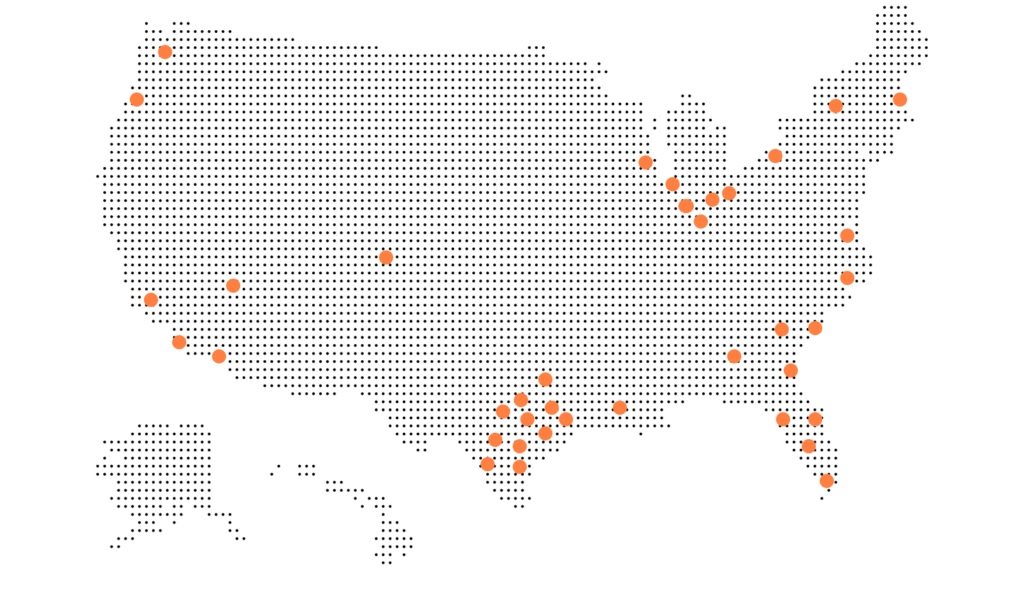
Locations
FAQ’s
B2B SEO focuses on decision-makers in niche, high-intent searches, which often involve longer sales cycles and more complex purchasing processes. B2C SEO is more focused on the broader consumer groups with quicker purchasing decisions. B2B strategies are not focused on the volume of traffic but the quality of leads, authority, and content that leads to conversion. This difference is most commonly seen in enterprise SEO services, where the sheer scale of things requires targeted approaches that do not follow templatized SEO practices often seen in B2C SEO.
B2B SEO is a long-term growth strategy, especially in competitive industries that are in a complex selling B2B ecosystem. Earlier visibility will be observed in a few months, but long-term high increases of qualified traffic, lead generation, and conversion effects are typically attained with constant optimization, building authority, and creating tactical content.
Yes, when it comes to SEO for B2B companies, local SEO service is of immense importance, as it must cover the target audience within a particular location, region, or localized lead generation avenues. Local visibility can help discoverable businesses be more geographically targeted, more credible, and discover qualified prospects actively searching for local business solutions or service providers.
Choose a provider with proven B2B SEO experience, transparent reporting, technical skills, and an understanding of long sales cycles and decision-maker behavior in a highly proficient way. Avoid rankings-only or traffic-only agencies. The best B2B SEO agency should focus on qualified lead generation, measurable growth, and revenue-focused SEO strategies.
Our B2B SEO agency leverages cutting-edge SEO and analytics tools for keyword research, technical audits, competitor analysis, backlink monitoring, content optimization, and performance tracking. These tools enable us to analyze buyer behavior, identify acquisition opportunities, monitor rankings, and current optimization strategies using a set of quantifiable data on search and conversion performance.
Safe and ethical link earning is based on practicing white-hat link building that is aimed at building authority, relevance, and generating trust signals for search engines and B2B customers. We employ various tactics aligned with white-hat techniques, such as digital PR, editorial outreach, thought leadership placements, and contextual backlinking from reputable sources. Rather than yielding short-term results from volume-based ranking tactics, we invest in building our clients’ authority over the long run to ensure that the results are scalable and sustainable.
Yes, we support B2B eCommerce platforms and offer eCommerce SEO services to B2B companies looking to improve their product visibility, category rankings, and qualified lead acquisitions. We help B2B eCommerce platforms boost visibility for high-intent consumers and optimize their user experience to increase conversion rates and organic revenue in their competitive marketplace.