











Driving Growth for Mid-Market & Enterprise Ecommerce Brands




Clients
BenEfits
Enterprise organic growth compounds across thousands of pages, not the handful smaller sites manage.
High-volume keywords alone rarely convert. Ranking for what buyers actually search for does.
Millions of pages, one technical foundation that can't afford to buckle under the load.
What actually builds market authority? Consistent visibility across every stage a buyer researches, not claims.
Engagement looks different for a buyer than an industry analyst reading the same page.
Enterprise SEO services built for expansion shouldn't need rebuilding from scratch with every new market.
Case studies
Objective
To increase qualified organic leads, improve conversion rates, and significantly reduce organic cost per lead across desktop and mobile.
Challenges
– High organic CPL with low conversion efficiency
– UX, technical, and intent misalignment across high-traffic pages
Solutions
– Implemented user-first CRO with intent-driven SEO and refined lead qualification
– Fixed technical gaps and optimized UI/UX using behavioral and analytics insights
Results
Reduction in optimized organic CPL
Increase in overall organic conversion rate
Growth in desktop organic lead goals
Objective
To expand ICICI Prudential’s organic visibility beyond traditional SEO by strengthening presence across Google AI Overviews and LLM platforms.
Challenges
-Limited entity depth and semantic structure for AI systems
– Low visibility within Google AI Overviews
– Minimal traffic and brand mentions from LLM platforms
Solutions
-Built AI-ready, entity-driven content across key insurance pages
– Optimized conversational FAQs and structured data for LLM visibility
– Enabled real-time AI Overview tracking using Infigrowth
Results
Keyword placements in Google AI Overviews
Growth in traffic from LLM platforms

Challenges
A traffic dip on a site with thousands of pages rarely comes from one single cause. Sometimes an algorithm update reweights a whole content category at once. Sometimes a template change accidentally strips metadata across a thousand pages overnight. Sometimes older content just stops matching how people search today.
The fix starts with segmenting the drop by template, category, and page type instead of looking at the whole domain as one number. Enterprise sites also carry more historical content than smaller sites, so part of that traffic loss is often just outdated pages finally losing relevance rather than something actively broken.
Backlink count matters less than most people assume. A competitor with a hundred links from trade publications and industry sites regularly beats a page with a thousand links from low-relevance directories, because Google weighs where a link comes from more heavily than how many exist in total.
Enterprise sites often accumulate backlinks passively over the years from directories, old partnerships, and syndicated press releases. Closing this gap usually means auditing the existing backlink profile for relevance, not just volume, then prioritizing digital PR and content that industry sites genuinely want to cite. A smaller, sharper backlink profile beats a larger, scattered one almost every time.
Perfect on-page optimization can’t fix a content or authority problem underneath it. A page can hit every keyword target and structure every heading correctly, and still sit on page two if it’s competing against sites with far stronger topical authority, or if the content simply doesn’t answer the query as completely as competing pages do.
Search engines increasingly reward depth and originality over keyword placement alone. The fix usually isn’t more optimization; it’s expanding the content to cover what’s genuinely missing, strengthening internal links from already-authoritative pages, and sometimes accepting that a brand-new page needs time to earn trust regardless of how well it’s built.
Rising traffic with flat conversions usually points to a mismatch between what’s ranking and what the business actually wants visitors to do. A page can rank well for a broad, informational term that draws visits from people nowhere near a buying decision, while the pages that would actually convert stay buried further down.
The fix starts with separating traffic goals from revenue goals in reporting, then auditing which ranking pages align with commercial intent versus pure awareness. Growth in the wrong keywords isn’t really growth, and it’s the first thing a properly run enterprise SEO services program should catch.
A site with ten pages can fix technical issues manually. A site with a hundred thousand pages can’t. Enterprise technical SEO breaks down when fixes rely on page-by-page work instead of systems that apply changes across templates and page types all at once.
The fix means building technical SEO into the development workflow itself: automated crawl monitoring, template-level fixes instead of page-level ones, and a Technical SEO service partner who understands the CMS and engineering constraints well enough to work inside them, not around them. This is precisely the kind of problem that brings enterprise SEO services into the picture once internal teams have hit their ceiling.
Duplicate content usually isn’t copied text; it’s structural. Faceted navigation, printer-friendly page versions, and near-identical product variants can generate thousands of URLs.
Search engines then have to guess which version matters, and often split ranking signals across all of them instead of consolidating authority anywhere. Canonical tags, parameter handling, and consolidating thin variant pages into fewer, stronger ones usually solve this issue, which is work a careful enterprise SEO service treats as routine at this scale. The goal isn’t fewer pages for their own sake; it’s making sure every page that exists is actually competing for something distinct.
Search engines don’t crawl every page on a large site equally. When crawlers spend their limited budget on filtered search results, thin tag pages, or outdated inventory, search engines crawl the pages that actually matter less frequently, and updates take longer to register in search results.
This is almost entirely an enterprise-scale problem. Fixing it is a core part of what enterprise SEO services handle: blocking or de-indexing pages that add no search value, cleaning up internal linking so crawlers reach priority pages faster, and monitoring crawl stats in Google Search Console to confirm the budget is actually shifting toward pages that drive revenue.
A strategy that works in one market rarely translates directly to another, even within the same language. Search behavior, competitor landscapes, and keyword intent all shift country by country, so a single global content plan usually underperforms in every market rather than succeeding in any one of them.
Hreflang implementation alone causes enough technical issues to tank international visibility when it’s set up incorrectly. The fix combines market-specific keyword research with a shared technical foundation, so each region gets tailored content and messaging without the engineering team maintaining entirely separate systems for every market. This is exactly the kind of coordination enterprise SEO services exist to manage.
Process
Enterprise SEO work goes sideways fast without agreement upfront on what success actually means. This phase brings marketing, sales, and leadership into the same room to define whether the priority is pipeline growth in a specific vertical, brand visibility ahead of a funding round, or organic revenue offsetting paid spend, since each goal points the strategy in a genuinely different direction.
KPIs get set at this stage too, tied to business outcomes like qualified leads and closed revenue rather than rankings alone, and the team attaches a realistic timeline given the scale involved. Enterprise sites rarely move as fast as smaller ones, so setting expectations honestly here prevents the six-month mark from feeling like a failure when it’s actually right on pace. Stakeholder alignment matters as much as the strategy itself; a technically brilliant plan that leadership doesn’t understand or trust tends to lose budget before it has time to work. This phase typically takes one to two weeks and produces the north star that guides every phase of enterprise SEO services that follows.
Every credible enterprise SEO company starts with a full account of the site’s current state, and at that scale it means auditing patterns across templates and page types rather than reviewing pages one by one. The SEO audit service covers indexation health, content depth by page type, internal linking structure, and the technical debt that’s accumulated across however many redesigns and CMS migrations the site has been through.
Large sites carry unique baggage: legacy URLs from platform migrations years ago, orphaned pages nobody remembers building, and content that once ranked well but has since drifted out of relevance. The audit surfaces all of it, then prioritizes by potential impact rather than by what’s easiest to fix first. Sites with millions of pages can’t fix everything at once, so this stage matters more here than almost anywhere else in the process. It typically runs two to four weeks depending on site size, and it produces the prioritized roadmap that shapes every phase that follows.
Crawlability and indexation get the deepest scrutiny in this stage of enterprise SEO services, since a page search engines can’t efficiently reach or process never gets a fair shot at ranking regardless of content quality. This phase examines Core Web Vitals across template types, XML sitemap accuracy, JavaScript rendering issues, and crawl budget allocation, all of which behave differently at enterprise scale than they do on a smaller site.
This phase maps site architecture for how authority flows between sections too, since a poorly structured hierarchy can trap ranking signals in pages that never surface them to the sections that need them most. Where technical fixes require engineering resources beyond what SEO alone can implement, coordination with a website development service partner or the in-house engineering team happens at this stage, not after findings sit in a report nobody actioned. This groundwork tends to be invisible to end users, but it’s usually where the largest ranking gains on enterprise sites actually originate.
Winning keywords only means something in context, so this phase maps exactly who’s outranking the site and why, across the specific terms that matter to the business rather than a generic industry keyword list. Any enterprise SEO firm worth hiring benchmarks direct competitors alongside adjacent players who show up in the same search results without being obvious rivals, since a comparison site or industry publication can quietly own visibility a direct competitor never threatens.
Content depth, backlink profiles, and technical implementation all get compared side by side, and the output becomes direct input for the content and technical roadmap rather than a report that sits unused. Where a competitor’s content is thin, that’s an opening; where their depth genuinely sets the bar, that becomes the target to match or beat. At enterprise scale, this analysis often reveals gaps across dozens of subcategories simultaneously, which is exactly the kind of pattern a smaller, page-by-page review would miss entirely.
Generic content refreshes rarely move the needle at enterprise scale, so this phase prioritizes traffic potential and business impact rather than working through pages in whatever order they were built. The on page SEO service work covers title tags, header structure, and internal linking, while the broader content strategy addresses depth gaps the competitive analysis surfaced.
Existing high-traffic pages usually get priority over new ones, since improving something already ranking on page two tends to produce faster, more predictable results than starting from zero. Content marketing services built for enterprise scale also mean templated guidance that content teams across multiple departments or regions can apply consistently, rather than a one-off recommendation that only works for a single page. Governance matters here too: without a shared content standard, large organizations tend to produce inconsistent quality across teams, which undercuts the whole strategy no matter how strong any individual page performs.
Buyers researching enterprise vendors increasingly ask ChatGPT, Perplexity, or Google’s AI Overviews to shortlist options before a single sales conversation happens. This phase applies AEO service and GEO service work: structured data, clear entity relationships, and content restructured around direct question-and-answer patterns so AI systems can parse, trust, and cite it accurately.
LLM SEO service work here goes beyond traditional optimization, since ranking well in Google doesn’t guarantee visibility in an AI-generated answer built from an entirely different set of signals. The team audits content for how cleanly a language model can extract a direct answer, and schema markup is applied wherever it clarifies relationships between entities the AI Overview is trying to represent. For enterprise brands competing in categories buyers research extensively before visiting a website, this phase increasingly decides who makes the shortlist.
Few competitors are tracking this shift with any rigor yet, which gives an early mover a real head start. The team reworks existing pillar content around the same structure rather than rebuilding it from scratch, since most of the underlying research and expertise already exists.
Recommendations only matter once they’re live, and at enterprise scale that means navigating engineering sprints, brand approval processes, and legal review before a single change ships. This phase coordinates directly with development, content, and design teams, often working alongside an internal website development service team or agency partner to translate SEO priorities into a sprint backlog engineering can actually execute against.
Prioritization follows dependency and impact, since some fixes require unlocking others first, and enterprise engineering teams rarely have unlimited bandwidth to implement everything simultaneously. Cross-functional check-ins happen on a regular cadence so nothing stalls silently in someone else’s backlog for months. Link Building services often run in parallel here too, since outreach and digital PR don’t depend on engineering timelines the way technical fixes do, and there’s no reason to let that work wait.
Cross-functional handoffs like this often take longer than researching and writing the recommendation in the first place, which is exactly why this phase gets treated as its own discipline rather than an afterthought tacked onto strategy.
Work doesn’t stop once changes go live. Infigrowth’s Rank Tracker and Traffic Insights modules track rankings, organic traffic, and technical health continuously, surfacing regressions before they compound and flagging opportunities before a competitor claims them first.
SEO service performance gets tied directly to CRM data here, connecting organic sessions to MQLs, SQLs, and closed revenue so reporting answers the question leadership actually asks: is this generating pipeline, not just whether a keyword climbed a few spots. Infigrowth’s LLM Traffic Insights module adds visibility into referral activity from ChatGPT, Gemini, and Perplexity as that channel grows. For an enterprise organization managing SEO across multiple stakeholders, this closed-loop reporting is often the difference between a program that keeps its budget and one that gets quietly deprioritized.
Dashboards break performance out by market, business unit, and page type rather than showing one aggregate number, since a single company-wide figure hides exactly the kind of regional problem worth catching early. This is where enterprise SEO services prove their value in the boardroom, not just in a rankings report nobody outside marketing ever opens.
Testimonials
Why Us?

Infigrowth’s SearchSense and AI Visibility Score translate enterprise-scale data into specific, prioritized actions, instead of leaving a dashboard full of metrics for someone to interpret manually across thousands of pages every single week. It acts as a perfect aid during AI search optimization.

Most enterprise SEO firms lean on the same handful of generic case studies. Recognition at SMX and the e4m IDMA awards came from campaigns spanning BFSI, ecommerce, and B2B specifically, the exact kind of scale and complexity this page addresses.

Technical specialists, content strategists, and data analysts at this enterprise SEO agency work in coordinated pods rather than one generalist juggling every discipline across an account too large for any single person to manage alone.

Multi-stakeholder approval chains, CMS constraints, and cross-regional teams shape strategy from day one here, rather than adapting a small-business playbook after it fails to scale. This is what enterprise SEO services should look like from the very first conversation.

Infigrowth’s four AI agents handle proactive monitoring, keyword research, competitor analysis, and technical auditing simultaneously- the kind of automation an enterprise search engine marketing company needs to catch issues across a large site faster than manual review ever could.
Bring your goals, challenges, and ambitions. We’ll build a strategy designed to move your business forward.
Driving Measurable Growth for Ambitious Brands
Plans
Startups Business
Your Growth Toolkit
Small-Market Businesses, Competitive Niches
Your Growth Toolkit
Mid-Market Businesses, Competitive Niches
Your Growth Toolkit
Enterprise, Large E-commerce, Site Migrations
Your Growth Toolkit
Industry
Platforms


Solutions
Drive sustainable traffic and revenue growth
Optimize visibility across AI search engines
Future-proof search strategy with AI
Scale product visibility and online revenue
Turn visitors into measurable revenue growth
Increase app visibility and install growth
Dominate local search and nearby customers
Authoritative backlinks that boost search rankings
Scalable SEO solutions for large organizations
Build websites that improve engagement
Find and fix issues affecting search visibility
Drive organic growth with strategic content

Growth Manager - Superbalist
SEo Growth
A few signs tend to show up before anyone officially decides a business has outgrown standard SEO. Organic growth flattens even as content output increases. A redesign or platform migration quietly tanks rankings across sections nobody thought to check. Marketing and engineering start blaming each other for the same unresolved technical debt. Any one of these usually means the strategy that worked at a smaller scale has stopped scaling with the business, and it’s time for enterprise SEO services built specifically for organizations operating across dozens or hundreds of markets at once.
That complexity looks different depending on the type of growth involved. National growth means competing for authority across every region of a single country simultaneously, often against entrenched local players who’ve owned regional visibility for years. International growth adds language, currency, and cultural nuance on top of that, along with the technical challenge of hreflang implementation and market-specific content that can’t just be a translated version of the home-market page. Regional and multi-location growth, meanwhile, is its own discipline entirely; a local SEO service built for a business with a handful of locations doesn’t hold up once that number reaches into the hundreds, since location pages, Google Business Profile management, and locally relevant content all need to operate at a completely different scale.
Large websites face challenges that simply don’t exist for smaller sites navigating any one of these paths alone. Crawl budget becomes a real constraint once a site passes a certain page count. Content governance breaks down when dozens of regional teams are publishing independently without a shared standard. Technical fixes that take an afternoon on a small site can take a full engineering sprint once they touch a template used across a hundred thousand pages. None of this is a reason to avoid expanding into new markets; it’s a reason to build the technical and organizational foundation before scale makes every fix ten times harder than it needed to be.
Measuring success across this kind of footprint means tracking far more than aggregate traffic. It means visibility broken out by market, by region, and by business unit, tied to the specific revenue or pipeline goal each one is actually working toward. It means knowing whether a dip in one country reflects a genuine problem or simply a smaller market carrying less weight in the overall number. Done properly, enterprise SEO stops being a cost center measured in rankings and becomes a growth engine measured in the same terms as every other channel competing for budget: qualified pipeline, market share, and revenue that can be traced back to the specific pages and markets that produced it.
AI tools








Growth Manager - Superbalist
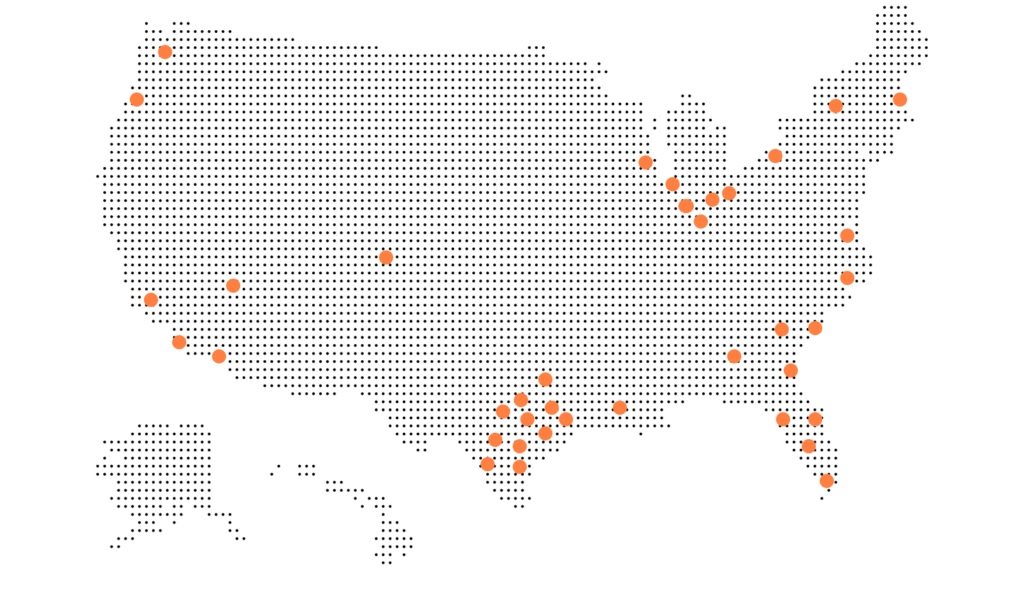
Locations
FAQ’s
Enterprise websites have thousands of pages, many markets, and complicated technical systems. Niche SEO supports scalability, visibility on large digital ecosystems, and solves issues that enterprise SEO services do not.
The most substantial benefit would be to industries that have large websites and intricate digital operations, such as eCommerce, SaaS, finance, healthcare, education, travel, real estate, media, manufacturing, and multinational enterprises that operate in multiple markets.
Enterprise SEO refers to the practice of optimizing large-scale websites to enhance search presence, traffic, and revenue. It is devoted to scalability, automation, technical performance, content governance, and multi-market search growth.
Enterprise SEO plan depends on the size of the website, technical complexity, market coverage, and business goals. Big organizations are usually in need of individualized approaches, assets, and constant optimization endeavors.
Enterprise SEO is concerned with large sites, national or global presence, and scalable optimization. Local SEO service aims at enhancing location-based searches and targeting customers in certain geographical locations.
Enterprise SEO services are generally provided with technical audits, content optimization, keyword strategy, international search engine optimization, site architecture, automation, reporting, competition analysis, and large-scale search performance management.
Enterprise SEO services should be taken into account by companies operating large websites, in different regions, with thousands of pages, and when growth goals cannot be efficiently met using the conventional methods of SEO.