











Driving Growth for Mid-Market & Enterprise Ecommerce Brands




Clients
BenEfits
Puts your business in front of nearby customers exactly when they're searching to buy.
A complete, active Google Business Profile earns trust before a customer even clicks through.
Strong reviews build the trust that turns searchers into callers and walk-ins.
Reaches the specific neighborhoods and service areas where your actual customers live.
Paid ads get expensive fast. Local SEO keeps producing leads without the rising bill.
Even searches that don't convert immediately build recognition your competitors don't have.
Case studies
Objective
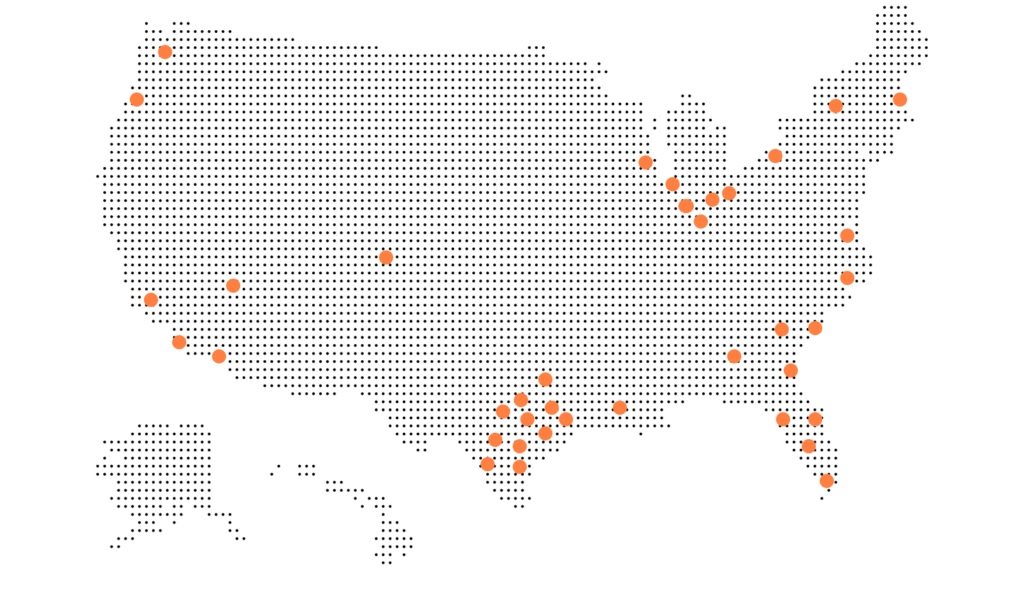
To increase traffic, visibility, and engagement across Google Business Profiles for 200+ fitness center locations.
Challenges
– Scaling local visibility across hundreds of locations
– Inconsistent and under-optimized Google Business Profiles
– Low engagement and discovery from local search & Maps
Solutions
– Conducted a full GBP audit to fix category, NAP, hours, and content gaps
– Optimized each location’s profile with keyword-rich descriptions, visuals, posts, and reviews
– Built 100+ authoritative local citations per location to strengthen local trust
Results
Increase in Cumulative Website Visits
Increase in Cumulative Search Impressions
Objective
To increase Google Business Profile traffic and improve local search visibility across 34+ amusement park locations.
Challenges
– No dedicated location pages for city-level discovery
– Under-optimized Google Business Profiles
– Limited visibility for high-intent local searches
Solutions
– Created SEO-optimized city and store-level location pages
– Fully optimized Google Business Profiles across all locations
– Built 100+ authoritative local citations and linked GBPs to location pages
Results
Increase in Non-Brand Clicks
Increase in Overall Clicks
Improvement in Top 3 Keyword Ranking

Challenges
Start by claiming and verifying your Google Business Profile, since an unclaimed listing can’t be optimized or trusted by Google’s algorithm. From there, fill in every section completely: business category, service area, hours, phone number, and a description that actually describes what you do rather than generic marketing copy.
Photos matter more than most business owners realize. Listings with a healthy photo count consistently outperform bare-bones profiles in both rankings and click-through rate. Posting updates regularly, weekly if possible, signals to Google that the business is active, which factors into how the algorithm weighs local relevance.
None of this happens overnight. Google typically needs a few weeks of consistent signals, accurate information, activity, and engagement before a new or recently claimed listing starts appearing reliably on the map for relevant searches.
Yes, almost certainly, if your business name, address, or phone number differs even slightly across directories. Google cross-references this data, known as NAP information, across the web to verify a business is legitimate, and mismatches erode that trust score even when each listing looks fine on its own.
A common culprit is an old address still showing on a directory after a move, or a phone number that changed without every listing getting updated. Abbreviations cause trouble too: “St.” versus “Street” or “Suite 200” versus “#200” can register as inconsistencies depending on how strictly a given platform parses the data.
A full citation audit across the major data aggregators, plus GBP, Bing Places, and industry-specific directories, usually surfaces these discrepancies fast. Fixing them is often one of the highest-leverage, lowest-effort improvements available to a local business.
Treat your GMB profile as a living page, not a one-time setup. Beyond the basics, category selection deserves real attention: choosing the most specific, accurate primary category and relevant secondary ones directly affects which searches your business shows up for.
Q&A sections get overlooked constantly, and competitors sometimes seed them with misleading answers if a business leaves them empty. Answering common questions proactively, pricing ranges, parking, appointment requirements, closes that gap and adds genuinely useful content Google can surface directly in search results.
Attributes (wheelchair accessible, women-led, free Wi-Fi, whatever applies) round out the profile and help match specific searcher intent. Combined with a steady posting cadence and prompt responses to reviews, an actively maintained profile consistently outperforms one that was set up once and forgotten.
Reviews influence rankings directly, but volume alone isn’t the whole story. Recency matters: a steady trickle of new reviews signals an active, trustworthy business more than a large pile of reviews from three years ago. Responding to every review, good or bad, also factors in, since it shows both Google and future customers that someone is actually paying attention.
Keywords inside review text carry weight too. A review mentioning “emergency plumber” or “same-day repair” naturally reinforces the exact terms your business wants to rank for, something no amount of on-page work can fully replicate.
The most effective approach is simply asking at the right moment, right after a job well done or a positive interaction, rather than a generic blanket request sent to every customer regardless of experience.
Location-specific content on the website itself matters more than most business owners expect. That means a dedicated page for each service area, not just a footer address, with content that actually mentions neighborhoods, landmarks, and local context rather than a city name swapped into a template.
Schema markup helps too: LocalBusiness structured data tells search engines explicitly where you operate and what you offer, reducing the guesswork they’d otherwise have to do. Mobile page speed deserves attention as well, since local SEO services near me searches happen overwhelmingly on phones, often from someone standing outside deciding where to go next.
Internal linking between the homepage, service pages, and location pages reinforces this local relevance further, helping search engines understand the full geographic footprint of the business rather than treating each page in isolation.
A few common culprits explain most map pack absences. Category mismatches are a frequent one: a business with a slightly wrong primary category may simply not qualify for the searches it’s targeting, regardless of how strong everything else looks. Weak or thin review profiles are another, since prominence, one of Google’s three core local ranking factors, weighs review count and rating heavily.
Distance plays a role too, and it’s often misunderstood. Even a well-optimized profile can lose to a closer competitor for hyper-local searches, because proximity to the searcher is baked directly into the ranking algorithm and can’t be fully overcome with content alone.
A local SERP audit, comparing your profile against whoever currently holds those map pack spots, usually reveals which of these factors is actually holding a listing back.
Local link building looks different from general link building, and that’s the first thing to understand. Sponsoring a local event, joining the chamber of commerce, or getting listed in a “best of [city]” roundup all earn links from genuinely local, relevant sources, exactly the kind Google weighs most heavily for local relevance.
Partnering with complementary local businesses works well too: a landscaper linking to a fencing company, or a dentist linking to a local orthodontist, creates natural, industry-relevant local link equity that’s difficult for competitors outside the area to replicate.
A structured link building service approach identifies which of these opportunities exist in a given market and pursues them systematically, rather than leaving local link acquisition to chance or sporadic outreach.
Suspensions almost always trace back to a guideline violation, whether intentional or accidental. Keyword stuffing in the business name, adding a service or city name that isn’t part of the legal business name, is one of the most common triggers, since Google explicitly prohibits it even though plenty of businesses still try it.
Other frequent causes include using a virtual office or residential address for a service-area business that doesn’t actually operate there, duplicate listings for the same location, or a sudden spike in reviews that trips Google’s spam detection. Even a legitimate business can get caught by an automated filter that isn’t perfect.
Reinstatement requires an appeal through Google’s support process, along with documentation proving the business is real and compliant. It can take anywhere from a few days to several weeks depending on the complexity of the case.
Process
Every engagement starts with a full audit, not a generic checklist, but a review built specifically around local ranking factors. That means checking technical health such as site speed, mobile usability, and crawlability, auditing Google Business Profile completeness against what’s actually possible to fill in, and verifying citation and NAP consistency across the directories that matter most.
Review benchmarking comes next: how many reviews do you have compared to the businesses actually sitting in the map pack for your target searches, and how does your average rating stack up? This comparison, not an arbitrary target, sets realistic goals.
The audit also maps the local SERP itself, who owns the three map pack spots versus who ranks in the organic ten below it, since the strategy for winning each differs. As a complete SEO audit service, the output isn’t a static report that sits in an inbox. It’s a prioritized roadmap: what to fix first, what moves the needle fastest, and what can wait.
Keywords get mapped to specific pages based on service, location, search intent, and business priority, not scattered across the site hoping something ranks. A plumbing company offering both emergency repairs and bathroom remodels needs those to live on separate pages targeting different search intent, even though both technically fall under “plumbing.”
Location adds another layer. A business serving five towns needs a clear map of which locations deserve their own dedicated page and which can be covered within a broader service-area page. It depends heavily on search volume and competition in each specific market.
Business priority matters just as much as search volume. A service generating the highest-margin work deserves stronger keyword and page investment than a lower-priority offering, even if that lower-priority service technically has higher search volume. This mapping becomes the foundation every later step in the local SEO services process builds on.
This step covers every lever inside the Google Business Profile itself: primary and secondary categories. These categories are chosen for accuracy: a complete list of services, relevant attributes, and a photo library that actually represents the business.
Q&A sections get populated proactively rather than left empty for competitors or confused customers to fill in with inaccurate information. A consistent posting cadence follows, keeping the profile visibly active, which factors into how Google weighs relevance and freshness.
Call tracking and direction-request tracking get set up here too, since these actions connect Google Business Profile activity to actual business outcomes rather than just impressions. The goal behind all of this is map pack visibility: research consistently shows well over 40% of local searchers click a result inside the map pack before ever scrolling to organic listings below it. A profile that isn’t fully optimized simply isn’t competing for that share.
Page strategy depends entirely on business type, and treating every business the same way here is a common mistake. A single storefront needs one genuinely strong, detailed page, rich with specifics about the location, service area, and what makes that particular business worth visiting, rather than a thin page that just repeats the business name and address.
A service-area business faces the opposite temptation: creating dozens of thin, near-identical pages for every suburb it technically serves. A landscaping company covering fifteen towns doesn’t need fifteen shallow pages; it needs four or five substantial ones grouped around real service clusters, each with genuinely useful, differentiated content.
Multi-location brands need clear rules for when a market earns its own page at all. A location generating meaningful local search volume and revenue justifies a dedicated page. One that’s barely searched for doesn’t, and forcing a thin page into existence there dilutes overall site quality without adding real value. Getting this segmentation right, rather than defaulting to more pages, consistently outperforms a template-and-swap approach.
Citation cleanup starts at the aggregator layer, since a handful of major data aggregators feed business information out to dozens of smaller directories automatically. Fixing information at the source prevents the same error from propagating across the web faster than it could be corrected one listing at a time.
From there, the work moves to the platforms that matter most directly: Google Business Profile, Bing Places, Apple Business Connect, Yelp, and whichever industry-specific directories carry weight in a given category. For example, legal directories for law firms, home service platforms for contractors, and so on.
Consistent NAP data—name, address, and phone number—functions as a trust signal search engines weigh directly when deciding how confident they are in a business’s legitimacy. Duplicate listings and stale, outdated information do the opposite: they actively confuse that signal and can hold back rankings even when every other part of the strategy is executed well.
Reputation work starts with a review generation system, timing requests to land right after a positive interaction, a completed job, or a resolved issue, rather than sending the same generic ask to every customer regardless of experience. Timing like this consistently produces higher response rates than blanket campaigns ever do.
Response strategy matters just as much as generation. Every review gets a reply, positive or negative, since a thoughtful response to a negative review often does more to build trust with future customers than the negative review itself does to damage it.
Review monitoring across platforms, not just Google, catches issues early and surfaces patterns worth acting on. A recurring complaint about wait times, for instance, is operational feedback as much as it’s a marketing signal. Handled well as part of a complete local SEO service, reputation strategy becomes a genuine feedback loop between the business and its actual customers, not just a rankings tactic.
Local content marketing means answering the questions local buyers are asking, pricing ranges specific to the market, realistic timelines, and permit requirements that vary by city.
A genuinely useful content writing service digs into what makes each market different: local building codes for a contractor, neighborhood-specific concerns for a real estate agent, or climate considerations that change what a landscaping company recommends from one region to the next. That specificity is exactly what a templated city-swap page can’t fake.
Blog content plays a supporting role here too, covering seasonal questions, local events, and community involvement in a way that builds genuine local relevance over time. Search engines increasingly reward this kind of specificity, and so do the actual humans reading it before deciding who to call. A single well-researched local page tends to outperform a dozen thin, interchangeable ones over time.
Local search behavior is shifting again, and this time it’s happening inside AI tools. Someone asking ChatGPT or Perplexity “best plumber near me” is getting a synthesized answer pulled from structured, well-authored content, not a traditional list of blue links, which means invisibility here is a real and growing risk.
This is where a proper AI SEO service engagement extends beyond traditional local optimization. Entity clarity becomes critical: AI systems need to understand exactly what a business does, where it operates, and why it’s credible; information that structured data and well-organized local content make explicit rather than implied.
A dedicated GEO service approach also structures content specifically for how AI systems extract and cite information: clear answers, specific local details, and citation-worthy authority signals, rather than vague marketing copy. Most local competitors barely touch this yet, which makes it one of the clearest ways to get ahead before it becomes standard practice.
Testimonials
Why Us?

Infidigit has helped businesses across BFSI, ecommerce, healthcare, and local service industries climb map pack rankings and organic visibility with measurable results, not vague promises. That track record spans single-location businesses and multi-location brands alike, backed by 135-plus documented case studies showing what actually moved the needle.

Recognition from SMX, the APAC Search Awards, and the ET BrandEquity Shark Awards reflects outcomes judged by industry peers, not self-reported wins. For a local business choosing an agency, that external validation signals genuine execution rather than marketing claims nobody’s checked.

A team of 150-plus specialists covers technical SEO, local citations, content, and AI search strategy, so a local business gets genuine depth rather than one generalist handling everything. That range matters most when a strategy needs GBP work, technical fixes, and content moving simultaneously.

Every local SEO services engagement gets built around the business type, storefront, service area, or multi-location franchise, rather than a one-size-fits-all playbook applied regardless of fit. That distinction shapes everything from page structure to citation priorities from day one.
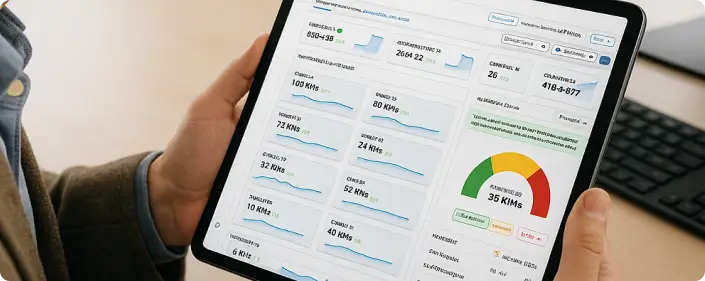
A dedicated point of contact means questions get answered by someone who actually knows the account, not a rotating support queue. Working with a local SEO service company that treats support as core, not an afterthought, matters as much to a local business as the strategy itself.
Plans
Enhance your local presence with basic SEO.
Your Growth Toolkit
Build a solid foundation for local search rankings.
Your Growth Toolkit
Strengthen your reach with reliable, local SEO tactics.
Your Growth Toolkit
Achieve significant growth within your regional market.
Your Growth Toolkit
Industry
Platforms


Solutions
Drive sustainable traffic and revenue growth
Optimize visibility across AI search engines
Future-proof search strategy with AI
Scale product visibility and online revenue
Turn visitors into measurable revenue growth
Increase app visibility and install growth
Dominate local search and nearby customers
Authoritative backlinks that boost search rankings
Scalable SEO solutions for large organizations
Build websites that improve engagement
Find and fix issues affecting search visibility
Drive organic growth with strategic content

Growth Manager - Superbalist
SEo Growth
Local SEO is the practice of optimizing a business’s online presence, so it shows up when nearby customers search for what that business offers, “emergency electrician,” “best tacos downtown,” “dentist open Saturday”, rather than for broad, non-local terms with no buying intent behind them. It combines several moving parts working together: a fully optimized Google Business Profile, consistent citations across directories, location-specific website content, technical health, and a genuine reputation built on real reviews.
Local SEO services exist because these pieces rarely get handled well by accident. A business might have a decent website and still lose customers to a competitor with a stronger, more complete Google Business Profile, simply because that’s what shows up first, above the organic search results entirely, for most local searches. We combine it with broader SEO services and, where relevant, CRO services to make sure the traffic converts. Local optimization becomes one part of a complete acquisition strategy rather than an isolated tactic, one just as relevant for local SEO services in USA markets as anywhere else.
The buyer journey for a local purchase rarely starts on a website at all. A customer searching “plumber near me” typically sees the Google Business Profile first, the map pack listing with a rating, a few photos, and a “call” or “directions” button, long before they ever click through to a company’s actual site. Reviews get compared next, often across multiple businesses on the same search results page, before the customer narrows down to two or three real contenders.
Only at that point does the website usually enter the picture, and often briefly: confirming pricing, checking service areas, or verifying the business looks legitimate before that call or direction tap actually happens. This is exactly why local SEO can’t be treated as simple profile cleanup. It spans the Google Business Profile, location pages, citations, reviews, and the technical foundation of the website itself, all working together to support a buyer journey that increasingly happens before a website visit, not because of one.
Businesses that treat these as separate, disconnected tasks consistently underperform ones that build them as a single, coordinated local presence. The map pack listing, the website, the review profile, and the citation network all reinforce each other or, left unmanaged, quietly undercut each other. Getting local visibility right means treating all of it as one system, because to the customer deciding who to call, it already is.
AI tools








Growth Manager - Superbalist
Locations
FAQ’s
Traditional SEO targets rankings for broad, often national or global search terms with no geographic component; think an ecommerce brand ranking for “best running shoes.” Local SEO specifically targets searches with local intent, “running shoe store in [city]”, and depends heavily on factors traditional SEO doesn’t touch at all: Google Business Profile optimization, citation consistency, and proximity to the searcher.
Ranking factors diverge too. Traditional SEO leans almost entirely on content quality, backlinks, and technical health. Local SEO adds review count and rating, NAP consistency across directories, and physical or service-area proximity into that mix, which is why a business can rank well nationally and still be invisible in its own city without dedicated local optimization.
Not always, though it depends heavily on the business model. A storefront business, a restaurant, retail shop, or dental office needs a real, verifiable physical address, since Google requires it for Google Business Profile verification and local pack eligibility.
Service-area businesses, plumbers, electricians, and cleaning services can rank in specific areas without a public-facing address in each one, using Google’s service-area business setting instead, as long as the business genuinely serves that area. What matters most either way is legitimacy: a virtual office or an address the business doesn’t actually operate from typically triggers suspension rather than helping rankings, regardless of the business type.
Reviews influence local rankings directly and significantly, factoring into Google’s prominence signal alongside citations and overall online reputation. Both quantity and recency matter: a steady stream of recent reviews outperforms a large stagnant pile from years ago, since it signals an actively operating, trustworthy business.
Beyond rankings, reviews shape click-through rate and conversion directly. Businesses with strong review profiles consistently earn more clicks from the map pack and convert those clicks into calls or visits at a higher rate than lower-rated competitors. Review responses matter too; a thoughtful reply to negative feedback often builds more trust with prospective customers than the negative review itself erodes.
A complete engagement typically includes Google Business Profile optimization, citation building and NAP cleanup across major directories, location and service-area page development, review generation and reputation management, technical SEO fixes, and increasingly, optimization for AI-driven local search in tools like ChatGPT and Google AI Overviews.
Reporting and performance tracking round it out, connecting rankings and visibility to actual business outcomes, calls, direction requests, and form fills, rather than isolated ranking numbers. Comprehensive local SEO services often get bundled with a broader SEO service engagement rather than sold purely as a standalone local package, particularly for multi-location businesses managing both local and broader organic visibility simultaneously.
Most businesses start seeing measurable movement, more profile views, and better map pack positioning for easier searches within four to eight weeks of consistent optimization. Meaningful lead and call volume typically takes longer, often three to six months, depending on how competitive the local market is and how much needs fixing at the outset.
A business with an unclaimed, sparse profile and inconsistent citations will generally see faster early wins than one that’s already reasonably well-optimized and competing for improvement at the margins. Competitive categories, dentists, lawyers, HVAC companies in dense metro areas, typically require a longer runway than less contested local categories.
Any business serving customers within a specific geographic area benefits, but the impact tends to be strongest for industries with high purchase urgency: home services, healthcare and dental practices, legal services, and food and hospitality businesses all see outsized returns, since these are exactly the categories where “near me” searches convert quickly into calls or visits.
Multi-location retail and franchise businesses benefit significantly too, though the strategy looks different, coordinating consistency and differentiation across dozens or hundreds of locations rather than optimizing a single profile. Even B2B service businesses with a defined service area see real value, particularly for emergency or time-sensitive work.
Pricing varies widely based on business size, competition, and scope, but most professional local SEO engagements for a single-location business fall somewhere between a few hundred and a couple thousand dollars per month, with multi-location and franchise engagements scaling well beyond that based on location count and market competitiveness.
Local seo package depends heavily on starting point too: a business with a clean, established profile and consistent citations costs less to maintain than one requiring extensive citation cleanup, a suspended profile investigation, or dozens of new location pages built from scratch. The real question worth asking about any local SEO services investment isn’t just cost, but what specific deliverables and reporting come with it each month.
Start by asking for case studies specific to businesses similar in size and industry to yours, not just generic before-and-after ranking screenshots. A credible local SEO company usa should be able to show real map pack movement and, ideally, downstream business outcomes like call or lead volume, not rankings in isolation.
Ask directly how the local SEO agency usa approaches AI search and GEO optimization too, since this is quickly becoming a meaningful differentiator and many providers still treat it as an afterthought. Transparency in reporting matters just as much: a good partner shows exactly what’s being done each month, not a black-box dashboard with vague monthly summaries and no clear connection to results.
Yes, arguably more so than for single-location businesses, since the complexity and potential payoff both scale with location count. Multi-location brands need consistent NAP data across every listing, clear rules for which markets earn dedicated location pages, and centralized oversight to prevent duplicate or conflicting profiles between locations.
Franchise and multi-location businesses also compete directly against each other for map pack visibility in overlapping markets, which makes coordinated strategy more important, not less. Done well, this turns dozens of individually weaker signals into one coordinated local presence, strong enough to consistently outrank competitors relying on generic local SEO services alone.
Yes, significantly. Local SEO allows every location to rank itself with optimized listings, location-specific pages, and citation management. This guarantees wider market coverage and brand consistency in all locations.