











Driving Growth for Mid-Market & Enterprise Ecommerce Brands




Clients
BenEfits
You own the checkout, the data, and every dollar of the margin.
A subscription box and a marketplace can both run on the same platform.
Product pages built on WordPress rank in ways hosted platforms often can't match.
Fifty products or fifty thousand, the same platform scales with you.
Your CRM, your accounting software, your ad platforms, all of it connects.
A buying guide and the product it recommends can finally live on one site.

Challenges
Plugin bloat is the most common culprit, and it compounds quietly over time as more tools get added without anyone removing what’s no longer needed. Every plugin adds its own scripts and database queries, and a store running thirty of them is carrying real weight even if each one individually seems lightweight.
A proper speed audit usually finds two or three specific culprits rather than a vague, unfixable problem. Most WooCommerce speed issues are solvable without the full rebuild, which some WooCommerce development services default to recommending.
Unexpected costs showing up at the final step: shipping fees, taxes, and surprise charges remain one of the most common reasons a cart gets abandoned right before payment. If pricing isn’t transparent earlier in the flow, checkout is where that trust breaks.
A checkout process demanding an account before purchase pushes away customers who just want to buy quickly. A shopper who can’t pay the way they prefer often just leaves rather than adapting.
Streamlining these friction points like guest checkout, transparent pricing, and more payment methods is core CRO service work, and it typically recovers a meaningful share of abandoned sales.
Weak product descriptions that just restate the title in different words leave a shopper with real questions unanswered right at the moment they’re deciding to buy. Thin content here does more damage than most store owners realize.
Product photography matters enormously too; a single low-resolution image doesn’t give a shopper enough confidence to purchase something they can’t physically touch or examine. Missing trust signals, reviews, clear return policies, and visible security badges compound the hesitation further.
Pages that pair genuinely useful content with strong visuals and visible trust markers consistently outconvert pages relying on a product photo and a price tag alone.
Duplicate content is a frequent, often invisible culprit here; product variations and filtered category URLs can quietly generate near-identical pages that confuse search engines about which version actually deserves to rank. This happens by default in WooCommerce unless someone specifically configures it.
Thin category pages compound the problem: a category page that’s just a product grid with no supporting content gives Google very little reason to rank it for competitive terms.
Fixing the technical foundation alongside genuinely useful category and product content, the core of any solid WooCommerce development services engagement, usually moves rankings faster than either fix attempted alone.
Plugin conflicts happen when two tools try to modify the same part of the store simultaneously; for instance, checkout, cart calculations, and product display, and step on each other in ways that are genuinely difficult to predict in advance. WooCommerce’s flexibility is exactly what makes this possible.
Outdated plugins compound the risk significantly, since compatibility issues pile up the longer an update gets delayed, and one delayed update can eventually break several dependent plugins at once. Too many plugins running simultaneously, even individually stable ones, raises the odds of an unexpected conflict considerably.
Misconfigured GA4 ecommerce tracking is the most common cause, and it’s often invisible until someone actually compares reported revenue against real order data and finds the gap. Events firing incorrectly or duplicating can inflate or deflate numbers without any obvious visual sign that anything is wrong.
Ad blockers and cookie consent settings can also quietly suppress tracking for a meaningful share of visitors, particularly in regions with stricter privacy requirements. Currency conversion issues cause discrepancies too, especially for stores selling internationally across multiple currencies.
A full tracking audit, comparing GA4, GTM, and actual order data side by side, usually reveals exactly where the numbers diverge and why.
A theme or plugin stack built for a small catalog often starts breaking down as product count and traffic both grow well beyond what it was originally built to handle. What worked fine at two hundred products can buckle at ten thousand.
Database performance degrades gradually, unless proper indexing and cleanup happen along the way rather than as an emergency fix later. Hosting infrastructure built for a small store simply can’t handle enterprise-level traffic spikes during a sale or seasonal surge.
Scaling well means rebuilding the technical foundation proactively, well before traffic and catalog size actually force the issue during a critical sales period.
Cart abandonment often shares the same root causes as checkout drop-off, but it also includes something checkout doesn’t: shoppers who never even started the payment process, just browsing, comparing, or getting distracted before finishing.
Cart abandonment emails recover a meaningful share of this traffic when timed well, typically within the first hour, but only if the technical setup actually captures the right data to send them in the first place. Exit-intent offers and saved cart functionality both help too, giving a hesitant shopper a reason to come back.
Most stores recover fifteen to twenty percent of abandoned carts with a properly configured recovery sequence in place.
Process
Every WooCommerce development service engagement starts with understanding what the store actually needs to sell and to whom, not a generic assumption about what an ecommerce site should include. Products, target markets, and customer behavior get mapped first, since a subscription box business and a B2B wholesaler need fundamentally different store structures even if both technically run on WooCommerce.
Payment and shipping requirements are defined early as they shape technical decisions throughout the entire build. A business selling internationally across multiple currencies and complex tax rules needs a different foundation than one shipping domestically with flat-rate pricing, and retrofitting later is far more expensive than planning for it upfront.
Integration needs, CRM, ERP, and existing marketing tools get scoped alongside conversion goals and the specific ecommerce KPIs that will actually define success. A business optimizing for average order value needs different features prioritized than one focused purely on new customer acquisition.
This groundwork shapes every technical and design decision that follows, rather than getting treated as a formality before the “real” build begins.
For stores already live and being rebuilt rather than launched fresh, this step starts with a full audit of what currently exists: store health, active plugins, theme quality, current speed, SEO standing, and analytics setup all get reviewed together rather than in isolation. A capable website development service treats this audit as the foundation for every decision that follows, not a formality to rush past.
We pay attention to checkout flow and product structure to directly determine conversion rate, and they often reveal the clearest opportunities for improvement. A checkout with too many steps or a product catalog with inconsistent categorization both create friction that compounds across thousands of visits.
Migration risks are identified specifically for stores moving from another platform, Shopify, Magento, or BigCommerce, since data mapping, URL structure, and SEO preservation all carry real risk if handled carelessly during a transition. This audit becomes the technical blueprint the rest of the build gets measured against.
Navigation and category structure get planned around how shoppers actually browse and search, not around how internal teams happen to organize inventory. A confusing category structure loses sales quietly, regardless of how good the products themselves actually are.
Product templates, filters, and the cart and checkout flow all get mapped as a connected system rather than isolated pieces designed separately and stitched together later. A filter system that doesn’t match how shoppers actually think about the catalog creates friction that a beautiful design alone can’t fix.
Account pages and content blocks, buying guides, comparison content, FAQs, get planned into the architecture from the start too, not bolted on after the store launches, which is exactly the difference thoughtful WooCommerce development services make over a rushed build. Conversion journeys get mapped for the specific paths shoppers actually take like first-time buyer, repeat customer, or B2B bulk order, since each one needs a genuinely different experience rather than one generic path trying to serve every visitor equally well.
Responsive layouts get built for every key page type: homepage, product pages, category pages, cart, checkout, and account pages, tested across real devices rather than just a few common screen sizes checked during review. A theme that looks polished on desktop but breaks on mobile is losing the majority of ecommerce traffic today.
Campaign pages get built into the theme system too, giving marketing the flexibility to launch a seasonal sale or product drop without needing custom development every single time. A rigid theme that requires developer involvement for every campaign quietly slows a business down during exactly the moments that matter most for revenue.
A capable website design service treats this stage as brand expression and conversion mechanics working together, not a purely aesthetic exercise, since a beautiful theme that doesn’t convert hasn’t actually accomplished what the WooCommerce development services set out to do in the first place.
Products, categories, and attributes get configured to actually support how shoppers search and filter, not just how the business happens to organize inventory internally. Variations, in particular, need careful setup, since a poorly configured variation structure creates confusing product pages that quietly hurt conversion.
Payment gateways and tax configuration get set up next, tested thoroughly across the specific markets a business actually sells into, since a payment failure at checkout is one of the most expensive bugs a store can ship. Shipping rules get configured with the same care, since incorrect rates either lose money on every order or drive customers away at checkout entirely.
CRM, ERP, marketing, and analytics integrations round out this step, connecting the store to the broader business systems it needs to actually run on day one rather than operating as a disconnected island collecting orders nobody else on the team can see or act on.
Metadata, schema-ready sections, and clean URL structures get built in at this stage, giving every product and category page a real chance to rank rather than starting from a technical deficit. Redirects and breadcrumbs get configured carefully too, since ecommerce sites generate URL changes constantly as inventory shifts, and a missing redirect quietly bleeds both traffic and link equity over time.
Core Web Vitals get addressed directly, since ecommerce pages tend to carry more images, scripts, and third-party tools than a typical content page, all of which can drag down speed if left unmanaged. A genuinely thorough SEO Service treats performance and search visibility as connected, not separate workstreams handled by different people.
GA4 ecommerce events and GTM tracking get configured and tested specifically, confirming that purchases, cart additions, and checkout steps all get measured accurately from the very first live transaction, not discovered broken weeks after launch when the reporting doesn’t add up.
Every product, checkout path, and payment method gets tested directly before launch, not spot-checked on a handful of items and assumed to work identically across the full catalog. A payment method failing silently for a specific card type or region can go unnoticed for weeks without direct testing.
Shipping calculations, forms, and confirmation emails all get verified too, since a customer who doesn’t receive an order confirmation loses confidence in the purchase immediately, even if the order itself actually processed correctly behind the scenes. Responsiveness and speed get tested across real devices, not just desktop previews that miss how checkout actually feels on a mid-range phone.
Tracking, redirects, and security all get validated as part of the same pass, confirming nothing was quietly missed in the process. Order flow gets tested end to end, from browsing through checkout to confirmation, since this is the sequence that actually determines whether real revenue comes through cleanly from day one.
Errors, failed orders, and checkout issues get monitored actively in the days immediately following launch, since this window is when unexpected issues, ones testing couldn’t fully predict, tend to surface fastest under real customer traffic and behavior.
Page speed and tracking accuracy get reviewed against pre-launch benchmarks specifically, confirming the new build actually performs the way testing indicated it would under real-world conditions. Plugin compatibility gets monitored on an ongoing basis too, since updates roll out constantly and an update breaking checkout is far more costly than one breaking a minor visual element.
An ongoing website maintenance service relationship catches these smaller issues before they compound into revenue-impacting problems, while customer experience gets reviewed continuously for friction points that only become visible once real shoppers, not just the internal team, are actually using the store. Performance improvement opportunities get documented and prioritized over time, turning post-launch support into an ongoing growth function rather than a maintenance afterthought.
Testimonials
Why Us?

All our WooCommerce development services run through Infigrowth, Infidigit’s proprietary SEO platform, tracking product and category rankings alongside AI Overview visibility from day one. That means SEO health gets monitored continuously, not discovered three months post-launch when organic traffic has already quietly declined.

Over 100 industry recognitions sit behind Infidigit’s name, e4m IDMA, and DIGIXX among the more recent ones, and none of them came from submission volume. Judges look at actual outcomes: rankings that held, conversions that grew, technical work that survived scrutiny, which is exactly what an ecommerce build needs: proven, not promised.

A team of 150-plus specialists spans WooCommerce development, technical SEO, and conversion design, meaning a store gets built by people who understand ecommerce specifically, not general web development applied to a storefront. That depth shows up in checkout flow and category structure alike.

Every build decision traces back to real shopper behavior and conversion data, not assumptions about what an ecommerce theme should look like. A WooCommerce development company built around evidence consistently outperforms one built around trends borrowed from unrelated industries.
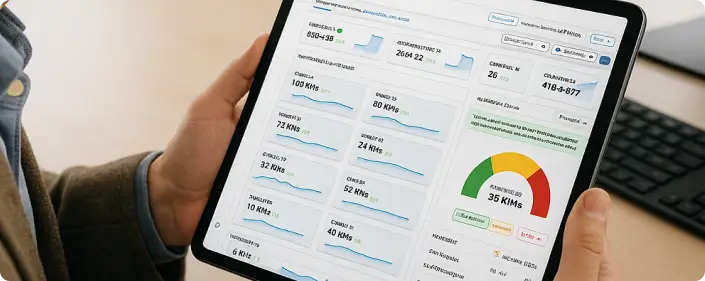
Reporting connects rankings, traffic, and revenue directly to the build itself, giving stakeholders a clear view of what changed and why. No vague launch announcements, just WooCommerce development services measured the way a revenue-focused business actually needs to see them.
Plans
Startups Business
Your Growth Toolkit
Small-Market Businesses, Competitive Niches
Your Growth Toolkit
Mid-Market Businesses, Competitive Niches
Your Growth Toolkit
Enterprise, Large E-commerce, Site Migrations
Your Growth Toolkit
Industry
Platforms


Solutions
Drive sustainable traffic and revenue growth
Optimize visibility across AI search engines
Future-proof search strategy with AI
Scale product visibility and online revenue
Turn visitors into measurable revenue growth
Increase app visibility and install growth
Dominate local search and nearby customers
Authoritative backlinks that boost search rankings
Scalable SEO solutions for large organizations
Build websites that improve engagement
Find and fix issues affecting search visibility
Drive organic growth with strategic content

Growth Manager - Superbalist
SEo Growth
WooCommerce is an open-source ecommerce platform built directly on top of WordPress, turning a standard WordPress site into a fully functional online store capable of selling physical products, digital downloads, subscriptions, or services. WooCommerce development services cover everything needed to turn that raw platform into an actual working store: custom design, product and payment setup, performance optimization, and the SEO foundation that determines whether the store gets found at all.
Because WooCommerce is open-source, it comes with genuine flexibility that hosted platforms like Shopify simply don’t offer: full control over hosting, checkout customization, and code-level changes without platform restrictions dictating what’s possible. That flexibility is also exactly why professional development matters. A poorly built WooCommerce store can be slower, less secure, and harder to maintain than a well-configured hosted alternative, while a properly built WooCommerce website development company engagement consistently outperforms hosted platforms on both cost and capability over time.
Ecommerce brands and D2C businesses selling directly to consumers make up the most obvious segment, but the platform’s flexibility extends well beyond that single use case. B2B sellers managing bulk pricing, tiered accounts, and complex ordering workflows use WooCommerce just as effectively as consumer-facing retailers, since the platform’s extensibility supports both without forcing a business into one rigid model.
Subscription businesses and local stores with a strong online component both benefit meaningfully too, as do multi-product brands managing large, complex catalogs that need genuine flexibility in categorization and filtering. Service sellers and digital product businesses, course creators, software vendors, and consultants selling packaged offerings find WooCommerce equally capable despite not fitting the traditional “physical product” ecommerce mold most people picture first.
Businesses migrating from Shopify, Magento, or BigCommerce represent a distinct and growing segment as well, typically driven by rising platform fees, limited customization, or hitting a technical ceiling on their current setup. A careful website migration service approach preserves SEO equity, order history, and customer data throughout this kind of transition, since a rushed migration can quietly cost a business months of accumulated rankings and revenue.
Whether the priority is a broader Enterprise SEO approach for a large, established catalog or focused Ecommerce SEO work for a growing store still finding its footing, WooCommerce’s underlying flexibility supports both paths without requiring a business to choose a fundamentally different platform down the line. That range, from a first-time online store to a business managing thousands of SKUs across multiple markets, is precisely what makes custom WooCommerce development services a genuinely long-term investment rather than a platform a business eventually outgrows and has to abandon.
AI tools








Growth Manager - Superbalist
Locations
FAQ’s
For most businesses, yes, particularly ones that want genuine control over their store rather than operating within a hosted platform’s restrictions. The combination of WordPress’s content flexibility and WooCommerce’s commerce functionality gives a business the ability to blend blogs, buying guides, and SEO content directly with product pages, something hosted platforms handle far less naturally.
It’s not automatically the right fit for every business, though. A store that needs zero technical involvement and values simplicity above all else might find a fully hosted platform easier to manage day to day. For businesses planning to scale, customize deeply, or invest seriously in organic search, development services from an established and proficient WooCommerce web development agency usually win out over time.
WordPress is the content management system, the foundation for building any kind of website, blog, business site, portfolio, whatever the goal is. WooCommerce is a plugin that runs on top of WordPress specifically, adding the commerce functionality needed to sell products: cart, checkout, payment processing, inventory management, and order tracking.
Think of WordPress as the building and WooCommerce as the store built inside it. A WordPress site doesn’t need WooCommerce at all if it’s not selling anything, but a WooCommerce store always needs WordPress underneath it, since it’s built as an extension of the platform rather than a fully independent system on its own.
A complete WooCommerce development services engagement typically spans store architecture and UX planning, custom theme design and development, product and payment configuration, shipping and tax setup, SEO and performance optimization, and thorough QA testing before launch. Integration work for CRM, ERP, and marketing tools is included wherever the business needs those systems connected.
We also bundle Post-launch support, including monitoring, plugin updates, and ongoing optimization, since a store’s technical needs don’t end the moment it goes live. Some WooCommerce web development services engagements scope more narrowly around a specific need, a migration, a performance fix, a redesign, rather than a full build from scratch. The right scope depends heavily on whether a business is launching fresh or improving something that already exists.
Yes, migrations from Shopify, Magento, BigCommerce, and other platforms are a common part of WooCommerce development work, and they get handled with real care given how much is riding on getting the transition right. Product data, customer accounts, and order history all need accurate mapping to avoid data loss during the move.
SEO preservation matters just as much as the data itself. Proper URL mapping and redirects prevent the ranking loss that a careless migration can cause, since search engines need a clear signal about where content moved rather than discovering broken links after the fact. A well-planned migration typically causes minimal disruption to an active, revenue-generating store.
Most builds take between six and sixteen weeks from initial planning to launch, depending heavily on catalog size, custom functionality requirements, and how quickly product data and content get finalized on the client’s side. A simple store with a few dozen products moves faster than one with complex variations, subscriptions, or heavy custom integration.
Migrations often take longer than fresh builds, since they involve auditing and carefully transferring existing data rather than starting from a blank foundation. Content and product data readiness affects the timeline more than most businesses expect; a build waiting on final product photography or descriptions can stall regardless of how quickly development itself moves.
Cost depends heavily on scope: a straightforward store with a modest catalog costs considerably less than a highly customized build with complex integrations, subscriptions, or a large product catalog requiring extensive configuration. Most professional WooCommerce website development services fall somewhere between a few thousand dollars and well into five figures.
Custom functionality, integrations, and migration complexity all push cost upward, while a more templated approach with standard functionality keeps it lower. Ongoing costs matter too. Elements like hosting, plugin licenses, and maintenance factor into the total investment beyond the initial build. The more useful question isn’t just the upfront number, but what specific deliverables and post-launch support come with that investment.