











Driving Growth for Mid-Market & Enterprise Ecommerce Brands




Clients
BenEfits
By the time someone's comparing prices or requesting a quote, they're deep in the funnel.
A paid budget runs dry. An organic page keeps generating inquiries in the long run sustainably.
A visitor searching by service and location converts differently than one browsing generally.
Sales teams close more when the form is where a reader actually is.
A case study answers the doubt a price page alone never could.
Someone researching today might not convert for months, but the page still works.
Challenges
Traffic and lead generation are separate problems, and it’s worth figuring out which one is actually broken before assuming the whole strategy needs rebuilding. A mismatch between keyword intent and page content is usually behind this, ranking for informational searches while the page itself pushes for a sale on a visitor who was never looking to buy yet.
Weak calls to action compound this further. A page that buries its contact form below three scrolls of content, or never clearly states what happens after someone reaches out, loses visitors who were genuinely interested but didn’t know what to do next.
Trust signals matter too. A visitor comparing several providers quietly favors whichever site feels most credible, with factors like clear pricing, visible reviews, and real case studies. That’s exactly the gap thoughtful lead generation SEO services are designed to close.
Keyword targeting is usually the root cause here. Ranking for broad, top-of-funnel terms brings in volume, but volume isn’t the same thing as fit, and a lead who was only casually researching converts very differently than one actively comparing vendors ready to buy.
Landing page messaging plays a role too. Vague copy that doesn’t specify pricing range, service area, or who the offering is actually for attracts inquiries from people who were never a genuine match, wasting sales team time on calls that go nowhere.
Tightening keyword intent toward commercial and comparison searches, “[service] pricing,” “[service] vs [competitor],” typically shifts lead quality noticeably within a few months without needing an entirely new content strategy.
Often it comes down to content depth rather than any dramatic advantage. A competitor with a dedicated page for every service and location gives search engines and visitors far more to work with than a single page trying to cover everything at once.
Review volume and visible social proof matter too. A prospect comparing multiple providers quietly leans toward whichever one looks most established: more reviews, clearer case studies, a more complete Google Business Profile, even when the underlying service quality is genuinely comparable.
Sometimes it’s simply a longer track record online, more backlinks, more indexed pages, more accumulated trust signals built up over years rather than months. That gap is closeable, but it takes deliberate content and authority work rather than hoping it narrows on its own.
A landing page that matches the ad or search query in the headline but not in the actual content creates a jarring mismatch the moment a visitor lands, and that mismatch alone can tank conversion rate regardless of how strong the traffic itself is.
Form length matters more than most businesses expect, too. Every additional field asked for upfront reduces completion rate, and a form demanding company size, budget, and timeline before a first conversation has even happened asks for more trust than a cold visitor is usually willing to give.
Page speed and mobile experience compound this further, since a slow-loading form on a phone loses patience fast. Simplifying the page around one clear action, rather than several competing ones, usually recovers a meaningful share of lost conversions.
High-intent searches, “[service] pricing,” “[service] near me,” “[service] company,” tend to be more competitive than broad informational terms, and a site without dedicated pages targeting these specific phrases simply isn’t in the running for them at all.
Technical health plays a role too. A mobile SEO service will help uncover hidden gaps, slow load times, or a poor mobile experience specifically. These issues can quietly suppress rankings for exactly these commercial searches, since most high-intent queries now happen on a phone rather than a desktop.
Building dedicated pages around each high-intent phrase, rather than hoping a single generic service page ranks for all of them, usually closes this visibility gap faster than broader content efforts aimed at top-of-funnel traffic.
AI tools like ChatGPT and Google’s AI Overviews pull from structured, clearly organized content, and a site without direct answers, comparison content, or clear entity signals simply gives these systems very little to extract and cite confidently.
Thin or vague service descriptions compound this. An AI system deciding which business to recommend needs explicit information about what a business does, where it operates, and what makes it credible. Generic marketing copy often doesn’t provide that information clearly enough.
Structured FAQs, comparison pages, and schema markup all help close this gap, giving AI systems exactly the kind of citation-worthy content they favor. Most competitors haven’t addressed this yet, which makes it one of the more accessible opportunities available right now.
Targeting keywords by funnel stage, rather than chasing whatever has the highest search volume, is usually the biggest lever. Commercial and comparison searches convert at a meaningfully higher rate than broad informational ones, even though they typically carry less overall traffic.
Landing page alignment matters just as much as the keyword strategy itself. A page built specifically to answer the exact question behind a search converts noticeably better than a generic page trying to serve every possible visitor at once.
Clear CTAs, credible trust signals, and a genuinely fast, mobile-friendly experience round this out. When put together, SEO services for lead generation stop being about visibility for its own sake and start becoming a consistent, compounding source of qualified pipeline.
Tracking needs to connect all the way from keyword rankings down to actual revenue, not stop at traffic or even lead volume alone. A lead is only valuable once its downstream outcome, a booked call, a closed deal, gets connected back to the specific page and keyword that generated it.
CRM integration makes this connection possible, tying form submissions and calls to eventual pipeline and closed revenue rather than treating every lead as equally valuable regardless of what it actually becomes. Cost per lead gets compared against cost per acquisition from other channels too, since SEO’s real advantage usually shows up in the trend line over time, not a single month’s snapshot.
Process
Every lead generation SEO services engagement starts with understanding who the business actually wants to reach and why, not a generic assumption about what “more leads” means for this specific business. Target customer profiles, service lines, and geographic focus all get mapped first, since a business selling nationally needs a different approach than one serving a handful of local markets.
We review the sales process thoroughly too, including how a lead moves from first inquiry to closed deal, and where in that process leads currently tend to stall or drop off. A business with a long, consultative sales cycle needs different lead-nurturing content than one closing deals in a single call.
Existing lead quality issues are discussed openly at this stage, since “more leads” isn’t actually the goal of any competent lead generation SEO services if half of them were never going to convert anyway. CRM setup gets reviewed alongside revenue goals, confirming the infrastructure exists to actually track a lead all the way through to closed revenue, not just to first contact.
Rankings, traffic, and technical SEO health don’t get audited as separate checklists here; they get looked at as one connected picture of where the site actually stands right now. That full-picture approach is what separates a genuine SEO audit service from a surface-level report an automated tool spits out on its own.
Conversion readiness matters as much as search visibility when service pages and landing pages get reviewed, since a page ranking well but converting poorly is still failing at its actual job either way. Forms, calls, and bookings get checked directly too, confirming they work rather than quietly losing submissions to a bug nobody’s noticed yet.
Analytics and CRM tracking get verified carefully, since flawed data here undermines every decision made afterward. A business optimizing based on inaccurate lead attribution ends up investing in the wrong pages and keywords entirely, no matter how sound the rest of the strategy looks on paper. This audit becomes the baseline every later recommendation gets measured against.
High-intent keywords get sorted by funnel stage here, separating genuine buying-ready searches from earlier research-stage queries that call for very different content. That distinction shapes every content decision that follows; not every keyword is equally valuable just because it ranks.
Competitor gaps get mapped alongside this too. Which high-value searches do competitors currently own, and where does a genuine content or authority opportunity actually exist? A gap analysis focused purely on keyword volume tends to miss exactly these harder-to-spot opportunities.
Service pages, local pages, and lead capture points all get planned around this combined keyword and funnel map, ensuring every page has a clear purpose tied to a specific stage of the buyer journey. Content needs get scoped directly from this mapping too, rather than guessed at separately, so nothing built later duplicates work or misses an obvious gap in coverage. This is the kind of groundwork a genuine SEO lead generation company treats as foundational, not a quick exercise to rush past before the real work begins.
A page that search engines can’t properly access or understand can’t generate leads, no matter how well it’s written or designed, so crawlability and indexation issues get resolved first. Metadata, headings, and internal linking all get addressed as part of this same technical SEO service pass, giving every page a clear structural foundation to build from.
Structured data around services, reviews, and FAQs gets implemented specifically to support lead generation, helping both traditional search engines and AI systems understand exactly what’s being offered rather than guessing. Redirects get audited too, preventing the kind of quiet link equity loss that compounds over time when old pages disappear without proper handling.
Core Web Vitals and mobile usability round out this step, since a slow or clunky mobile experience actively suppresses both rankings and conversion rate simultaneously. Thorough on page SEO services tie all of this together at the page level, making sure content, structure, and technical health all pull in the same direction rather than working against each other.
Service pages get created or rebuilt around what a prospect actually needs to know before reaching out. These include pricing expectations, process, and what makes this business the right fit, rather than generic descriptions that could apply to any competitor.
Comparison and industry-specific pages get built next, targeting the exact searches a prospect runs right before deciding, like “[service] vs [alternative]” or “[service] for [industry].” A skilled content writing service threads real specificity through all of this, avoiding the generic language that makes so many service pages interchangeable.
FAQs and case studies round out the content layer, answering real objections and building credibility through specific, verifiable outcomes rather than vague claims. Lead-focused landing pages get their own dedicated treatment too, since a well-executed website design service here directly shapes whether traffic that does arrive actually converts into a genuine inquiry rather than bouncing off a page that never quite closes the sale.
Google Business Profile optimization anchors this step for any business with a physical or service-area presence, since map pack visibility often captures high-intent local searches before a visitor ever reaches the website itself. Citations get cleaned up alongside this, ensuring consistent business information across the directories that matter.
Review generation and response strategy get built into this same phase, since review count and recency both influence local visibility and, just as importantly, a visitor’s decision to actually reach out once they land on the site after finding it through search.
Backlinks and digital PR round out the authority side, prioritizing coverage from genuinely relevant, credible sources over volume alone. Case studies published externally, guest content, and third-party mentions all build the kind of trust signal that a business talking about itself simply can’t replicate, reinforcing credibility both to search engines and to prospects doing their own research before ever picking up the phone.
Forms and CTAs get optimized specifically for conversion, not just visual appeal, testing field count, button copy, and placement against actual submission data rather than assumptions about what should work. This CRO service work runs parallel to SEO rather than after it, since driving more traffic to a poorly converting page just amplifies an existing problem.
Phone and booking tracking get configured to capture every lead channel accurately, not just form submissions, since a business relying heavily on calls needs that data connected just as tightly as web form data. Thank-you pages get set up properly too, both to confirm the action for the visitor and to fire the tracking events that measure it accurately.
GA4, GTM, and CRM lead attribution are connected as part of this same setup, ensuring every lead from any lead generation SEO services engagement can be traced back to the specific page and keyword that generated it from day one.
Reporting tracks the full chain from rankings and traffic down to leads, calls, forms, and bookings, connecting each of these to CPL and lead quality rather than treating volume as the only metric that matters.
MQLs, SQLs, and pipelines get folded into this same reporting wherever CRM integration allows, since a channel generating high lead volume but poor pipeline conversion isn’t actually the win it might look like on the surface. Revenue gets connected back to specific pages and keywords over time too, building a genuinely clear picture of what’s actually driving business outcomes.
AI visibility gets tracked increasingly alongside traditional metrics, monitoring whether the business shows up in AI-generated answers as this channel continues growing. Optimization stays continuous rather than periodic, with budget and content effort shifting toward whatever’s proving itself and away from what isn’t, on an ongoing basis rather than waiting for a quarterly review to make that call.
Testimonials
Why Us?

All lead generation SEO services we deploy will run through Infigrowth, Infidigit’s proprietary SEO platform, tracking rankings, AI Overview visibility, and lead-generating keyword performance in one place. That means strategy decisions rest on live pipeline data, not a quarterly guess about which pages are actually driving inquiries.

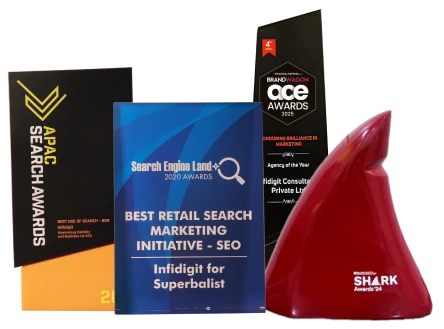
Judges at the ET BrandEquity Shark Awards don’t score a submission packet; they score whether the campaign actually moved the needle. That’s the bar Infidigit has cleared repeatedly across 100-plus industry recognitions, work that is held up under scrutiny rather than just looking good in a case study deck.

A team of 150-plus specialists spans technical SEO, content, local search, and conversion optimization, meaning lead generation strategy gets built by people who understand the full funnel, not just rankings. That range matters most when technical fixes, content, and CRO all need to move together.

Assumptions about what should convert don’t drive recommendations here; real lead and pipeline data does. A lead generation SEO company built around evidence consistently outperforms one relying on generic best practices borrowed from unrelated industries and applied without context.
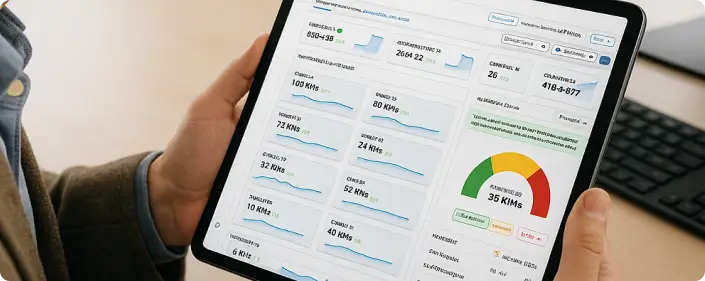
Rankings and traffic connect directly to leads, calls, and pipeline in every report, so stakeholders can see for themselves what’s actually working. No vague visibility metrics, just lead generation SEO services measured the way a revenue-focused business actually needs to see them.
Plans
Startups Business
Your Growth Toolkit
Small-Market Businesses, Competitive Niches
Your Growth Toolkit
Mid-Market Businesses, Competitive Niches
Your Growth Toolkit
Enterprise, Large E-commerce, Site Migrations
Your Growth Toolkit
Industry
Platforms


Solutions
Drive sustainable traffic and revenue growth
Optimize visibility across AI search engines
Future-proof search strategy with AI
Scale product visibility and online revenue
Turn visitors into measurable revenue growth
Increase app visibility and install growth
Dominate local search and nearby customers
Authoritative backlinks that boost search rankings
Scalable SEO solutions for large organizations
Build websites that improve engagement
Find and fix issues affecting search visibility
Drive organic growth with strategic content

Growth Manager - Superbalist
SEo Growth
Buying leads feels faster, and in the short term, it often is. A list of contacts or a shared-lead service can fill a pipeline within days. But most bought leads carry a quiet cost that doesn’t show up until later: the same lead is frequently sold to three, four, or five competing businesses simultaneously, and the person on the other end is often mid-research rather than genuinely ready to buy, if they even remember requesting information at all.
SEO-generated leads work differently by design. Someone who searches “[service] pricing” or “[service] near me” and clicks through to a business’s own page is actively looking for a solution right now, not a name pulled from a purchased list months after they filled out an unrelated form. That difference in intent shows up directly in close rate, and it’s why organic leads consistently convert at a meaningfully higher rate than purchased ones across most industries.
Cost behaves differently too. Bought leads carry a per-lead price that never goes away; every single lead costs roughly the same whether it’s the first one or the thousandth. A PPC service works the same way: real, immediate visibility, gone the moment the budget stops. SEO compounds instead. A page built once keeps generating organic leads for years with only maintenance-level ongoing investment, meaning lead generation SEO services actually get cheaper per lead over time rather than staying fixed or climbing.
Start with ranking pages targeting the exact searches a business’s best customers actually run. Pair those with landing pages built specifically to convert that traffic once it arrives, not generic pages hoping visitors figure out what to do next on their own. Lead forms get connected directly to CRM tracking, so every inquiry ties back to the specific page and keyword that generated it, not lost in a spreadsheet nobody updates.
Content, local SEO, and technical SEO all work together underneath this, building the visibility and trust that get a business found in the first place, while CRO work makes sure that visibility actually converts into inquiries rather than just impressions. Monthly reporting closes the loop, connecting rankings and traffic all the way through to leads, pipeline, and revenue, so the whole system stays visible and accountable rather than running as a black box nobody actively manages.
The businesses building this kind of owned system now are the ones who won’t be scrambling to replace their lead source when ad costs climb again or a bought-lead vendor quietly changes their pricing. Owned visibility doesn’t disappear the moment a budget gets paused. It just keeps working.
AI tools




Growth Manager - Superbalist
Locations
FAQ’s
Yes, and for most businesses it’s becoming one of the most durable parts of the mix. Lead generation covers every channel that attracts prospects. It also includes paid ads, referrals, events, content, and organic search.
What makes SEO distinct within lead generation is intent. Someone finding a business through a search for their exact problem or service is already further along than someone seeing a cold ad, which is exactly why a capable USA SEO company for lead generation sees SEO-sourced leads convert at a noticeably higher rate than leads pulled in through less targeted channels.
Think of it as SEO with a specific, measurable job: not just ranking higher, but ranking for the exact searches that lead to an inquiry, a call, a form fill, a booking. Lead generation SEO services combine keyword strategy, content, technical optimization, and conversion rate work into one connected system rather than treating rankings and conversions as separate concerns handled by different teams.
This differs from general SEO in what actually gets prioritized. A general SEO strategy might chase traffic volume broadly; lead generation SEO prioritizes commercial and comparison keywords specifically, even at lower search volume, because they convert at a meaningfully higher rate than broader, less targeted terms ever could.
It starts with visibility for the right searches, not just any searches. Ranking for commercial and local-intent keywords like “[service] pricing” and “[service] near me” puts a business in front of people evaluating options, not people casually browsing for general information.
From there, the page itself has to do real work: clear messaging, credible trust signals, and a straightforward path to actually reach out. Traffic that lands on a page without a clear next step rarely converts, no matter how well that page ranks. Combined, strong visibility and strong on-page conversion elements turn lead generation SEO services into a consistent, compounding source of qualified leads rather than just a traffic number.
Service pages and location pages come first, since these carry the highest commercial intent and sit closest to an actual inquiry. Comparison and alternative pages follow closely behind, capturing prospects right before they make a final decision between options.
Pricing pages deserve particular attention too, even when exact numbers can’t be published, since vague or missing pricing information is a common reason a genuinely interested visitor leaves without reaching out. FAQ and case study pages close out the list, tackling objections right where hesitation tends to peak. The homepage matters, but usually needs sharper positioning rather than broad messaging trying to speak to everyone.
Yes, it has to, since traffic without conversion isn’t generating anything a business can use quantifiably. CRO sits within the core work of comprehensive SEO services built around lead generation, not tacked on as an optional add-on once rankings happen to improve.
How much of the traffic lead generation SEO services generate actually turns into a lead comes down to form optimization, CTA placement, and page speed just as much as rankings do. Ignore CRO and real value gets left on the table even with strong rankings. The businesses seeing the best results here treat visibility and conversion as one connected problem, not two separate projects run by different teams on different timelines.