











Driving Growth for Mid-Market & Enterprise Ecommerce Brands




Clients
BenEfits
Turn more visitors into customers with optimized product pages and conversion-focused user journeys.
Create seamless browsing and faster shopping experiences across desktop, mobile, and tablet devices.
Help shoppers find products quickly through intuitive categories, filters, and smart navigation.
Design user-friendly interfaces that improve engagement, trust, and overall shopping satisfaction.
Simplify checkout flows and remove friction that prevents customers from completing purchases.
Build search-optimized website structures that improve visibility and support long-term organic growth.
Challenges
Traffic itself will never be able to produce revenue. The problem may be a lack of clarity in your message about your product, a call-to-action that isn’t strong enough, poor user experience (UX) on a small screen/mobile device, or you may simply have too many hoops to jump through to buy. As an e-commerce web design agency we focus solely on improving the overall customer experience; therefore, improving the experience improves the chances of potential buyers becoming actual buyers. To learn more about our CRO services and how we assist in identifying and resolving conversion rate bottlenecks throughout your online store.
Shipping cost surprises, being required to sign up for an account, lengthy check out forms, and limiting what forms of payment are available are all examples of why a shopper might not complete their purchase. By providing a streamlined checkout process with fewer steps, and by adding a few trust indicators such as security badges and allowing guests to checkout; this can greatly increase the number of completed purchases. According to Google’s best practices for ecommerce UX – removing friction makes it easier for users to finish purchasing.
Product pages that convert well include descriptive copy about each item, high-quality images of each item, price transparency, customer ratings/reviews, and strong calls-to-action to encourage the buyer to finalize their purchase. Buyers want to know enough about each product to feel confident about their decision without feeling overwhelmed. Additionally, good e-commerce design brings attention to things like free shipping, returns and other product benefits that are typically looked at by shoppers.
Mobile devices are used most to shop online which means speed directly affects the bottom line. Images are often large, un-optimized code, and unused scripts are examples of items that can cause increased load time and decreased user interaction. Our website design services utilize responsive designs, lightweight image/file sizes, and mobile-first performance to enable fast shopping experiences.
Well-designed ecommerce sites still struggle to get indexed properly by search engines if there is poor category organization, bad product architecture, weak internal linkages, and weak technical seo. Search engines cannot see inside a website and understand its content unless the website has a clearly defined structure. Learn how our ecommerce seo services improve visibility through improved site architecture and seo friendly designs.
Slow websites usually happen due to overly sized media file/image sizes, too much use of third party applications, scripts, applets, etc., render blocking resources, etc. Optimizing core web vitals, compressing images, eliminating unnecessary scripts, code, etc. creates a noticeable improvement in the shopping experience. Google’s Core Web Vitals guidance also identified performance as one of the key factors in Page Experience.
If consumers can’t find what they’re looking for right away, they’ll likely go somewhere else. Poor menu systems, different categories, poor filtering capabilities all negatively impact the ability to discover products and contribute to higher bounce rates. The way that effective navigation enables users to find products quicker includes using organized category structures, simple filtering mechanisms, and clear search functions to allow users to locate products with fewer clicks.
Growth becomes difficult when websites rely on rigid templates, inconsistent page structures, or disconnected integrations. A scalable ecommerce website is designed to support larger product catalogs, multiple collections, marketing tools, analytics, and future feature expansion without requiring a complete redesign.
Process
Each successful e-commerce website begins with an understanding of the business behind it. Prior to designing anything, we review your products, target market, competition, the path of the customer through their journey, and revenue objectives.
During this research process, we identify expectations of customers, determine at what point users drop-off during the shopping process, and identify which pages provide the greatest commercial value. Additionally, we analyze your current website structure, mobile experience, content and conversion opportunities to develop a comprehensive project plan.
As necessary, the results of our e-commerce SEO services and CRO services are used to assist in developing a website that will grow organically as well as increase conversions.
User Experience research occurs prior to visualizing your new online store. This is when we determine how customers will navigate through your store. A wireframe is a low-fidelity version of your website that illustrates the structure and organization of individual pages. Your wireframes define how pages are organized, where products will appear on pages, how users will navigate throughout your store (e.g. filters, search), where products will go once added to cart, and ultimately, how users check out.
Performing user research and developing wireframes early on in the process allows us to validate the shopping experience at a lower cost and avoid potentially expensive changes during the design process. As a result of our research and development of wireframes, we can plan out the user’s path to successfully complete their purchase (including discovery of products) with best-in-class usability guidelines in mind.
Wireframes provide consistency among categories, product pages, collection pages, promotional landing pages and many others. Wireframes serve as blueprints for both designers and developers to follow prior to engaging in Interface Design.
After determining the user’s pathway through your online store via wireframes, we now create a visually appealing UI that supports your brand identity while providing a user-friendly shopping experience. Our primary focus during this phase is designing an interface that is clear, trusted, accessible and consistent across every interaction point for your customers.
All designs created during this phase are developed to accommodate multiple device types (desktops, tablets, mobile phones). Product images, price information, reviews and calls-to-action are always easily visible regardless of screen size. Any visual elements created during this phase exist solely to assist your customers in making informed purchasing decisions; they do not distract from those decision-making processes.
Our design services focus on developing scalable design systems which enables rapid expansion of product collections, campaign launches and maintaining a cohesive customer experience as your ecommerce business continues to grow.
While having an aesthetically pleasing ecommerce website is important; having a robust technical base for search engine performance is equally important. In this planning phase we build upon a logical site architecture which incorporates optimized categorization hierarchies for products and collections; internal linking strategies; clean URL structures; breadcrumb navigation; and crawl friendly navigation structures.
Having a well-planned SEO structure prior to development assists in the ability of search engines to better understand inter-product/collection relationships as well as discoverability for products within your catalog. Planning ahead also eliminates the risk of introducing indexing obstacles as your product offerings continue to grow.
We adhere to search engine best practices outlined by Google Search Central for building clear and accessible site architectures which benefits both users and search engines alike. Thus ensuring that design decisions made today will aid in long-term organic visibility instead of hindering future technical capabilities.
Following design approval, we take the agreed upon visual interface and convert it into a fully functioning ecommerce website. During the development phase we pay close attention to clean code, fast responsive performance, secure ecommerce functionality, and successful platform integration.
As part of the configuration of core ecommerce features we establish product catalogs, product collections, payment gateways, shipping configurations, inventory management solutions, customer account options, and integrate with external business tools. Our ecommerce development practice builds websites that are highly adaptable to changing product lines and evolving business requirements.
Our custom ecommerce web design services focus heavily on producing maintainable ecommerce websites. Therefore, our goal is to allow for seamless updates, feature enhancements, and marketing integrations without requiring the full rebuild of the original website. Each implementation is thoroughly reviewed against the approved design specifications and functional requirements prior to being deemed complete.
Prior to launching your ecommerce website, we conduct extensive quality assurance testing to ensure that each page functions as expected across various devices and browsers. We utilize a variety of testing methodologies including but not limited to: testing navigation, testing form submissions, testing checkout flows, testing responsive layouts, testing product filtering mechanisms, testing interactive elements, and much more.
In addition to performing quality assurance tests for usability purposes, we also optimize the performance of your ecommerce website by utilizing techniques such as image compression, optimizing code, enabling lazy loading, eliminating unnecessary resource loading that could slow down load times, etc. Mobile usability receives additional emphasis due to its direct impact on customer experience/engagement.
Our quality assurance methodology aligns with Google’s Core Web Vitals guidelines to improve page experience and deliver faster/stable ecommerce websites that feel responsive and reliable to visitors.
Finally launching your ecommerce website marks just one milestone in getting your online presence up-and-running. Prior to the official launch date we run thorough technical checks on your ecommerce website to confirm redirect chains have been properly configured; submit key pages for crawling/indexing by major search engines, set-up analytics tracking for ecommerce events (product views, purchases, etc), and configure analytics tracking for non-eCommerce events (page views, time-on-site, bounce rates).
Analytics setup provides critical insight into how customers behave on your website including product performance, conversion pathways/patterns and checkout abandonment. By leveraging this data-driven intelligence you’ll be able to make evidence-based decisions regarding ongoing optimizations to drive continued improvement in organic visibility, user engagement, conversion performance for your growing ecommerce business.
Testimonials
Why Us?

By combining ecommerce website design and AI-Driven SEO Solutions, we build websites that are easier for both search engines and AI-powered search platforms to navigate. From organizing your website’s structure and content, to creating pathways for customers to find products you sell through our design process, we focus on understanding how users look for information online and how search engines identify ecommerce websites in order to create a strong foundation for long term organic traffic.

Our ecommerce solution unifies the disciplines of SEO, UX, Conversion marketing and technical execution into one cohesive activity. Rather than viewing design and seo as two separate initiatives, we incorporate the potential impact of each decision made during the planning, design and development phases. This eliminates many common issues where decisions made regarding design ultimately result in major adjustments being required to achieve optimal seo results, or force compromises in the way in which search engines are able to crawl and interpret the most critical ecommerce pages on your website.
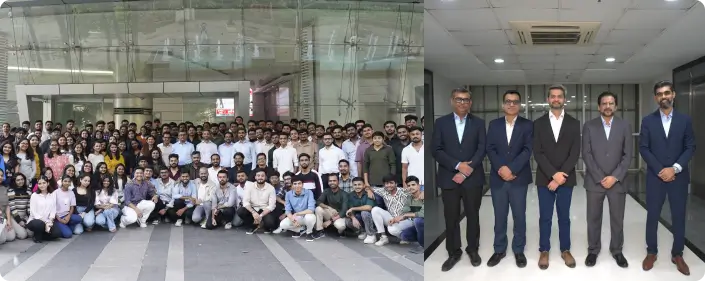
Our team consists of over 130+ SEO professionals who have experience working in the areas of technical seo, content marketing, ecommerce search, analytics, digital strategy and others. The breadth of this experience provides ecommerce clients with access to unique knowledge at specific points within their project. For example, prior to commencing development work on an ecommerce website, our team may assist in architecting the website’s structure and developing strategies to optimize product discovery. In addition, we can also provide insight into opportunities related to technology that will allow us to improve organic visibility and enhance the overall shopping experience for customers.

Rather than making ecommerce design decisions based solely upon personal preference or assumption, we rely on data collected about customer behavior, search performance and other metrics as well as business priorities to inform those decisions. By doing so, we can establish where efforts should be directed to maximize improvement potential while ensuring that all website enhancements remain in alignment with commercial objectives and budget constraints.
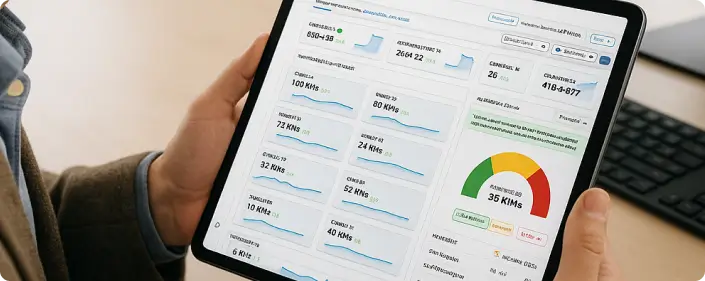
Each client receives a clear and structured roadmap outlining key milestones, priorities and deliverables at every stage of the ecommerce web design process. Our reporting is designed to clearly communicate to stakeholders exactly what was accomplished, what still needs to occur and where decisions need to be made. By providing transparency across all aspects of the design, development, seo, and optimization process, we ensure that each project remains aligned with previously agreed-upon business objectives.
Bring your goals, challenges, and ambitions. We’ll build a strategy designed to move your business forward.
Driving Measurable Growth for Ambitious Brands
Plans
Startups Business
Your Growth Toolkit
Small-Market Businesses, Competitive Niches
Your Growth Toolkit
Mid-Market Businesses, Competitive Niches
Your Growth Toolkit
Enterprise, Large E-commerce, Site Migrations
Your Growth Toolkit
Industry
Platforms


Solutions
Drive sustainable traffic and revenue growth
Optimize visibility across AI search engines
Future-proof search strategy with AI
Scale product visibility and online revenue
Turn visitors into measurable revenue growth
Increase app visibility and install growth
Dominate local search and nearby customers
Authoritative backlinks that boost search rankings
Scalable SEO solutions for large organizations
Build websites that improve engagement
Find and fix issues affecting search visibility
Drive organic growth with strategic content

Growth Manager - Superbalist
SEo Growth
An attractive ecommerce website is only one part of a successful online store. Design needs to support how customers search, compare, evaluate, and purchase products. Navigation, page speed, product information, trust signals, and SEO architecture all influence whether visitors can move from discovery to checkout smoothly.
AI tools








Growth Manager - Superbalist
Locations
FAQ’s
E-commerce in web design means creating websites that allow customers to browse products, compare options, add items to a cart, and complete purchases online. It combines visual design, user experience, product presentation, navigation, checkout, mobile responsiveness, and technical functionality to create a smooth shopping journey.
The right ecommerce web design company depends on your business goals, platform, product catalog, budget, and required integrations. When evaluating agencies, look at their ecommerce experience, UX approach, development capabilities, SEO expertise, portfolio, process, communication, and post-launch support rather than choosing based only on reputation or price.
Ecommerce website design costs vary based on the number of pages and products, design complexity, ecommerce platform, custom functionality, integrations, and development requirements. A simple store generally costs less than a fully custom ecommerce website with advanced product features, third-party integrations, and complex user journeys. Request a project-specific estimate based on your requirements.
An ecommerce web design agency plans and builds online stores around user experience and business goals. Services can include UX research, wireframing, UI design, ecommerce development, SEO architecture, platform integration, mobile optimization, testing, analytics setup, and conversion improvements.
An ecommerce website can take several weeks to several months to build, depending on its size and complexity. The timeline is influenced by the number of templates and products, custom design requirements, platform integrations, content readiness, development scope, testing, and feedback cycles. A clear project plan helps establish a realistic launch timeline.
Yes, an ecommerce website can be designed to support SEO from the beginning. This includes creating a logical site structure, crawlable navigation, descriptive URLs, internal linking, mobile-friendly pages, optimized content, appropriate structured data, and strong technical foundations. Building SEO into the design and development process can reduce the need for major fixes after launch.