










Home > Industries > SEO For Manufacturing
Manufacturing SEO agency helping suppliers and OEMs turn organic visibility into qualified Request for Quotations.

Driving Growth for Mid-Market & Enterprise Ecommerce Brands



Clients
Know The Basics
Manufacturing SEO is the practice of optimizing a manufacturer’s website so it ranks for the specific searches buyers actually run: product names, part numbers, material specifications, certifications, manufacturing capabilities, and supplier comparisons. It differs from general SEO because the searches themselves are highly technical. An engineer looking for “6061 aluminum CNC machining tolerances” needs a very different page than a procurement manager comparing supplier lead times.
A capable manufacturing SEO agency builds visibility around this technical specificity rather than generic industry terms no one actually searches. Done well, it turns organic search into a genuine source of qualified Request for Quotations, connecting engineers, procurement teams, and OEM buyers directly to the right product or capability page at the moment they’re actively evaluating suppliers.
BenEfits
An engineer searching a specific tolerance spec is already evaluating real suppliers.
A buyer browsing capability pages finds you before they ever request a quote.
Compliance questions get answered by a certification badge before procurement even asks.
Engineers want specs, procurement wants fit, and executives want proof you can scale.
A trade show booth empties after the event. A page built by a manufacturing SEO agency works daily.
A manufacturing SEO agency understands buyers research quietly for months before a Request for Quotation reaches your inbox.
Process
Every engagement starts with understanding what a manufacturer actually makes, who buys it, and how those buyers actually search, not a generic assumption about what “manufacturing SEO” should look like. Products, capabilities, and target industries get mapped first, since a custom fabricator serving aerospace needs a fundamentally different strategy than a distributor selling standard fasteners at volume.
We define specific buyer personas. This includes engineers, procurement teams, plant managers, and OEM buyers, since each searches differently and needs different content to move toward a Request for Quotation. Geographic footprint and distributor relationships get scoped alongside this, since a manufacturer selling through regional distributors needs a different approach than one selling direct.
Sales cycle length and Request for Quotation goals are discussed openly at this stage, since manufacturing buying decisions often involve multiple stakeholders and multiple research sessions before a quote request ever gets submitted. Revenue priorities round out this review, identifying which product lines or capabilities deserve the most attention from an SEO agency based on actual margin and strategic importance, not just search volume.
Site health gets audited first: crawlability, indexation, Core Web Vitals, and mobile usability all get reviewed together, since manufacturing sites often carry hundreds or thousands of product pages that can quietly develop technical debt over years of incremental additions.
Product pages and category pages get reviewed specifically for both search visibility and technical completeness, checking whether specs, certifications, and application details are actually present and structured in a way search engines can parse. Metadata and schema markup get audited alongside this, since manufacturing pages benefit enormously from structured data that clarifies product specifications, certifications, and availability.
We also review backlink profiles, mapping which pages have earned genuine industry authority versus which exist without any real external validation. Quote paths get tested directly as part of this same SEO audit service, confirming that a visitor who wants to request a quote can actually do so without friction. This audit becomes the technical foundation every later recommendation gets measured against.
Product keywords, process keywords, and material terms all get mapped together, exactly the groundwork a specialized manufacturing SEO agency treats as foundational, since manufacturing search behavior spans far beyond generic industry terms into highly specific technical language, exact alloy grades, tolerance specifications, certification standards, that buyers actually type into Google.
Part numbers and supplier-specific terms get included in this mapping too, since a buyer searching an exact part number or spec code is often closer to a Request for Quotation than one searching a broad category term. Long-tail queries capture this same specificity at scale, covering the countless variations of how different buyers phrase similar technical needs.
Increasingly, this research also considers AI prompts, the kind of question a buyer might ask ChatGPT when researching suppliers or comparing manufacturing capabilities, since that behavior is growing steadily in B2B procurement. Competitor gaps get mapped alongside all of this, revealing which technical searches competitors currently own and where a genuine visibility opportunity exists for any manufacturing company SEO initiative worth pursuing.
Product-family pages get planned around how buyers actually browse and compare, not around internal SKU organization that makes sense operationally but confuses a visitor trying to find the right component. Capability pages get built separately from product pages, since a buyer searching “CNC machining services” has a different intent than one searching a specific part number.
Application and industry pages round out this structure, addressing searches like “aerospace-grade fasteners” or “food-safe stainless fabrication” that combine a product type with a specific use case. Material pages get their own dedicated treatment too, since buyers frequently search by material specification before narrowing to a specific product.
Location pages get planned for manufacturers with multiple facilities or regional service areas, and internal linking gets mapped across all of this from the start. This helps in connecting related products, capabilities, and applications so both buyers and search engines understand how the full catalog fits together. This kind of coherent structure is built into a thoughtful website design service from day one, rather than retrofitted later.
Metadata, headings, and technical copy all get optimized around the exact terms buyers search, not generic industry language that could describe any manufacturer’s product line. Product details get expanded to include the specifications, certifications, and application context a technical buyer actually needs before requesting a quote.
FAQs get built directly onto product and capability pages, addressing the real questions engineers and procurement teams ask: lead times, minimum order quantities, certification documentation, rather than generic company FAQs disconnected from the actual buying decision. Schema markup gets layered in throughout, helping both search engines and AI systems understand exactly what’s being offered.
CTAs and quote paths get optimized specifically too, since a technically excellent page that doesn’t make requesting a quote obvious and frictionless still fails at its actual job. A genuinely strategic manufacturing SEO agency ties all of this together through dependable content marketing services, supporting the buyer’s full research journey rather than existing as a disconnected content silo.
Backlinks get pursued from genuinely relevant industry sources, since a manufacturing site earns far more trust from a mention in a trade publication or supplier directory than from a generic, unrelated link. Industry mentions and supplier links carry particular weight here, reflecting real business relationships rather than manufactured link equity built purely for search engines.
Trade publication features and association links round out the authority profile, since manufacturing buyers often trust industry-specific sources more than generic search rankings alone when evaluating an unfamiliar supplier they’ve never worked with before. Case studies documenting real project outcomes, tolerances hit, timelines met, problems solved build the kind of credibility that generic marketing copy simply can’t replicate.
Technical content assets, whitepapers, spec guides, comparison resources, earn links naturally while also serving as genuinely useful resources for buyers deep in the research phase, well before they’re ready to submit a Request for Quotation to any specific supplier on their shortlist.
Manufacturing buyers increasingly research suppliers through AI tools before ever visiting a website directly, asking ChatGPT to compare CNC machining capabilities or recommend suppliers meeting a specific certification requirement. Professional AI SEO services ensure a manufacturer’s capabilities show up clearly in these AI-generated answers, not just traditional search results.
Answer-led sections and structured summaries get built directly into product and capability pages, giving AI systems exactly the kind of clear, extractable information they need to cite a supplier confidently. Entity signals matter heavily here too, ensuring search engines and language models understand precisely what a manufacturer produces, what certifications it holds, and what makes it credible.
This is where dedicated LLM SEO services swoop in to extend beyond traditional optimization, targeting the specific technical questions buyers actually ask AI tools. Schema markup ties this together technically, and AI-search-ready content gets prioritized for the manufacturer’s highest-value capabilities and product lines specifically, not applied evenly across the entire catalog.
Reporting tracks the metrics that actually matter to a manufacturer: rankings and traffic, yes, but always alongside Requests for Quotations, quote requests, calls, and form fills connected back to specific product and capability pages. A page generating strong traffic but zero quote requests gets flagged for review, while a lower-traffic page converting well gets prioritized for further investment.
Product-line performance gets broken out specifically, since a manufacturer with multiple product families needs to know which lines are actually driving pipeline, not just an aggregate traffic number that obscures which capabilities are genuinely working. Lead quality gets tracked alongside volume too, distinguishing genuine Request for Quotation-ready inquiries from casual research traffic that was never close to a purchase decision.
Pipeline impact rounds out the reporting wherever CRM integration allows, connecting organic visibility all the way through to closed deals, giving stakeholders a genuinely clear picture of what a manufacturing SEO agency is actually contributing to revenue, not just visibility metrics disconnected from business outcomes.
Testimonials
Why Us?


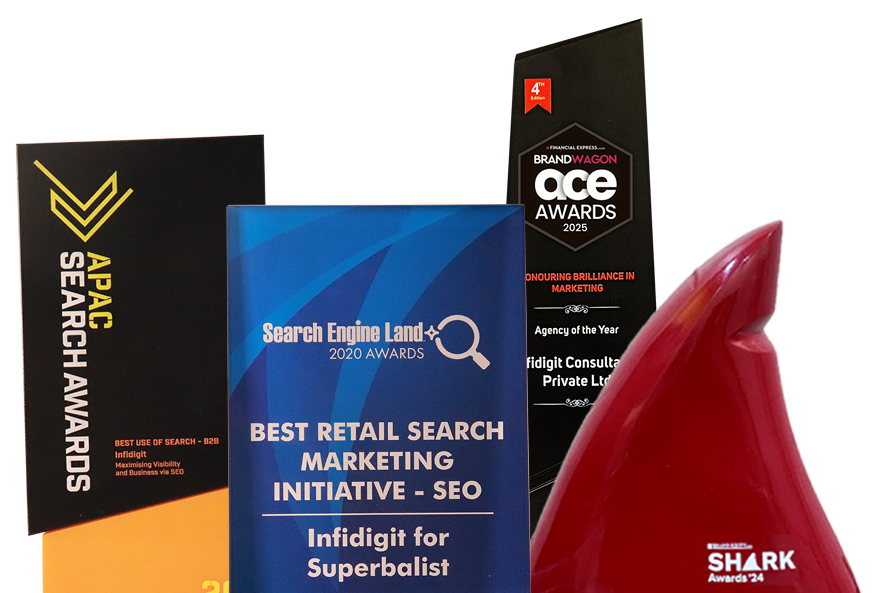
DIGIXX and the APAC Search Awards don’t hand out recognition for a nicely written submission; they look at whether rankings actually moved and whether that movement showed up in a client’s pipeline. Infidigit has cleared that bar across 100-plus industry recognitions, work judged on outcomes a manufacturer can actually point to.
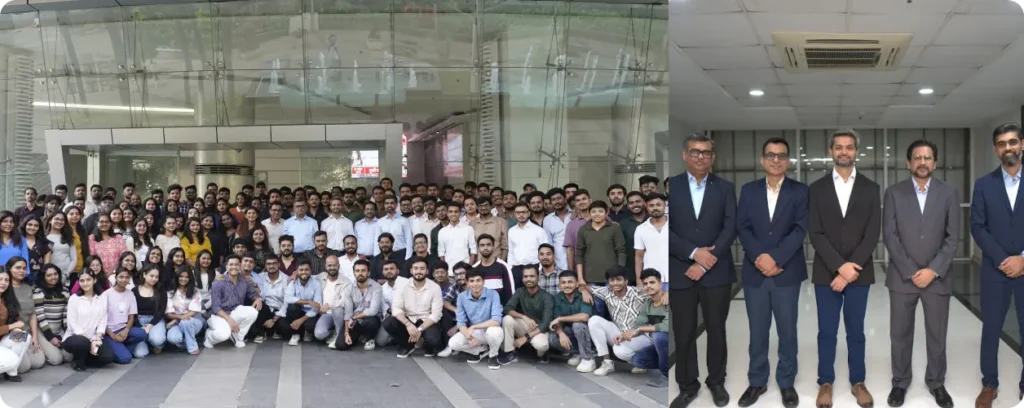
A team of 150-plus specialists spans technical SEO, content, and AI search strategy, meaning any manufacturing SEO agency engagement here gets built by people who understand both search engines and technical buyers. That range matters most when spec pages, schema, and authority building all need to move together.

Every recommendation traces back to real search behavior and Request for Quotation data, not assumptions about what industrial buyers want to read. A manufacturing SEO company built around evidence consistently outperforms one relying on generic B2B best practices applied without technical context.

Reports connect rankings and traffic directly to Request for Quotations, quote requests, and pipeline, giving stakeholders a clear view of what’s actually working. No vague visibility metrics, just manufacturing company SEO services measured the way a revenue-focused manufacturer actually needs to see them.
Plans
Startups Business
Your Growth Toolkit
Small-Market Businesses, Competitive Niches
Your Growth Toolkit
Mid-Market Businesses, Competitive Niches
Your Growth Toolkit
Enterprise, Large E-commerce, Site Migrations
Your Growth Toolkit
Industry
Solutions
Drive sustainable traffic and revenue growth
Optimize visibility across AI search engines
Future-proof search strategy with AI
Scale product visibility and online revenue
Turn visitors into measurable revenue growth
Increase app visibility and install growth
Dominate local search and nearby customers
Authoritative backlinks that boost search rankings
Scalable SEO solutions for large organizations
Build websites that improve engagement
Find and fix issues affecting search visibility
Drive organic growth with strategic content
We’ve worked with Infidigit for several years and have consistently been impressed by their expertise, professionalism, and results-driven approach. Their team has played a key role in improving our organic visibility and helping us achieve sustained growth. From Jan’25 to Aug’25, organic clicks grew by 138% and impressions by 119%, reflecting the strong results of our ongoing SEO efforts. It’s been a pleasure partnering with them.

Growth Manager - Superbalist
Locations
FAQ’s
Because most industrial buyers now research suppliers online long before ever picking up the phone or attending a trade show, and a manufacturer invisible in that research simply doesn’t make the shortlist. Engineers search for exact specifications, procurement teams compare supplier capabilities, and both groups increasingly start that research on Google rather than through a distributor relationship or a trade show floor.
Manufacturing SEO services ensure a company shows up for these searches at every stage, from early technical research through final supplier comparison, connecting that visibility directly to Request for Quotations and quote requests rather than just traffic. Without this visibility, even a highly capable manufacturer risks losing business to competitors who simply show up first in the searches that matter most.
Yes, and often quite effectively, particularly for manufacturers serving a specific regional market or operating as a preferred local supplier for certain industries. Local search signals, Google Business Profile optimization, location-specific pages, regional certifications and partnerships, help a manufacturer show up for “[product] manufacturer near me” or “[capability] supplier in [region]” style searches.
This matters even for manufacturers with a national footprint, since many buyers still prefer working with a supplier who’s geographically closer for reasons ranging from shipping cost to easier facility visits. Combining local SEO fundamentals with the broader technical work done by a capable SEO agency for manufacturing creates a genuinely complete visibility strategy, rather than treating local search as an afterthought.
Yes, though it requires structuring content specifically for how AI systems extract and cite information, not just traditional keyword optimization. Structured data, clear entity signals, and answer-led content sections all help AI tools like Google’s AI Overviews, ChatGPT, and Perplexity understand exactly what a manufacturer produces and cite it accurately when a buyer asks for a recommendation.
This matters increasingly in B2B manufacturing specifically, since technical buyers researching complex specifications or comparing supplier capabilities are turning to AI tools earlier in their research process than they were even a year ago. A manufacturing SEO agency that structures content with genuinely citation-worthy specificity gets its clients ahead of competitors still treating this as an afterthought rather than core strategy.
Rankings and traffic matter, but they’re only the starting point for any genuine SEO Service worth paying for. Real measurement connects visibility all the way through to Request for Quotations, quote requests, and eventually closed pipeline, since a manufacturer generating strong traffic but zero quote requests isn’t actually succeeding at the goal that matters most.
A complete manufacturing SEO agency engagement tracks product-line performance specifically too, identifying which capabilities and product families are actually driving qualified inquiries versus which pages generate traffic without meaningful business impact. Lead quality gets measured alongside volume, distinguishing genuine Request for Quotation-ready inquiries from casual research traffic. Where CRM integration allows, revenue and closed deals get connected back to specific pages and keywords, giving the clearest possible picture of ROI.