











Driving Growth for Mid-Market & Enterprise Ecommerce Brands




Clients
BenEfits
A visitor decides whether to trust you within seconds of the page loading.
Visitors on their phone shouldn't have to pinch and zoom to read anything.
Rankings your old site worked years to earn shouldn't disappear during a redesign.
Every extra click between a visitor and your form loses you real customers.
Load time drops matter: a one-second faster page converts noticeably better.
Your team should be able to update a page without calling a developer.

Challenges
A quick side-by-side comparison usually settles this fast. Pull up three direct competitors: does your site load as fast, look as current, and communicate as clearly as theirs? If a prospect bounces between four tabs before calling anyone, whichever site feels most trustworthy in that moment usually wins the inquiry.
Design trends shift faster than most businesses update their sites. This gap costs more than pride. It costs the benefit of the doubt a visitor extends to a business that looks current and capable, which is exactly the gap most website redesign services are hired to close.
Traffic and conversion are two separate problems, and it’s worth figuring out which one a business actually has before assuming the whole site needs rebuilding. A site pulling decent visitors but generating few actual leads usually points to friction somewhere in the path: a buried contact form, a confusing CTA, or a page that never quite explains what happens after someone reaches out.
Trust signals matter here too. Visitors comparing several options quietly favor the site that feels most credible, with clear pricing, visible reviews, and a professional layout, over one that leaves them guessing.
A sudden drop like this deserves urgent attention. It usually means a past update introduced a technical issue, not that rankings are simply fluctuating the way they normally do. Broken redirects, accidentally deindexed pages, or a website migration service engagement that skipped proper URL mapping can quietly erase years of accumulated ranking equity within weeks.
Start with Google Search Console: a sudden drop in impressions or clicks that lines up with a recent site change is the first clue worth chasing. Crawl errors and indexation issues often show up there before the traffic loss becomes fully visible in analytics.
Mobile traffic now makes up for the majority of visits for most businesses, and a site that struggles there is losing the largest share of its actual audience. Slow load times, text too small to read comfortably, or buttons too close together to tap accurately all push visitors toward the back button within seconds.
Core Web Vitals, LCP, INP, and CLS specifically capture this experience in measurable terms that search engines actually use for ranking. A poor score here doesn’t just frustrate visitors; it also actively works against rankings.
A mobile-first redesign, built for the smaller screen first rather than shrunk down from desktop, usually resolves both problems together.
When every small content change requires calling a developer, that friction quietly discourages a team from updating the site at all, and stale content compounds over time. A blog that hasn’t published in eight months or a pricing page still showing last year’s numbers both trace back to this same root cause.
An outdated or overly rigid CMS is usually the culprit, not the team’s lack of effort. The right setup lets someone without technical skills update a blog post, swap a banner, or add a new service page in minutes.
Yes, more than most business owners realize, since a website often functions as a first impression before a single conversation ever happens. A dated design signals something to a visitor, whether or not it’s true, that the business itself might be behind the times too.
This matters most in categories where trust drives the buying decision. A visitor comparing two similar businesses will often default to whichever one looks more current and put-together, even if the underlying service quality is identical.
Perception isn’t the whole story, but it’s enough of one that an outdated site quietly costs business regardless of how good the actual work is.
Usually it comes down to one of a few things: unclear value proposition, a CTA that’s hard to find, or a page that simply takes too long to explain what the visitor actually gets. If someone can’t tell within a few seconds what a business does, they leave, regardless of how good the underlying service actually is.
Page structure plays a bigger role than most business owners expect. A wall of text with no clear path forward asks a lot of a visitor’s patience, especially on mobile.
Heat map and session recording tools often reveal exactly where visitors stall, which is usually more useful than guessing.
Almost certainly, since design and conversion rate are far more tightly linked than most businesses assume. Confusing navigation, inconsistent CTAs, or a checkout and form flow with too many steps all quietly bleed conversions that better design would simply capture.
A/B testing specific elements like headlines, CTA placement, and form length usually reveals which design choices are actually costing conversions versus which ones just look outdated but don’t meaningfully affect behavior. Not every design flaw matters equally.
Treat design as a conversion lever rather than just an aesthetic choice, and the results of a redesign tend to look meaningfully different than a cosmetic refresh ever produces on its own.
Process
What is the current site actually failing to do? That’s where every website redesign service engagement starts, not a generic assumption about what a “modern” website should look like. Business goals, target audience, and competitive positioning get mapped first, since a law firm and an ecommerce brand need fundamentally different redesign priorities even if both sites look equally dated.
We audit UX friction points, SEO health, conversion data, and the technical limitations of the existing platform across every dimension that matters. This isn’t a surface glance. It means watching where visitors drop off, which pages carry the most organic value, and what the current CMS can’t do that the business actually needs.
Our experts review competitor sites—not to copy them—to understand what visitors are comparing this site against every time they land on it. A redesign built without this context risks fixing the wrong problems entirely, solving for aesthetics when the real issue was navigation, or vice versa.
This audit becomes the foundation every later decision gets measured against, rather than a formality completed before the “real” design work begins.
Before a single page is redesigned, we benchmark current rankings, traffic, and conversions in detail. This is the baseline to determine whether the redesign actually protects or damages organic performance over time. Top-performing pages are flagged specifically, since these carry disproportionate ranking value and need the most careful handling during the transition.
Our team reviews backlink profiles and indexed URLs to map exactly which pages have earned external links or accumulated search visibility over time. Losing one of these pages, or changing its URL without a proper redirect, can erase years of accumulated authority in a single launch.
We document all technical issues at this stage as well, so pre-existing problems don’t get blamed on the redesign later, and so genuine improvements get properly credited. As part of a complete SEO Service, ranking-sensitive pages, especially the ones driving meaningful traffic or revenue right now, get identified and flagged for extra caution throughout the entire redesign process, not just at launch.
Navigation and page hierarchy get planned around how visitors and search engines both actually need to find content, not around how the internal team happens to think about the business. A confusing structure hurts both audiences simultaneously, even when neither problem looks related on the surface.
URL structure is carefully planned, since this is where SEO risk concentrates most heavily during a redesign. Service pages, product pages, blog content, and location pages all need a logical hierarchy that search engines can crawl efficiently, and that reflects genuine topical relationships, not just organizational convenience.
Internal linking gets mapped during this same planning phase, not left as an afterthought once pages are already built. Done well, it distributes ranking authority intentionally across the site, guiding both visitors and search engines toward the pages that actually matter to the business, instead of leaving that distribution to chance and hoping it sorts itself out after launch.
Wireframes map out exactly how a visitor moves through each key page before a single pixel of actual design gets touched, focusing entirely on structure and flow rather than visual polish. This deliberately separates the “does this work” question from the “does this look good” question, which prevents beautiful pages that quietly confuse visitors.
CTA placement gets planned with real intention here, positioned where a visitor is actually ready to act rather than wherever looks visually balanced. Trust sections, reviews, credentials, case studies, get placed at the exact points in a page where hesitation typically peaks, not just clustered at the bottom as an afterthought.
Content hierarchy follows the same logic: the most important information for a visitor’s actual decision gets the most prominent placement, not necessarily what the business finds most interesting to say. This is the kind of detail thoughtful website redesign services get right and rushed ones skip. Mobile-first structure ensures phone visitors, most of them by volume, get an experience built for them specifically, not squeezed into a desktop layout.
Structure becomes a brand-aligned look here, one that still respects everything the UX planning already established rather than overriding it for the sake of visual polish. Color, typography, and imagery all get chosen to reinforce trust and brand recognition, not just to look current for its own sake.
Content gets written and aligned alongside the design rather than dropped in afterward as filler text waiting to be replaced. Every page gets built around genuine user intent and the SEO keywords that intent maps to, ensuring the page a visitor lands on actually answers the question that brought them there.
Conversion goals stay central throughout this step too. A beautifully designed page that doesn’t clearly guide a visitor toward the next action, whether it’s a call, a form, or a purchase, hasn’t actually accomplished what the redesign set out to do, no matter how polished it looks in a design review with the internal team.
Responsive pages get built to perform consistently across every device, not just to look acceptable on a few common screen sizes tested during QA. Reusable components speed up future updates significantly, letting the team add new pages later without rebuilding shared elements, headers, footers, and CTAs from scratch each time.
CMS templates get configured specifically for how the business will actually use the site day to day, forms, integrations, and third-party tools all connected and tested during this phase rather than patched in after launch under time pressure. A capable website development service provider treats speed as a core requirement here, not an afterthought bolted on once the site is already built and running slow.
SEO-friendly code underlies all of it: clean markup, proper heading structure, and fast-loading templates that give the redesign a real technical foundation to build search visibility on, rather than a beautiful site that quietly fights the SEO work happening around it.
Before launch, every redirect gets validated individually rather than spot-checked in a sample, since a single broken redirect on a high-value page can undo months of careful SEO benchmarking work in a single click. Metadata, schema markup, and XML sitemaps get reviewed line by line against what was documented during the benchmarking phase.
Robots.txt deserves a careful check too: nothing important should be accidentally blocked from crawling, since that’s an easy mistake that can quietly tank a redesign’s search visibility right at launch. Forms, analytics, and conversion tracking events all get tested directly rather than assumed to be working just because the code looks correct.
Real devices, not just desktop previews, are where browser compatibility and page speed actually get validated, since a preview can easily miss how a page behaves on a mid-range phone. Mobile layout gets checked with the same rigor as desktop, since this is exactly where most website redesign services‘ QA gaps tend to hide until a customer finds them first.
Testing every form live, submitting the updated sitemap to Google Search Console, confirming the site is actually crawlable in its final live state and not just in staging; that’s what launch day itself looks like. This isn’t a single moment; it’s the start of an active monitoring window that continues for weeks afterward.
Errors get fixed immediately as they surface rather than batched for a later update, since search engines and visitors alike form early impressions of the new site quickly. Rankings get validated against the pre-launch benchmark specifically, confirming the website redesign services work protected the SEO equity it was supposed to protect rather than quietly eroding it.
A technically successful launch that quietly tanks form submissions or checkout completion hasn’t actually succeeded at all, so conversions get reviewed with the same care as rankings. A follow-up SEO audit and ongoing CRO service work catch what a standard QA pass tends to miss, filling in gaps a purely visual website design service review wouldn’t necessarily surface. Performance gets tracked over the following weeks, not just the first 48 hours.
Testimonials
Why Us?

Infigrowth, Infidigit’s proprietary SEO platform, sits behind every redesign, benchmarking rankings and AI Overview visibility before launch and tracking them continuously afterward. That means SEO risk gets caught with live data, not discovered three months later when a client asks why organic traffic quietly dropped.

SMX, the APAC Search Awards, the ET BrandEquity Shark Awards: this recognition reflects redesign and SEO work judged on measurable outcomes, not submissions alone. For a business trusting years of accumulated rankings to a website redesign services partner, that track record matters.
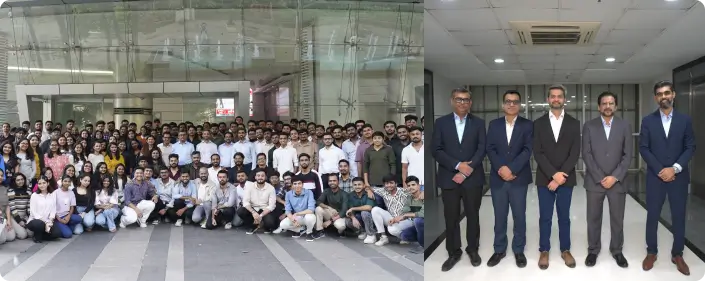
A team of 150-plus specialists spans design, development, and technical SEO, meaning a redesign gets built by people who understand ranking risk as part of a genuine website redesign service agency, not just visual trends. That combination consistently prevents the two disciplines from working against each other during a rebuild.

Design decisions trace back to real user behavior and conversion data, not assumptions about what looks modern. What actually moves visitors toward action shapes every website redesign services engagement here, not current design trends borrowed from unrelated industries.

Rankings, traffic, and conversions all connect directly back to the redesign itself in every report, giving stakeholders a clear before-and-after view of what changed and why. No vague launch announcements, just website redesign services measured the way a results-focused business actually needs to see them.
Plans
Startups Business
Your Growth Toolkit
Small-Market Businesses, Competitive Niches
Your Growth Toolkit
Mid-Market Businesses, Competitive Niches
Your Growth Toolkit
Enterprise, Large E-commerce, Site Migrations
Your Growth Toolkit
Industry
Platforms


Solutions
Drive sustainable traffic and revenue growth
Optimize visibility across AI search engines
Future-proof search strategy with AI
Scale product visibility and online revenue
Turn visitors into measurable revenue growth
Increase app visibility and install growth
Dominate local search and nearby customers
Authoritative backlinks that boost search rankings
Scalable SEO solutions for large organizations
Build websites that improve engagement
Find and fix issues affecting search visibility
Drive organic growth with strategic content

Growth Manager - Superbalist
SEo Growth
Traditional redesign agencies still measure success almost entirely in blue-link rankings and page speed scores, treating AI Overviews and generative search as an afterthought bolted onto the SEO checklist. That’s already outdated. A professional website redesign services approach that doesn’t account for how AI systems read, understand, and cite a website is optimizing for half the search landscape while ignoring the half that’s growing fastest.
This starts at the structural level. Pages get built with direct answers near the top, summary blocks, clear heading hierarchies, and FAQ sections that AI systems can extract cleanly, rather than burying the actual answer three paragraphs into dense marketing copy. Comparison sections and clear definitions get built in deliberately, since these are exactly the content formats AI Overviews and answer engines pull from most reliably.
Service pages, product pages, blogs, and resource pages all get restructured around the specific questions users actually ask, not just the keywords those questions technically map to. A service page that clearly answers “what does this cost” and “how long does this take” performs very differently in AI-generated answers than one that only describes features in generic marketing language.
Entity clarity becomes a structural requirement here, not an afterthought. Brand consistency, precise service definitions, and a genuinely substantive About page all help AI systems understand exactly what a business does and why it’s credible. Even reviews, citations, and internal links play into this, since AI systems weigh exactly this kind of topical depth heavily when deciding which sources to trust and cite.
Simple, structured explanations consistently outperform dense, jargon-heavy copy when it comes to AI readability. Consistent facts stated the same way across every page, descriptive headings, clean HTML, and proper schema all make a site easier for language models to parse accurately, reducing the risk of an AI system getting a fact wrong or skipping the page entirely because it’s too ambiguous to summarize confidently.
Every major content section gets planned with schema in mind from the wireframe stage onward; FAQ, Organization, LocalBusiness, Service, Product, Article, Breadcrumb, and Review schema all mapped to the sections that will actually support them. Retrofitting schema onto a finished site is possible but inefficient; planning for it during the redesign itself means every page launches genuinely ready for how search actually works today.
This is the real differentiator most redesign agencies still miss. A beautiful, fast, technically sound website that isn’t built for how AI systems actually read and cite content is solving yesterday’s problem while today’s buyers are already asking ChatGPT for a recommendation. The businesses redesigning with this in mind now won’t just have a better-looking site. They’ll have one that’s actually built to be found, understood, and trusted by the tools shaping how people search next.
AI tools







Growth Manager - Superbalist
Locations
FAQ’s
Think of it less as building a new site from scratch and more as a structured upgrade, keeping what already works like rankings, brand recognition, and existing content value, while fixing what doesn’t: outdated design, poor mobile experience, a CMS nobody enjoys using. The full process behind website redesign services spans auditing the current site, planning new architecture, designing and developing the new experience, and protecting SEO performance throughout the transition.
A simple visual refresh only goes so far, updating colors and fonts without touching the underlying structure, technical health, or conversion strategy. A genuine redesign addresses all of these simultaneously, treating design, SEO, and conversion as connected priorities rather than separate projects handled by different teams with no coordination.
Cost depends heavily on scope: a five-page business site redesign looks nothing like a fifty-page ecommerce rebuild with custom functionality. Most professional redesigns land somewhere between a few thousand dollars and well into five figures, depending mostly on complexity and page count.
Custom design work, ecommerce functionality, and integration requirements all push cost upward, while a more templated approach with fewer custom elements keeps it lower. SEO risk mitigation adds cost too, but it’s the kind of investment that protects existing value rather than adding a nice-to-have feature.
The more useful question isn’t the raw number, but what specific deliverables, SEO safeguards, and post-launch support come bundled with that investment.
Most businesses should seriously consider a redesign every three to five years, since design standards, mobile behavior, and technical best practices all shift meaningfully over that timeframe even without any single dramatic trigger event. Waiting for the site to feel obviously broken usually means it’s already been costing conversions quietly for a while.
Specific signals matter more than a fixed timeline: declining conversion rates despite steady traffic, a CMS the team actively avoids using, or a competitor whose site now clearly outshines yours in a side-by-side comparison. Any one of these, brought to a website redesign services company for an honest assessment, can justify moving redesign planning up the priority list, regardless of how recently the last redesign happened.
It can in either direction, which is exactly why SEO risk management has to be part of the redesign process itself, not an afterthought handled after launch. Done carelessly, a redesign can tank rankings through broken redirects, lost internal links, or accidentally deindexed pages that once carried real search value.
Done properly, with URL mapping, redirect validation, and technical health checks built into every phase, a redesign typically protects existing rankings while creating room for meaningful improvement, since the new technical foundation usually performs better than whatever limitations the old site was quietly working around.
The difference almost always comes down to whether SEO was planned into the website redesign services from the start or bolted on right before launch.
Most redesigns take between two and six months from initial audit to launch, depending heavily on site size, custom functionality requirements, and how quickly content and approvals move on the client’s side. A simple five-to-ten page site moves faster than an ecommerce platform or a site with dozens of location pages.
Content readiness affects timeline more than most businesses expect going in. A redesign waiting on new copy, product data, or final approvals can stall for weeks regardless of how quickly the design and development work itself moves. Planning content alongside design from the start, rather than after wireframes are finished, keeps most projects meaningfully on schedule.
The first month demands close monitoring against the pre-launch benchmark for rankings and organic traffic because optimization issues appear at this stage. Check Google Search Console regularly too, watching for crawl errors or unexpected coverage issues that QA didn’t catch.
Forms, checkout flow, and conversion tracking all deserve direct testing too, since a form that looks fine but silently fails to submit can go unnoticed for weeks. Page speed and mobile experience should get re-verified under real-world conditions too, since staging environments don’t always reflect what visitors experience at launch.
An ongoing website maintenance service relationship afterward catches the smaller issues like broken links, plugin updates, and evolving content needs before they compound into problems as noticeable as the ones that triggered the redesign in the first place.