










Driving Growth for Mid-Market & Enterprise Ecommerce Brands




Clients
BenEfits
Determine the causes of losses by thoroughly analyzing traffic, updates, technical signals, and affected pages.
Identify manual actions quickly and develop a transparent recovery plan in line with Google's recommendations.
Discover malicious backlinks, unnatural trends, and link threats that de-rank and reduce organic visibility.
Guard valuable authority and only disavow truly harmful backlinks when needed.
Make content more valuable by eliminating spam cues and optimizing pages based on search intent.
Implement prioritized recovery measures that regain rankings, reestablish trust, and achieve sustainable organic growth.

Challenges
When there is a sudden drop in ranking due to a Google update, it does not always imply that your site has been manually penalized. Google has, in most instances, used its fundamental ranking mechanisms to merely re-rate your site with more focus on the usefulness of content, technical performance, authority, and user experience. This is the reason why it is important to know Google search updates prior to implementing any significant changes in the area of SEO.
An effective diagnosis should include comparing the losses of traffic to the verified update dates, reviewing Google Search Console, looking at the movements of the keywords, evaluating the impacted groups of pages, and determining whether the drop is on the entire site or in selected sections. Businesses tend to complicate recovery by taking pages away or disavowing unproven links. Professional Google penalty recovery services commence with forensic analysis to find out precisely what and why has changed, so that all suggestions are based on the real cause rather than a symptom that can be entirely unrelated.
The best starting point is the Manual Actions report of Google Search Console. When Google takes action against your site manually, the violation will be clearly indicated in the report, and, in many cases, the pages or areas involved. Nevertheless, a lot of ranking losses happen automatically without any notification. Symptoms can be similar to an update of the algorithm, indexing, server errors, low content quality, or technical SEO problems.
An experienced Google penalty recovery consultant searches through Search Console data, crawl logs, indexing patterns, backlink information, traffic fragmentation, and ranking histories to differentiate between a manual penalty and an algorithmic drop. This difference is critical due to the fact that the recovery plan is different. Failing to diagnose the problem correctly usually results in businesses wasting months correcting the wrong issues, without the actual cause of the problem suffocating organic visibility and revenue.
The possibility of a direct manual penalty is low, but duplicated content may heavily decrease the search performance of your site. When the same keywords are used by several pages or the information on the pages is almost similar, the search engines cannot decide which page should be ranked. This causes the dilution of authority, wastage of crawl resources, and even valuable pages might never be ranked to their full potential. This is common in ecommerce sites, location pages, descriptions of manufacturer products, and dynamically generated URLs.
Recovery can be used to detect duplicate clusters, to consolidate overlapping content, to add canonical tags, to enhance internal links, and rewrite pages to offer unique value that matches user intent. It is not merely to delete duplicate pages, but rather to establish a more transparent web architecture which will allow search engines to know what content should have precedence and provide visitors with a more enjoyable experience.
Dealing with bad backlinks is a valuable recovery measure, but it does not often help rankings in itself. The ranking mechanisms at Google consider hundreds of quality signals at the same time, such as content depth, topical authority, internal linking, technical health, user engagement, and trust of the websites. Unless these weaknesses are addressed, the rankings might still not improve despite a thorough backlink cleanup.
Moreover, deleting bad links does not necessarily restore the credibility your website could have lost over the years. A professional SEO penalty removal company comes up with a holistic recovery plan, which integrates backlink cleanup with content fix, technical optimization, and reestablishing authority. Instead of just eliminating the bad signals, professional Google penalty recovery services strive to enhance the good signals that Google considers when once again evaluating the long-term quality of the website, which helps rankings regain positions in a sustainable and quantifiable manner.
It is much more difficult to recover a manual action than to repair a single problem. It starts with going through the Manual Actions report on Google Search Console to know precisely which Google guideline was breached. This can include the removal of unnatural backlinks, the removal of hidden text, the re-writing of low-quality content, the correction of structured data abuse, or the spam-related problems, depending on the action taken. All the remedial measures are to be recorded since Google would want to see clear indications that the issue has been dealt with comprehensively before going back to the site.
A professional Google penalty removal service will also draft an elaborate reconsideration request to elaborate on what and how the problem occurred, the actions taken to correct it, and the measures taken to ensure the same does not happen again. An open, evidence-based recovery procedure would go a long way in enhancing the possibility of successful lifting of the manual action and regaining the long-term search visibility.
Not every low-quality backlink is harmful, which is why backlink audits require expertise rather than assumptions. Naturally, any poor-quality links are automatically disregarded by Google algorithms, yet the manipulative trends, such as paid links, private blog networks, excessive use of keywords in anchor text, or mass link schemes, can be considered a violation of Google Spam Policies and harm the rankings. The task is not to denounce all the suspicious backlinks–it is to discover patterns that actually indicate manipulation.
An extensive backlink audit will review referencing domains, past acquisition of links, anchor text variety, topical relevance, and overall quality of links, and then suggest removal or disavowal. This cautious method retains useful authority and yet removes truly risky backlinks, enabling websites to recuperate without inadvertently removing links that remain beneficial to general search results.
The time to recover depends on the issues that affect each site. A manual action can be reinstated in a few weeks following approval of a reconsideration request by Google, and algorithmic recoveries can take months as Google systems reassess the quality of content, authority, and technical health. Recovery speed depends on the complexity of your site, the seriousness of the problems, the competitiveness of your industry, and the extent to which the underlying problems are addressed.
Businesses must also know that the rankings do not come back in a short time. Sustainable enhancements come because the search engines keep crawling the site and reassessing it as time progresses. Professional SEO penalty recovery services are based on establishing an enduring foundation that can deliver over time rather than pursuing immediate ranking spikes, and as such, building a stronger foundation that will work over time as the algorithm undergoes future changes.
The use of AI in content creation does not necessarily lead to a Google penalty. Google is concerned with the quality, originality, and usefulness of the content, rather than the production of the content. Thin pages, repetitive pages, pages that are factually incorrect, or pages that are there to manipulate rankings, have far greater chances of being de-ranked by Google quality systems.
Adhering to the Helpful Content Guidelines of Google implies creating people-first content that is demonstrably expert, answers user questions in a comprehensive manner, and has a unique value. AI will be able to speed up the process of content creation, yet each page must still be reviewed by experts, fact-checked, edited, and optimized before being published. Companies that integrate AI effectiveness and robust editorial control always achieve better results as compared to those that depend on mass-produced, unfiltered content that is not produced with the users in mind.
Process
Any successful recovery begins with the determination of when rankings or traffic started to fall. We gather historical GA4 information, Google Search console reports, landing pages affected, key performance indicators, crawl logs, migration history, CMS updates and changes in plugins, and recent SEO efforts to create an accurate timeline of events. This will be a chronological method of isolating correlation and causation, so that businesses do not fix what might not be the cause of the actual decline.
A lot of websites go through numerous changes over a relatively short time frame, e.g., redesign of a site, a server change, content modification, or backlink campaign. It is hardly possible to find out the real trigger without recording every event. We do not base our Google penalty recovery services on assumptions, but on evidence, which forms a solid ground for all the decisions made concerning the recovery. This in-depth research also underpins the future SEO audit services, where we can see recurring trends and avoid the scenario of such ranking losses in the future.
After setting the timeline, the second step is to identify the reason as to why the decline has taken place. We then examine Google Search Console to determine whether there are any manual actions, indexing problems, crawl errors, or security warnings. When no manual action is present, we compare ranking drops with proven Google algorithm changes as we examine impacted keyword sets, page templates, device performance, and technical changes. This will assist in identifying the problem: whether the problem is due to the quality of the content, backlinks, technical SEO, user experience, or more general algorithmic adjustments.
Proper diagnosis is necessary since each road to recovery is unique. A site impacted by a Helpful Content Update needs a much different approach than one that has been hit by unnatural backlinks or indexing issues. Our Google penalty recovery services will be focused on finding out the exact cause and then implementing remedies such that recovery activities do not go wild. The investigative process also reveals opportunities in which enhanced technical SEO services can make websites resilient to future algorithm updates.
Recovery of penalties involves a much greater analysis than a normal review of a website. In our technical audit, we will review technical SEO, crawlability, indexation, internal linking, structured data, Core Web Vitals, the quality of backlinks, relevance of content, duplicate pages, redirect chains, canonical, tracking accuracy, and performance of competitors. We also measure the relationship of crawlers of Google with your site to reveal any technical problems that are lurking in the shadows and undermining rankings several updates after an algorithm change or manual intervention.
In addition to problem identification, we focus more on how individual problems relate to each other. Bad content and crawl inefficiencies, bad internal linking, or old architecture can usually form a significantly bigger visibility issue than any one of these factors by itself. This forensic method is backed by full-scale SEO audit services and website development services that will present a full recovery blueprint that considers root causes rather than the symptoms themselves, making recovery efforts deliver sustainable enhancement rather than transitory improvements in rankings.
All the issues that are identified in the course of an audit should not be given the same attention. The key to successful recovery is the prioritization of the problems according to their real effect on crawling, indexing, trust, user experience, and rankings. We isolate critical blockers (i.e., indexing failures, serious technical errors, spam signals, or significant content quality problems) and low-priority optimizations that may be handled afterward. This systematic approach will guarantee the allocation of resources in areas where they will provide the highest value of recovery initially.
A recovery strategy that is implemented in phases also reduces unwarranted risk since it does not cause extensive changes on the website and thereby creates further instability. After solving high-impact problems, we gradually solidify the site with better architecture, better-polished content, and easier user experiences. This prioritization system, with the help of on-page SEO services, content marketing services, and our Google penalty recovery services, will help achieve faster recovery and develop a better and more resilient website that will be able to support long-term organic growth.
After identification of the root causes, we start fixing the first priority ones in a systematic order. This involves checking the quality of backlinks, creating disavow files when needed, rewriting thin or outdated pages, deleting duplicate pages, fixing redirect chains, fixing schema markup, troubleshooting indexation problems, and internal linking. Every activity is carried out with a clear idea of how the ranking systems at Google operate on trust, relevancy, and usability, so that every enhancement would help the company in the long-term recovery instead of short-term benefits.
Recovery is not about the number of changes that are made but rather the right ones. We thoroughly test each implementation so that technical enhancements can be made to provide more robust crawling and indexing, and content improvements to meet user intent. Our on-page SEO services, technical SEO services, and AI SEO services cooperate to enhance both the conventional search visibility and the new AI-based search experiences. It is an authoritative, resilient, and stable approach that can make the website become much more authoritative and be able to sustain steady rankings even after the recovery process is over.
Transparency and accountability are key in the recovery of penalties. All steps during the recovery process are well-documented, such as the backlinks removed, outreach efforts, disavowal requests, rewritten content, technical solution, impacted URLs, date of implementation, screenshots, and validation reports. Having a change log will provide a full audit trail, which will enable our team, as well as the client, to know precisely what has been fixed and why each step was required.
This documentation is especially useful in case a reconsideration request has to be made, since Google anticipates that the violation has been addressed in a more than superficial manner. It also assists in continuing to optimize it as it gives context to subsequent audits and updates to algorithms. Along with website development services, careful documentation is another way to ensure that recovery decisions are evidence-based and that a reproducible system for maintaining long-term search health and reducing future ranking risks is established.
In case the manual action has been inflicted on the site, a reconsideration request is one of the most crucial steps of recovery. This, however, should come after all the identified problems are completely addressed and Google has allowed some time to re-crawl the fixed pages. We present a detailed report justifying the initial problem, keeping the record of all the corrective actions, expressing the preventative steps, and showing the actual intention to adhere to Google Search Essentials.
Weak or incomplete reconsideration requests will typically slow down recovery since rejected requests will force businesses to recycle the review process, having made further corrections. We have a team that thoroughly authenticates each and every improvement prior to submission, so nothing is left out. With the help of LLM SEO services, we can also enhance the content clarity and the quality of websites beyond the instantaneous recovery demand, enhancing both the conventional search operation and the appearance in the current AI-enhanced search interfaces.
Recovery doesn’t end once fixes have been implemented or a manual action has been revoked. The algorithms at Google keep re-analyzing websites over time, and constant monitoring is critical in tracking progress and discovering new opportunities. Our key metrics include keyword ranking, organic traffic, crawl, indexation, Core Web Vitals, backlinks, content interaction, and conversion, which help us comprehend the nature of search visibility after recovery. This continuous evaluation assists in differentiating between temporary changes in ranking and valuable long-term enhancements.
With authority starting to recover, we change our emphasis on recovery to sustainable growth, which is reinforced by content quality, enhanced user experience, increased topical authority, and technical performance. Our Google penalty recovery services undergo a transformation to a proactive optimization service with content marketing services to ensure the site not only gains lost visibility but also continues to strengthen with every algorithm update and generates qualified organic traffic, leads, and long-term business value.
Testimonials
Why Us?

Our proprietary InfiGrowth platform uses AI-focused insights with professional analysis to show recovery opportunities more quickly and focus on the fixes that have the biggest impact. This smart strategy assists in getting rid of the guesswork and speeds up your journey towards sustainable organic growth.

The success of our activities is evident in the quantifiable results that we provide to businesses in various industries. By combining technical expertise, data-driven decision-making, and ethical SEO practices, we’ve earned the trust of leading brands seeking long-term visibility instead of short-lived ranking improvements.
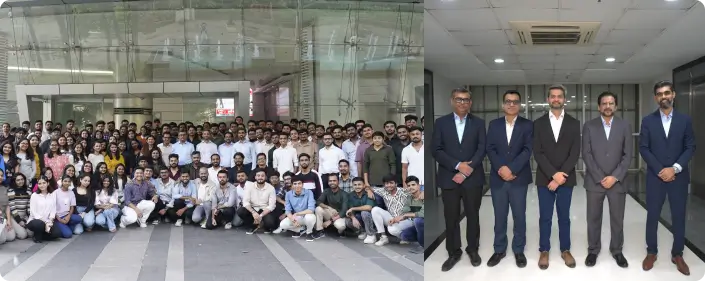
By selecting our Google penalty recovery services, you can enjoy the support of a multidisciplinary team of SEO consultants, technical experts, content analysts, developers, and data analysts who work together to address intricate ranking problems and create a more robust and future-proof search presence.

Recovery is only the beginning. We evaluate success based on meaningful business measurements like recovered ranking, organic traffic, qualified leads, conversions, and revenue growth, and make sure that each optimization is directly related to your long term business goals and not based on vanity measures.
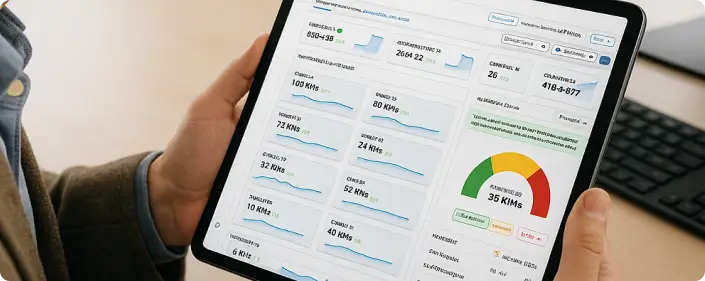
Our monthly reports not only rank the updates but also tell you what was done, why it is important, how your site is performing, and what opportunities there are in the future. The progress of your recovery will be fully visible to you at any moment, with the insights being presented in an easy-to-understand manner.
Plans
Startups Business
Your Growth Toolkit
Small-Market Businesses, Competitive Niches
Your Growth Toolkit
Mid-Market Businesses, Competitive Niches
Your Growth Toolkit
Enterprise, Large E-commerce, Site Migrations
Your Growth Toolkit
Industry
Platforms


Solutions
Drive sustainable traffic and revenue growth
Optimize visibility across AI search engines
Future-proof search strategy with AI
Scale product visibility and online revenue
Turn visitors into measurable revenue growth
Increase app visibility and install growth
Dominate local search and nearby customers
Authoritative backlinks that boost search rankings
Scalable SEO solutions for large organizations
Build websites that improve engagement
Find and fix issues affecting search visibility
Drive organic growth with strategic content

Growth Manager - Superbalist
SEo Growth
Sudden loss of search visibility does not necessarily indicate that your site has been penalized manually, but it must never be overlooked. These are the most popular signs that your business can use the professional Google penalty recovery services.
One of the initial signs that something important has changed is the sudden drop in organic traffic. It can be due to a manual process, an update of the algorithm, technical problems, tracking issues, or a recent migration of the site. By comparing the GA4 data to Google Search Console reports, crawl activity, and algorithm update schedule, it can be seen whether the problem is technical or quality-based. An organized process of recovery of SEO penalties is centered on determining the exact trigger, and then the corrective measures are taken.
When dozens or hundreds of high-ranking keywords are de-ranked at the same time, it is unlikely that the issue is limited to one or two pages. Evaluating the group of keywords, page templates that are impacted, performance data in Google Search console, and verified update schedules contribute to the process of defining the patterns that lead to the origin of the problem. Examining such signals will help to avoid inappropriate changes and concentrate recovery efforts on the problems that will produce the most significant effect on organic performance.
Google gives information regarding the violation, yet it takes a lot more than rectifying the reported problem to resolve it. All the contributing factors should be discussed, recorded, and proved prior to filing a reconsideration request. By collaborating with a reputable Google penalty recovery agency, it becomes easier to make the recovery process comprehensive, evidence-based, and in line with Google Search Essentials, which enhances the likelihood of regaining lost visibility significantly.
When major landing pages, service pages, or product pages are suddenly no longer indexed by Google, the problem can be unintentional noindex tags, improper canonical implementation, crawling limits, robots.txt issues, hacked content, or removed URLs, or more global quality issues. An in-depth analysis of crawl reports, index coverage, and page status will assist in understanding why search engines are no longer ranking your most valuable content. Solving the problem in the short term will avoid loss of ranking in the long-term and recover the visibility where it is needed the most.
Subtle SEO problems may also arise as a result of website redesigns and migrations. A thorough post-launch audit will help in the identification of these technical problems, which will be addressed prior to their effect on long-term performance. Regardless of whether the drop is due to a manual intervention, algorithm change, or a migration error, prompt Google penalty recovery services recover rankings, safeguard existing authority and generate sustainable organic growth.
AI tools
Growth Manager - Superbalist
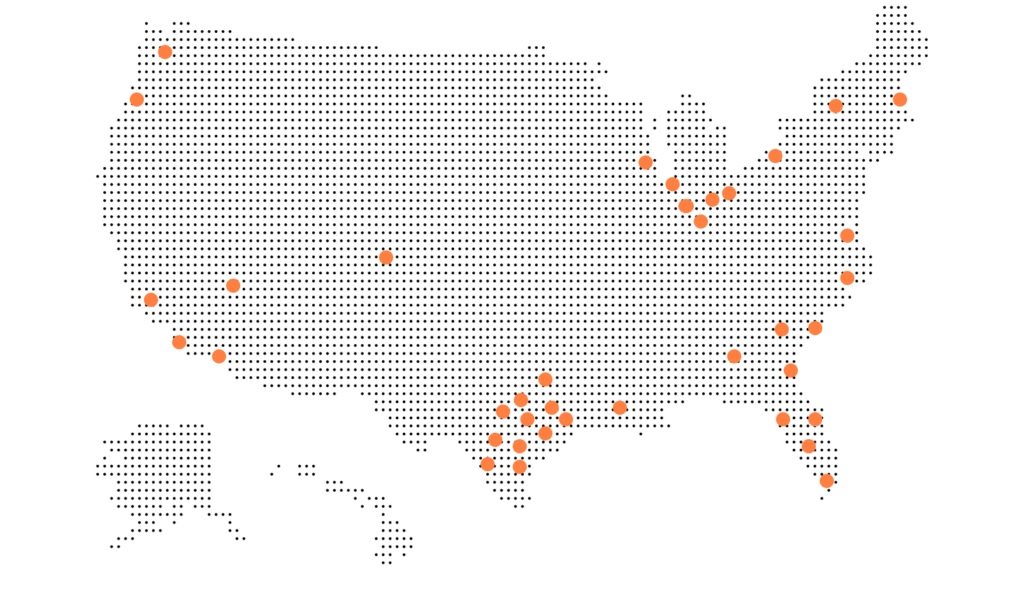
Locations
FAQ’s
The Google penalty recovery services assist companies in diagnosing the reasons why their site has lost organic visibility and take the appropriate corrective measures to recover rankings. It might include the diagnosis of manual activities, research of algorithmic effects, backlink audit, content quality enhancement, correction of technical aspects of SEO, and indexing. Instead of having a quick fix, recovery services are working towards restoring the trust that Google has in your site and enhancing the quality of its overall site. An organized recovery plan not only recovers the lost visibility but also minimizes the chances of further ranking losses due to the changing search algorithms.
The initial step is to consider whether your site has been given a manual action or whether your site has been impacted by an algorithm update. Based on that, all the problems that have caused the decline must be resolved, which may include unhealthy backlinks, thin content, technical, spam, or indexing issues. Recovery must be evidence-based on Google search console, analytics, crawl, and ranking data. The recovery services provided by professional Google penalties include a well-organized process of implementing the highest impact fixes, reporting all the changes, and tracking the recovery developments to sustain the progress and avoid short-term improvement by ranking.
Start by analyzing the Manual Actions report in Google Search Console. In case Google has taken a manual action, you will get a notification of why you violated. Nonetheless, the loss of rankings on many websites occurs without any manual notification since changes in algorithms, technical troubles, or low quality of the content can lead to a similar outcome. Comparing the declines in traffic with the schedule of Google updates, crawl information, indexation, and the analysis of the impacted keywords will assist in deciding the actual reason. Diagnosis is also very important as every type of issue needs a varied approach to recovering it to achieve organic performance.
Timelines of recovery will be determined by the issue and its severity. Manual actions can be fixed within weeks of a successful reconsideration request, whereas algorithmic recoveries can take several months to play out as Google reevaluates the quality of your site. The size of the site, technical complexity, profile of the backlinks, the quality of the content, and the speed at which problems are solved are all factors that determine the speed of recovery. The main aim that businesses should make is to carry out improvements that are sustainable rather than hoping to gain instant ranking. Sustainable recovery is realized through regaining power and trust over the long run as opposed to pursuing short-term variations.
A manual action is taken when the review team of Google decides that a site has contravened its Search Essentials and imposes a punishment that is reflected in Google Search Console. An algorithmic penalty, in contrast, is not a formal penalty but a ranking demotion due to the automatic systems of Google to review the quality of websites following an update. Each recovery process is unique. To recover penalties caused by Google, Google penalty recovery services will initially diagnose the nature of the problem of your website and then suggest remedial measures, with time and resources prioritized on the remedies that are most likely to regain your lost search visibility.
Yes, redesigns and migrations of websites often have an impact on SEO, as important technical aspects are not maintained properly. Some of the common causes are the absence of 301 redirects, altered URLs, broken internal links, deleted content, incorrect canonical tags, XML sitemap problems, and errors with the indexing. Even minor technical errors may make the site less visible when search engines find it hard to comprehend the new structure of the site. Thorough testing of SEO prior to and post-launch is recommended to maintain the rankings without losing momentum of long-term organic growth and user experience enhancements.
AI-generated content itself is not a ranking problem. Google’s focus is on whether content is helpful, accurate, original, and created for users. Issues become evident when AI is employed to produce low-value pages on a mass scale, copy-and-paste the already existing information, or release incorrect information without human verification. All AI-supported articles must be revised, fact-verified, and filled with expert commentary and adjusted to reflect real search intent before publication. The efficiency of AI and a powerful editorial control combine to generate content that is both optimally effective in a traditional search result and in the new search results involving AI.