











Driving Growth for Mid-Market & Enterprise Ecommerce Brands




Clients
BenEfits
Help search engines find, comprehend, and rank your most valuable pages.
Make sure the appropriate pages are indexed and that duplicate-content confusion is avoided.
Design quicker experiences that enhance interaction, conversions, and search results.
Improve user experience indicators that facilitate the rankings, retention, and conversions.
Earn trust through secure browsing, data security, and increased search credibility.
Optimize technical foundations for visibility across search engines and AI platforms.

Challenges
In cases where crucial pages cannot be found in the search results, the reason is usually technical and not content-related. The most common ones are accidental noindex tags, blocked URLs in robots.txt, weak internal links, duplicate content indications, or XML sitemap errors that mean that the search engines cannot prioritize those pages.
An in-depth analysis would help to understand why Google is overlooking good content. This is where a technical SEO audit service can be crucial, as it assists in determining the barriers to indexing before they affect the rankings, traffic, and lead generation opportunities.
Google assigns a small crawl budget to each site. When that budget is spent on broken links, duplicate URLs, heavy pages with too many parameters, or bad site architecture, important pages might be crawled less often or not at all.
Robots.txt limitations, orphan pages that lack internal links, and poor navigation systems are other typical reasons. Good technical SEO services are about ensuring that crawling becomes more efficient to ensure that your search engines utilize their resources to find and examine the pages that are of the greatest concern to your business.
The problem of slow websites is usually not one but a series of performance bottlenecks. Slower load times can be caused by large images, too much JavaScript, render-blocking resources, bad hosting environments, and bad code optimization.
The effect is not limited to user frustration. Slow webpage loading leads to higher bounces, decreased conversions, and diminished search performance. The optimization of performance must involve some technical enhancements that will make content load fast on all devices, browsers, and speeds, which are all part of website design services.
The most common problems associated with Core Web Vitals include unstable page structures, slow responsiveness, excessive media sizes, and slow loading components, which influence overall user experience. These issues are usually exacerbated by mobile devices due to low processing power and network conditions.
The Core Web Vitals Guidelines offered by Google are centered on the following metrics: loading speed, visual stability, and responsiveness, since these directly influence the experience of users on a given site. The enhancement of these metrics can usually lead to increased engagement, reduced abandonment, and enhanced search performance.
Duplicate pages confuse search engines, as two or more URLs can compete to show up as the best in the search. Notable causes encompass URL parameters, pagination, product variations, session ID, and improper implementation of canonical tags.
Ranking signals are diluted when the search engines have trouble finding the desired version of a page. A coordinated SEO audit service will detect patterns of copy content and concentration of authority in such a way that the appropriate pages get exposure and ranking authority.
Broken links, redirect chains, soft 404s, and redirects that are mishandled result in frustration for the user and the search engine. Such problems consume crawl resources, decrease the link equity, and impact the overall experience of visitors on your site.
These errors may undermine site authority over time and increase the difficulty of ranking important pages. Consistent monitoring is critical for technical SEO services to ensure that redirects are kept clean, the old links are managed accordingly, and the visitors of the site do not experience dead-end situations.
Traditional SEO is not sufficient anymore in the modern search environment. To comprehend and access websites properly, AI-driven search engines are strongly dependent on structured data, entity relations, schema markup, clear content hierarchy, frequently asked questions, and page structures that are machine-readable.
The need to be AI-ready has become a priority among many SEO consultants since tools such as ChatGPT, Perplexity, and Google AI experience all process content in different ways than conventional search engines. Unstructured and poorly-designed websites might not be ranked well in AI-generated results despite ranking high in organic search results.
This often occurs in the case of missing hreflang tags, misconfigured tags, or when there are inconsistencies in tags between regional versions of a page. In the absence of any explicit language and geographical indicators, search engines can be used to give the user the incorrect country or language page.
International websites must also be carefully coordinated in terms of localization, URL structures, and technical implementation. The most high-quality content or web design service cannot help to resolve the wrong hreflang settings completely when search engines are unable to know to which audience a certain page is targeted.
Process
The most effective technical SEO engagement starts with an understanding of your market environment and then proposes solutions. The discovery phase aims to examine the site platform, CMS setup, business goals, analytics implementation, workflows, and current SEO issues and pages that provide the best business value. In the absence of this context, technical recommendations tend to address individual problems and fail to take larger performance constraints into consideration.
This stage also assists in identifying platform-related constraints, past search practices, indexing issues, and risks of implementation that can influence future optimization activities. We examine search performance data, crawl behavior, site architecture, and technical dependencies to create a clear baseline. This is not just to recognize the problems but to learn how technical advancements can help in business development. Any successful technical SEO services will be based on clarity, to be sure that all the recommendations are in line with the operational reality and long-term goals of the site. The result is a detailed view of the technical world that informs all the further steps of the optimization process.
All technical issues do not have the same impact. There are issues that make pages unable to be indexed at all, and some cause progressive performance degradation with time. Our ranking/prioritization process divides findings into critical, high, medium, and low priority issues based on their impact on rankings, crawl, user experience, and business performance.
Issues that are usually critical are indexation blockers, crawl restrictions, and hard-core technical errors. The issues with high priority often include failures with Core Web Vitals, duplication, and structural problems that impact search visibility. Medium and lower-priority recommendations are based on schema gaps and redirect inefficiencies, and technical improvements.
Through our structured technical SEO audit services, all discoveries are converted into a roadmap for phased implementation with specifications that are ready to be developed, the effort estimates, and the anticipated results. This will make sure that the teams work on the fixes that will have the highest impact initially and have a clear direction to the long-term technical improvements.
Technical audits fail frequently due to the inability to put the recommendations into action. To implement changes effectively, developers require guidelines, priorities, and enough context to implement changes without causing new issues. Our process translates technical discoveries into action items that are development team-specific.
Implementation notes, affected URLs (where applicable), screenshots, priority levels, anticipated SEO impact, and validation requirements are provided as part of each recommendation. This eliminates confusion and enables development resources to concentrate on implementation and not interpretation. The technical specialists and developers must collaborate, as even valuable suggestions may be postponed when requirements are not clear. SEO consultants who have also been in the field realize that effective optimization requires not only the quality of implementation but also the discovery of problems.
Our technical SEO services minimize friction and speed up deployment by providing recommendations in a structured and friendly-to-developer format, and increase the chances of technical changes giving measurable search performance improvements.
Technical recommendations are only useful when they are applied properly. After deploying the changes, all updates should be tested to make sure that they correct the desired problem without creating new issues on the rest of the site. Technical SEO deals with interrelated systems, and therefore, one change can impact crawling and indexation, user experience, or search visibility unless reviewed appropriately.
In our implementation support process, we work closely with the developers, test the completed fixes, perform crawl testing, indexing testing, schema testing, and redirect testing, and also perform performance testing. We make comparisons between the pre- and post-implementation to ensure that the desired outcome has been attained. This step is particularly crucial since technical bugs may be undetected, although they may seem to be working.
Effective quality assurance will provide a guarantee that the improvements are working as planned and that no essential SEO factors have been compromised in the development process. Technical SEO services cannot just end with recommendations, but should go the whole way and implement them with validation to make sure that each change has a positive impact on search performance and the health of the website.
Technical SEO is not a single undertaking. Websites are continually updated with new content, remodeled with new platforms, third-party services, changes in algorithms, and changing search engine demands. Unless continuous monitoring is maintained, technical problems would creep up and destroy performance even after an initial audit has been made.
Google Search Console insights, crawl data, indexing patterns, page speed performance, Core Web Vitals, ranking changes, and overall technical health are the aspects that we monitor. Periodic comparisons of the past and present performance can be used to detect emerging problems before they affect the visibility or experience of the user.
We also confirm existing effective optimizations during site expansion. Ongoing tracking makes technical SEO more proactive instead of reactive. Early detection of performance changes enables businesses to defend search presence, sustain crawl performance, and grow their technical base organically over time.
Testimonials
Why Us?

Technical SEO issues are not usually stand-alone. Our team operates on enterprise platforms, bespoke websites, ecommerce platforms, JavaScript frameworks, CMS platforms, and complicated site structures. This extensive technical exposure enables us to detect platform-specific problems more quickly and deliver resolutions that enhance crawlability, indexation, performance, and long-term search performance.

The costliest SEO errors are those that businesses are not aware of. We use high-end crawling, log files, performance monitoring, and search data to reveal the invisible technical obstacles to growth. All the recommendations are evidence-based, and the decisions are made based on quantifiable impact and not assumptions or generic best practices.
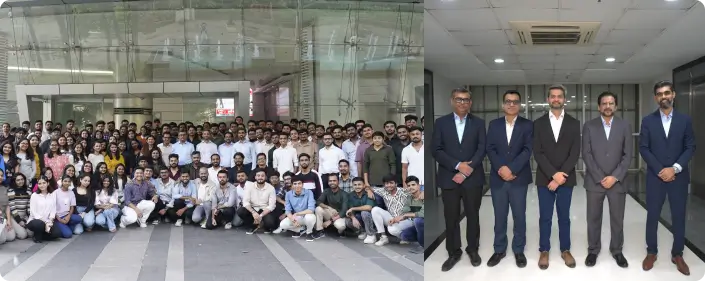
Technical SEO thrives when backed by skills across various fields. Having over 130 experts in the fields of technical SEO, content strategy, analytics, and digital PR, as well as AI search and user experience, clients will enjoy the team-based approach that reveals the opportunities beyond technical solutions and transforms them into future growth.

Search is not confined to conventional search engines. Technical underpinnings currently affect the way AI platforms find, comprehend, and mention websites. We also optimize for structured information, clarity of entities, ease of accessing content, and readability by machine to assist businesses in establishing visibility not only in Google, but in the next generation of AI-driven search experiences.
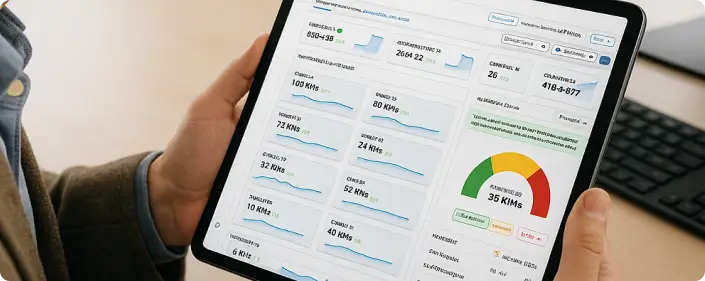
Technical improvements must never fade into a checklist. We report on what changed, why it was important, and how it affected performance on a website. We also give clarity by showing the business results of technical fixes like visibility, traffic, crawl health, and user experience so that our stakeholders can see the value in each optimization.
Bring your goals, challenges, and ambitions. We’ll build a strategy designed to move your business forward.
Driving Measurable Growth for Ambitious Brands
Plans
Startups Business
Your Growth Toolkit
Small-Market Businesses, Competitive Niches
Your Growth Toolkit
Mid-Market Businesses, Competitive Niches
Your Growth Toolkit
Enterprise, Large E-commerce, Site Migrations
Your Growth Toolkit
Industry
Platforms


Solutions
Drive sustainable traffic and revenue growth
Optimize visibility across AI search engines
Future-proof search strategy with AI
Scale product visibility and online revenue
Turn visitors into measurable revenue growth
Increase app visibility and install growth
Dominate local search and nearby customers
Authoritative backlinks that boost search rankings
Scalable SEO solutions for large organizations
Build websites that improve engagement
Find and fix issues affecting search visibility
Drive organic growth with strategic content

Growth Manager - Superbalist
SEo Growth
Technical SEO is the act of ensuring that a webpage is optimized in its underlying infrastructure in such a way that it is discovered, crawled, interpreted, indexed, and ranked by the search engines. Although much attention is usually given to the content and backlinks, they can only do their job in the best way possible when the technical background of a website is working well. When search engines are not able to get pages, process site structure, and consider performance signals properly, even the best content would not be able to be visible.
In order to learn about technical SEO, it is helpful to distinguish it from other fields of SEO. On-page SEO concentrates on the content quality, targeting of keywords, metadata, headings, and alignment of user intent. Link building service is concerned with the authority signals, such as backlinks, brand mentions, and digital PR. Under both is technical SEO. It covers crawlability, indexation, site architecture, page speed, Core Web Vitals, security, structured data, mobile usability, canonicalization, XML sitemaps, and additional infrastructure items that help decide whether search engines can effectively consider a site.
The significance of technical SEO is easily understood when it comes to the way search engines work. A page has to be discovered, crawled, processed, indexed, and comprehended before it can rank. This process can not occur properly in case of technical barriers at any of the stages. Studies in the industry have always indicated that websites that fail to correct technical factors tend to be greatly suppressed during ranking, not due to the poor content they carry, but because the search engines find it difficult to reach or understand the content on the site. Technical errors are more likely to generate faster SEO returns than the creation of more content in most instances.
User experience is also directly affected by technical SEO. Engineers of search engines are also putting more emphasis on the interaction the user has with websites by using indicators like loading speed, responsiveness, mobile responsiveness, and page stability. A slow site that is hard to navigate or unstable is not only frustrating to the visitor but may also affect the performance of the search over time. That is why hiring an expert technical SEO agency is now an important business operation and not an activity of the developer.
Technical SEO is increasingly gaining prominence with the evolution of search. Search engine data, AI-powered search experiences, and big language models are all structured, accessible, and machine-readable. If a website has a good technical foundation, search crawlers and AI systems can understand, reference, and suggest it more easily.
AI tools



Growth Manager - Superbalist
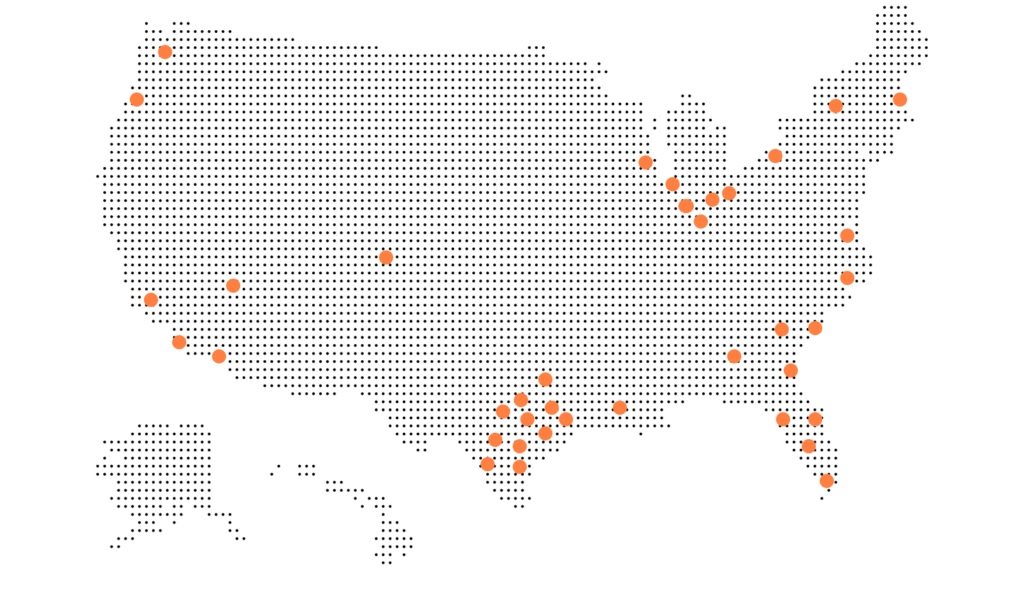
Locations
FAQ’s
Technical SEO services focus on improving a website’s ability to be crawled, indexed, and understood by search engines efficiently. This involves optimizing site speed, Core Web Vitals, crawlability, indexation, structured data, mobile usability, site architecture, and overall technical health to improve search performance.
Technical SEO is the process that allows search engines to view and crawl your site without any problems. Great content from content marketing services may not perform well if the pages are slow, hard to crawl, are not correctly indexed, or have technical errors. A strong technical foundation supports rankings, user experience, and long-term organic growth.
Technical SEO is concerned with the infrastructure of the site, such as crawlability, indexation, speed, security, and site structure. On-page search engine optimization targets content, keywords, metadata, headings, and user intent. Technical SEO assists the search engines in reaching your content, whereas on-page SEO assists them in comprehending its relevance.
Yes. Technical SEO can encompass performance optimization, which includes image compression, code cleanup, caching optimization, and server response optimization, as well as Core Web Vitals optimization. The speed of websites offers high-quality user experience, lower bounce rates, and might have a positive impact on search visibility and conversions.
Absolutely. Some technological problems that ecommerce websites have to deal with include duplicate content, faceted navigation, waste of crawl budget, indexing, and huge product catalogs. Technical SEO assists in enhancing the discoverability, site performance, user experience, and search visibility of thousands of product and category pages.