











Driving Growth for Mid-Market & Enterprise Ecommerce Brands




Clients
BenEfits
Puts your business ahead of competitors the moment someone nearby starts searching.
Drives consistent visitors who are actively searching for exactly what you offer.
A visitor who searches, clicks, and calls beats a hundred who scroll past.
People remember the name that showed up when they were actually looking.
You stop paying to reach people who were never going to buy from you.
Unlike paid ads, rankings keep working for you long after the budget's spent.
Case studies
Objective
To dominate Black Friday organic search by doubling sessions and revenue while securing a top-three Google ranking for “Black Friday.”
Challenges
– Extremely high competition for the “Black Friday” keyword
– Low visibility in rich results and featured snippets
Solutions
– Built research-led Black Friday content optimized for Featured Snippets and FAQs
– Strengthened internal linking and crawl priority through smart URL targeting
Results
increase in organic Black Friday revenue
Objective
To scale organic visibility globally, drive high-quality leads, and accelerate user acquisition across key international markets.
Challenges
– Duplicate content impacting indexing and rankings
– Poor site architecture limiting crawlability
– Declining search demand for core social media keywords
Solutions
– Built a geo-focused SEO framework with region-specific microsites
– Implemented hreflang, technical SEO fixes, and intent-led content optimization
– Launched a knowledge hub to capture top-of-funnel global demand
Results
increase in organic users across global markets
Objective
To expand visibility beyond traditional SEO by establishing strong discoverability across AI-led platforms like ChatGPT, Gemini, Perplexity, and Google AI Overviews across MENA markets.
Challenges
– Shallow, transactional content limiting AI authority signals
– Weak schema, internal linking, and entity-based structure
– Fragmented content not aligned with regional or multilingual intent
Solutions
– Built entity-driven content hubs and AI-optimized category pages
– Implemented semantic clustering and conversational query optimization
– Strengthened technical SEO for AI readability and faster indexing
Results
Objective
To increase qualified organic leads, improve conversion rates, and significantly reduce organic cost per lead across desktop and mobile.
Challenges
– High organic CPL with low conversion efficiency
– UX, technical, and intent misalignment across high-traffic pages
Solutions
– Implemented user-first CRO with intent-driven SEO and refined lead qualification
– Fixed technical gaps and optimized UI/UX using behavioral and analytics insights
Results
Objective
To improve conversion efficiency by turning existing website traffic into qualified insurance leads through focused CRO and UX enhancements.
Challenges
– Low session-to-conversion ratio despite strong organic traffic
– User friction across key pages impacting inquiry submissions
– Ineffective CTA visibility during critical decision moments
Solutions
– Conducted a detailed CRO audit to identify and fix friction points
– Improved UI and on-site user flow to reduce drop-offs
– Placed intent-driven CTAs across high-impact insurance pages
Results
Improvement in Conversion Rate on AMP (Accelerated Mobile Pages)
Objective
To increase app store keyword visibility, drive high-intent non-branded traffic, and improve app performance across the Play Store and App Store.
Challenges
– Intense competition from established financial apps
– Low visibility for high-intent, non-branded keywords
Solutions
– Executed a full-funnel ASO strategy covering keywords, visuals, reviews, and UX
– Improved app stability and metadata via Android Vitals
Results
Challenges
Ranking usually comes down to a mix of competition, content depth, and technical health, and small businesses often lose on more than one front at once. Larger competitors typically have more backlinks, more indexed pages, and years of accumulated domain authority, which means a newer or smaller site needs sharper, more specific targeting rather than trying to outrank them on broad, high-competition terms.
Thin or generic content is a common culprit too. A homepage that says “quality service since 2010” without specifics about location, offerings, or what makes the business different gives Google very little to work with, and gives searchers even less reason to click.
Technical issues compound the problem further: slow load times, missing metadata, or a site that isn’t mobile-friendly all quietly suppress rankings regardless of how good the underlying business actually is. Fixing the technical foundation first usually unlocks gains that content alone can’t achieve.
Map visibility depends on a different set of signals than organic rankings, and an unclaimed or incomplete Google Business Profile is the most common reason a business simply doesn’t appear. Even a claimed profile with missing categories, no photos, or inconsistent hours can fall behind competitors with more complete listings.
Proximity and relevance both factor in too. A business sitting just outside a searcher’s immediate area, or one that hasn’t clearly defined its service categories, can lose out to a competitor that’s better optimized even if it’s not objectively a better business.
Review count and recency matter heavily as well, since Google weighs prominence signals alongside relevance and distance. A newer competitor actively collecting fresh reviews can push right past a business that’s been operating for years but stopped asking for reviews somewhere along the way.
Often it comes down to consistency rather than any single dramatic advantage. A competitor posting regularly to their Google Business Profile, responding to every review, and keeping citations accurate across directories builds compounding trust signals that a business doing none of these can’t match.
Content plays a role too. A competitor with dedicated pages for each service and location gives search engines, and searchers, far more to work with than a single generic homepage trying to cover everything at once.
Sometimes it’s simpler than strategy: a competitor may have just been established online longer, accumulating reviews, backlinks, and search history that takes real time to replicate. That’s not a reason to give up ground; it’s a reason to start closing that gap deliberately rather than hoping it closes on its own.
Traffic and conversion are separate problems, and a site can succeed at one while failing at the other entirely. Unclear calls to action are a frequent cause: a visitor who has to hunt for a phone number, contact form, or booking link often just leaves instead, no matter how relevant the page that brought them there was.
Trust signals matter just as much. A page without visible reviews, credentials, or clear pricing information leaves a visitor uncertain, and uncertain visitors rarely convert, even when they’re genuinely interested in the service.
Page speed and mobile experience play a quieter but significant role too. A slow-loading page or one that’s awkward to navigate on a phone loses visitors before they even reach the call to action, regardless of how strong the offer underneath actually is.
Publishing content and publishing content that ranks are two different things. Blogs written around broad, generic topics with no clear search intent behind them often generate very little traffic, since they’re competing against thousands of similar articles without offering anything genuinely distinct.
Keyword targeting matters here more than volume. Ten well-researched posts built around real search terms your customers actually use will typically outperform fifty generic ones with no clear focus, and outperform them by a wide margin over time.
Technical and on-page fundamentals still apply too: a blog post without proper headers, internal links, or a clear structure gives search engines little reason to rank it well, no matter how genuinely useful the underlying content actually is. This is exactly why effective small business SEO services treat blogging as one piece of a coordinated strategy, not a standalone fix on its own.
Yes, and in some ways SEO is a better fight for a small business than most other channels, because rankings reward relevance and specificity, not budget size. A local business can outrank a national brand for location-specific searches simply by being more relevant to that particular search, something a large brand’s generic national page usually can’t match.
Niche targeting also works in a small business’s favor. Competing for broad, high-volume terms against enterprise budgets is a losing fight, but targeting the specific, high-intent searches a large brand doesn’t bother optimizing for is where smaller businesses consistently win.
Local signals amplify this advantage further. A national brand generally can’t match a local business’s Google Business Profile depth, community reviews, and hyper-specific local content, all factors that carry real weight in local search results specifically, and all factors well-targeted small business SEO services are built to strengthen.
Start by looking at how specific their strategy sounds. An agency that immediately talks about your industry, your local competition, and your specific goals is a better sign than one offering a generic package identical to what they’d sell any business.
Transparency matters just as much. A trustworthy small business SEO agency doesn’t hide behind vague ranking reports; it shows exactly what work happened this month and ties that work back to calls and leads you can actually count.
Case studies and references help too, particularly ones from businesses similar in size and industry to yours. An agency with genuine experience in your specific situation, not just a large client roster in unrelated industries, is far more likely to understand what will actually move results for a business like yours.
Not every business needs the same package. But a fully optimized Google Business Profile, clean technical SEO, and content built around real customer questions come up in almost any solid SEO service, no matter the industry.
Beyond that, priorities shift with business type. A storefront leans on local SEO and reviews. A service-area business needs stronger location page strategy. A business with genuine national ambitions needs broader content and link building layered on top of the local fundamentals, not instead of them.
The honest answer is that most small businesses benefit from a phased approach: fixing technical and profile foundations first, then building out content and authority over time, rather than trying to do everything simultaneously with a limited budget spread too thin to move any single area meaningfully.
Process
Every strategy starts with a clear picture of who’s actually winning in your market right now, not assumptions about who the competition might be. That means checking which businesses currently hold the map pack spots and the organic top ten for your priority searches, then digging into what’s working for them, how many reviews they have, how deep their service pages go, where their backlinks come from.
Gaps get mapped just as carefully as strengths. A competitor with strong reviews but thin service pages reveals an opportunity; one with strong technical health but weak local signals reveals a different one entirely. Effort follows whichever gap actually matters, instead of getting spread evenly across everything at once.
The analysis also sets realistic benchmarks. If top-ranking competitors average forty reviews and five dedicated service pages, that’s the number to aim for, not an arbitrary goal pulled out of thin air. This becomes the baseline every later decision in the small business SEO services engagement gets measured against.
Keywords come from real search behavior, not a guess at what customers might type. Search volume data gets combined with intent signals here, telling apart someone still researching a topic from someone ready to book or buy, since chasing the wrong intent just wastes content effort on traffic that was never going to convert.
Local modifiers get particular attention for a small business specifically. “Emergency plumber” behaves very differently from “emergency plumber [city],” and the latter, while lower volume, typically converts at a meaningfully higher rate for a business that only serves one metro area.
Competitive difficulty gets weighed against realistic ranking potential too. Chasing a high-volume term that established competitors have dominated for years often wastes budget better spent on slightly lower-volume, achievable terms that can realistically rank within months rather than years. Content priorities trace back to this keyword map long before a single page gets written for the SEO for small business usa strategy.
Before any new work begins, this step takes a full inventory of where things currently stand. Technical SEO comes first: site speed, crawlability, mobile experience, and from there it moves to local SEO health. Local optimization covers Google Business Profile completeness, citation consistency, and how the current map pack standing compares against local competitors.
Rankings and service pages get reviewed together next. Some pages already perform; others exist but aren’t pulling their weight, often because of thin content or weak internal linking. Backlink profiles and review counts get benchmarked against whoever’s currently outranking the business, so the gap that needs closing is a real number, not a guess.
Content quality and analytics round out the picture, checking whether existing pages actually answer real customer questions and whether traffic patterns reveal where visitors drop off. As a complete SEO audit service within a broader small business SEO services engagement, this produces more than a diagnostic report. It becomes the prioritized starting point every following step in the process builds from directly.
Technical SEO addresses the foundation search engines rely on to crawl, understand, and rank a site properly. Site speed, mobile responsiveness, and crawlability come first, since a site that loads slowly or renders poorly on mobile devices quietly suppresses rankings no matter how strong the content sitting on top of it is.
Structured data gets implemented here too, giving search engines explicit signals about business information, services, and reviews rather than leaving that interpretation to chance. AI-driven search results increasingly rely on exactly this kind of structured, machine-readable content to generate their answers, so this groundwork supports more than just traditional rankings.
Broken links, duplicate content, and indexation issues get resolved as part of this same pass, since even small technical errors can quietly undermine an otherwise solid strategy. A lot of SEO companies for small business clients skip this depth of technical work entirely, and that gap is usually where a real advantage hides. Getting this foundation right early prevents these issues from compounding as the site grows larger over time.
Local optimization covers the Google Business Profile, citations, and location-specific content that determine whether a business shows up for nearby searches at all. This starts with a completeness pass on the profile itself, accurate categories, complete services, current hours, and a steady stream of photos and posts that keep the listing visibly active.
Citation consistency gets addressed next, since a business name, address, or phone number that varies even slightly across directories quietly undermines the trust signals Google relies on to verify legitimacy. Cleaning this up across major directories and industry-specific listings is often one of the highest-leverage fixes available.
As a complete Local SEO service, this step also includes review strategy and location-specific content, since these two factors consistently separate businesses that dominate the map pack from ones that remain invisible despite having a technically sound profile. Together, these elements build the local foundation everything else gets built on.
Every page needs to clearly say what it’s about, to visitors and to search engines alike, and on-page seo service is what makes that happen. This means optimizing title tags, meta descriptions, and header structure around the keywords identified during research, while keeping the actual reading experience natural rather than stuffed or awkward.
Content depth gets addressed too. A page that briefly mentions a service in a sentence or two rarely competes with a dedicated page that actually answers the questions a customer has: pricing ranges, process, timelines, and what makes this particular business the right choice.
Internal linking ties the site together during this step as well, connecting related service pages, location pages, and blog content so search engines understand how everything relates. A capable SEO company for small business clients treats this as ongoing maintenance, not a one-time pass. Done well, on-page optimization turns a functional but forgettable website into one that clearly earns its rankings rather than barely holding on to them.
Content strategy starts with the gap between what customers are actually searching for and what the site currently offers. Service pages come first, since they typically carry the highest commercial intent and the most direct line to a call or booking.
Location pages follow for businesses serving multiple areas, and they need genuine local specificity rather than a city name swapped into a repeated template. FAQs land directly on the relevant pages too, tackling the exact questions customers ask before deciding, which happens to also help visibility in AI-generated answers and Google’s People Also Ask feature.
A genuinely useful Content writing service extends this further into blogs, case studies, and product or category pages where relevant, always built around real search intent rather than content for its own sake. Case studies in particular do double duty, building both search visibility and the kind of social proof that moves a hesitant visitor toward becoming a customer.
Small business customers increasingly ask AI tools directly for recommendations, “best plumber near me” or “how to choose a local accountant”, and the businesses that show up in those answers share a few common traits: strong reviews, consistent citations, and clearly structured information about what they actually offer.
A proper AI SEO service approach makes sure this information is genuinely explicit rather than implied. Service clarity matters enormously here; AI systems need to understand exactly what a business does, where it operates, and what sets it apart, information that vague homepage copy simply doesn’t provide.
This is where LLM SEO service work extends beyond traditional optimization, targeting the specific questions customers actually ask: pricing ranges, timelines, availability, service areas, and direct comparisons against alternatives. Brand mentions across the web, even unlinked ones, reinforce this further, since AI systems increasingly weigh how consistently and credibly a business gets referenced across the internet, not just what a business says about itself.
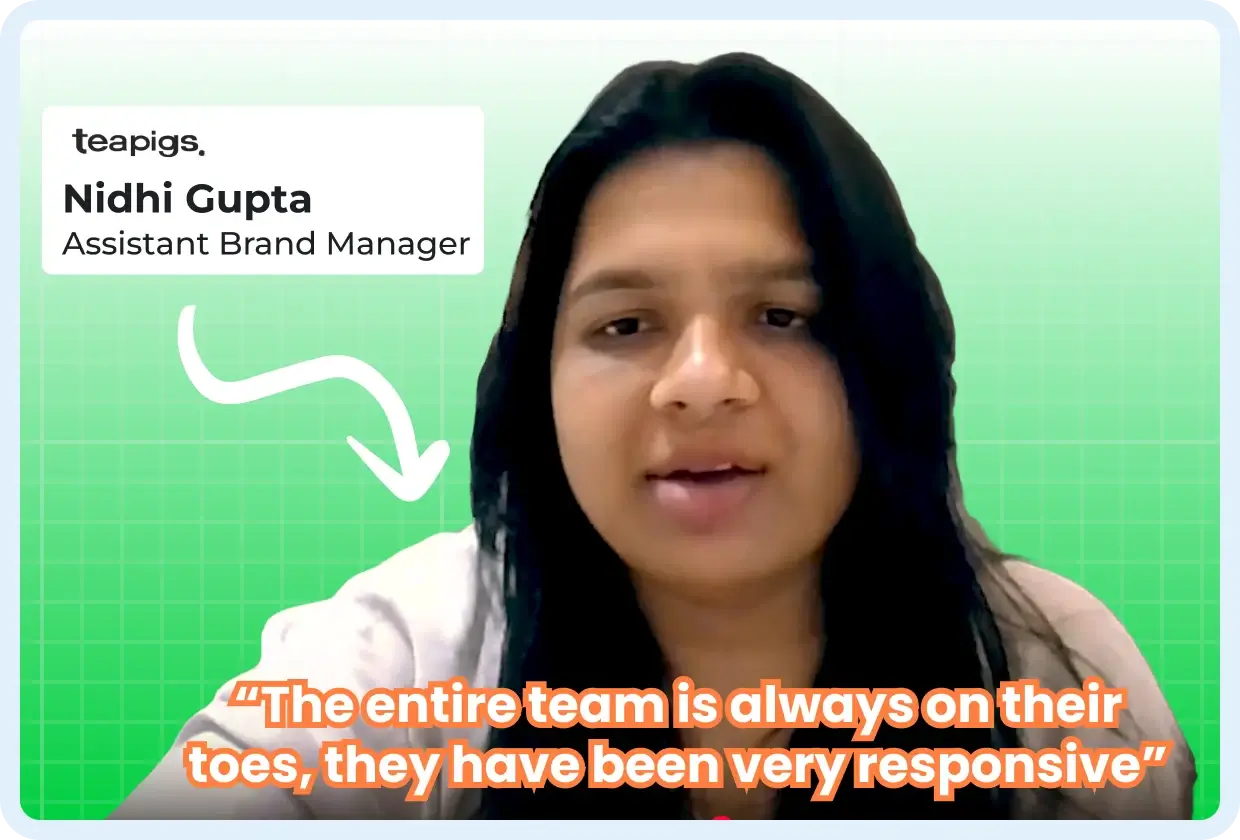
Testimonials
Why Us?

Every strategy runs through Infigrowth, Infidigit’s proprietary AI platform, tracking rankings, AI Overview visibility, and competitor movement in real time. For a small business, that means decisions grounded in live data rather than a generic playbook applied regardless of what’s actually happening in your specific market.

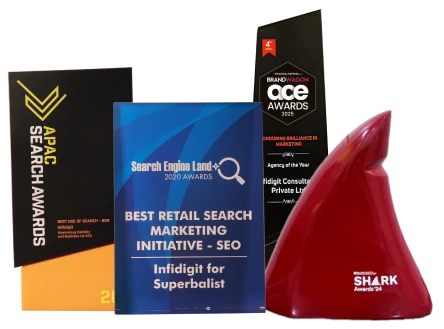
We have won many recognized awards, including SMX, the APAC Search Awards, and the ET BrandEquity Shark Awards. This recognition reflects results judged by industry peers, not self-reported claims. That external validation matters when a small business is trusting its limited marketing budget to an outside partner.

A team of 150-plus specialists covers technical SEO, local optimization, content, and AI search strategy, giving a small business access to genuine depth without hiring an in-house team. That range matters most when technical fixes, content, and local work all need to move together.

135-plus documented case studies span businesses of every size, including small and local operations, not just enterprise brands with unlimited budgets. That track record shows what’s actually achievable for a business working with realistic resources and a focused, prioritized small business SEO services strategy.

Rankings and traffic connect directly to calls, leads, and bookings in every monthly report, not just abstract visibility numbers nobody can act on. For a small business owner without an SEO background, that clarity means understanding exactly what your small business SEO services investment is producing and why, without needing to decode a dashboard alone.
Plans
Startups Business
Your Growth Toolkit
Small-Market Businesses, Competitive Niches
Your Growth Toolkit
Mid-Market Businesses, Competitive Niches
Your Growth Toolkit
Enterprise, Large E-commerce, Site Migrations
Your Growth Toolkit
Industry
Platforms


Solutions
Drive sustainable traffic and revenue growth
Optimize visibility across AI search engines
Future-proof search strategy with AI
Scale product visibility and online revenue
Turn visitors into measurable revenue growth
Increase app visibility and install growth
Dominate local search and nearby customers
Authoritative backlinks that boost search rankings
Scalable SEO solutions for large organizations
Build websites that improve engagement
Find and fix issues affecting search visibility
Drive organic growth with strategic content

Growth Manager - Superbalist
SEo Growth
The name is a bit narrow. Small business SEO services actually fit almost any company that isn’t a national or global enterprise: a single-location retail shop, a regional service provider, a professional practice like a law firm or accounting office, a growing ecommerce brand, all of them qualify, even though their specific strategies end up looking quite different from one another.
Storefront businesses, restaurants, salons, retail shops, benefit most immediately from strong local optimization, since their customers are almost always searching with location intent already built in. A small business SEO company experienced with this segment prioritizes Google Business Profile depth, review generation, and location-specific content first, since these drive foot traffic more directly than broader organic strategies.
Service-area businesses—plumbers, electricians, cleaning companies, contractors—need a slightly different emphasis: strong local SEO combined with dedicated pages for each service area, since these businesses often compete across a wider geographic footprint than a single storefront does. Getting the balance right between too many thin location pages and too few substantial ones is a common challenge this segment faces specifically.
Professional service businesses, law firms, accounting practices, and medical and dental offices need a strategy weighted more heavily toward authority and trust. These purchase decisions usually involve more research and higher stakes than someone quickly searching for a nearby restaurant, so content depth, credentials, and real expertise shown through detailed service pages carry more weight here than a pile of local citations ever could.
Ecommerce and product-based small businesses need a different mix again: technical SEO and product page optimization matter more than local signals, though many still benefit from local presence if they maintain any physical location or serve a specific regional market alongside broader online sales.
What unites all of these businesses isn’t their industry; it’s the shared challenge of competing against better-funded competitors without a correspondingly large marketing budget. Enterprise brands can afford broad, expensive campaigns across every channel simultaneously, while a small business may face challenges. Prioritized small business SEO services that identify the highest leverage opportunities are considerably more valuable than they would be for a company with unlimited resources to spread across every possible tactic.
This is precisely why SEO services for small business operations look meaningfully different from enterprise SEO engagements. The tactics overlap: technical health, content, local optimization, but thes sequencing, prioritization, and budget allocation get built around a business that needs results without years of runway to wait for them.
AI tools








Growth Manager - Superbalist
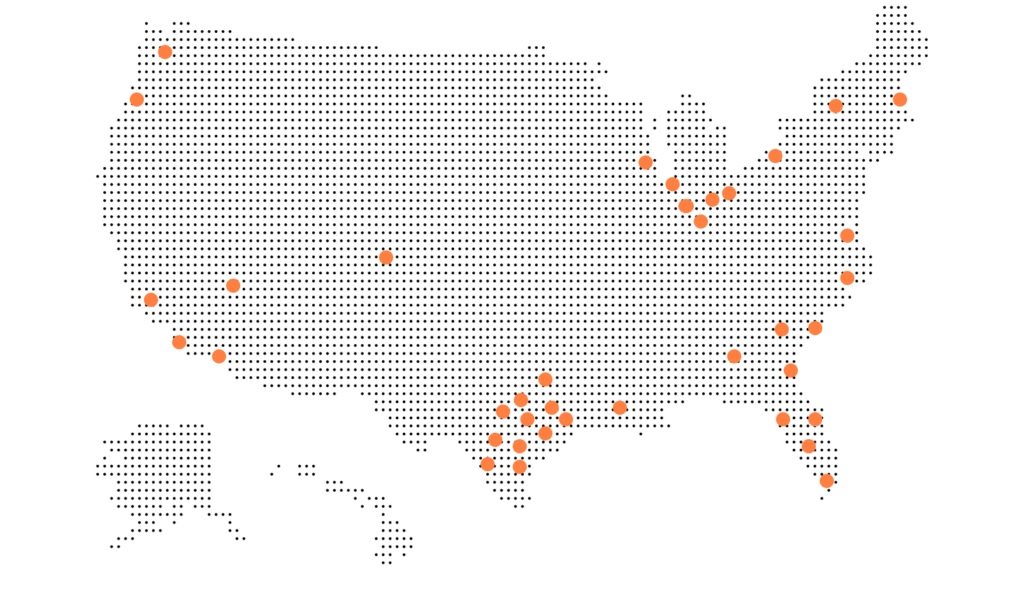
Locations
FAQ’s
Small business SEO aims at enhancing online presence to reach pertinent, high-intent clients. It is the process of maximizing your website, focusing on the correct keywords, and gaining authority- making your business appear when your potential customers are actively searching for what your products or services are.
Begin with a content and technical audit to find out what is missing, and then you should concentrate on the keyword research in accordance with your services. This involves optimization of your site, creation of necessary listings, and development of specific content. Coherence in implementation and monitoring performance at an early stage is sure to see you develop a robust, scalable SEO base.
Some of the best practices for SEO services for small businesses include intent-based keyword targeting, creating structured content for better discoverability in featured snippets, ensuring consistent NAP information across all channels, and developing a high-quality backlink profile. You should also regularly conduct audits with consistent performance monitoring to fine-tune your strategies to maximize their impact on your revenue.
Yes. SEO creates a sustainable marketing channel for your business without having to constantly spend on paid ads. It produces a pipeline for inbound leads with stable traffic, which enables long-term revenue growth.
The cost is determined by the level of competition, scope, and goals. Smaller campaigns can be quite cost-effective, whereas competitive niches will require greater investment. It should be about value-compounding returns, delivered through well-executed SEO, which is more cost-efficient than a continuous paid campaign.
The first improvements should be seen within a few months, and the continued growth will be seen in 4-6 months or more. The outcome is based on technical health, content quality, and authority indicators. SEO is all about consistency, and the more trust and relevance are established over time, the faster the results are.
Yes, through the target niche key words, local intent, and underserved queries. Big brands fail to capitalize on these opportunities. Through focused strategies and excellent execution, small businesses can outperform larger companies in certain segments where relevance and agility matter more than size.