











Driving Growth for Mid-Market & Enterprise Ecommerce Brands




Clients
BenEfits
Enhance search rankings in the App Store and Google Play to become more discoverable by target users.
Continuously promote better-quality organic installs by optimizing app listings, targeting keywords, and ASO approaches that focus on conversion.
Enhance user experiences, in-app interactions, and retention with refined user experiences, app relevance, and enhanced audience targeting.
Reduce reliance on paid acquisition channels by growing sustainable organic installs through effective ASO optimization initiatives.
Enhance app credibility and presence in competitive app markets, enhancing awareness amongst high-intent mobile users.
Grasping the interest of continuous traffic of organic app through increased visibility of keywords, discoverability, and optimization of marketplace search performance.
Case studies
Objective
To increase app store keyword visibility, drive high-intent non-branded traffic, and improve app performance across the Play Store and App Store.
Challenges
– Intense competition from established financial apps
– Low visibility for high-intent, non-branded keywords
Solutions
-Executed a full-funnel ASO strategy covering keywords, visuals, reviews, and UX
-Enhanced app stability and metadata through Android Vitals and performance – improvements
Results
Improvement in the top 10 Keywords Ranking for the Play Store
Improvement in top 5 Keywords Ranking for App Store
Improvement in top 10 Keywords Ranking for App Store
Challenges
A comprehensive ASO audit will be needed to determine why exactly your app is not ranking higher on the App Store or Google Play Store. There are many reasons why your app may not be performing well. This could be poor keyword targeting in your metadata, poor quality screenshots that don’t properly communicate your app’s appeal to users, or just poor user engagement signals. Both the App Store and Google Play Store have their own ranking parameters for apps, including things like conversion rates, user ratings, and keyword relevance. Even quality apps may fail to rank if they do not optimize as per the platform’s or google play ranking factors.
If your app is not being discovered organically by users, it might be that your app description and metadata are not aligned with user search intent. You need to align user search intent with your app’s ASO to increase your discoverability by proper metadata optimization, choosing the right categories for your app, and optimizing media on your app description page.
Impressions do not ensure installs in themselves. It takes users only a few seconds to determine the trustworthiness, utility, and relevance of an app. Bad screenshots, ambiguous descriptions of apps, bad icons, or a lack of value messaging tend to decrease conversions. Powerful creatives, refined messaging, and enhanced trust indicators contribute to translating visibility into improved-quality app installs in app markets across the board.
Yes, inappropriate keywords can considerably decrease the visibility of the apps. The excessive competitiveness, irrelevance, or low-intent keywords complicate the relevance of your app to the app stores. App Store Optimization services do proper research on keywords based on search demand, competition intensity, and user intent so that it can be optimized as the search behavior evolves.
App store algorithms, as well as user trust, are directly affected by ratings and reviews. Low ratings will lower the conversion rate since users will not download apps with negative or low credibility indicators. Effective review management enhances visibility, user trust, and performance during installations and also keeps apps in a more sustainable ranking in competitive categories.
The main reason why your app might be losing visibility after updates is because of metadata changes that have not yet been logged into the app platform. Even minor modifications in your app title, description, or media can affect your discoverability. Therefore, you must enforce consistency in metadata optimization, engagement monitoring, and comprehensive testing of updates before updating your app page. This will help you avoid any visibility slumps after an update.
Competitive app categories are usually highly competitive in terms of keyword saturation and aggressive acquisition practices. Unless apps are clearly differentiated, niche-positioned, or have optimized creatives, they are unlikely to become visible. Categories that are crowded and have a large number of competitors all demand specific strategies in terms of their keywords, enhanced images, conversion improvement, and placing your application around the idea of unique user value and not just general competition.
Applications might not show up in the relevant searches due to poor keyword placement, indexing constraints, ineffective metadata optimization, or a lack of relevance between the search queries and app content. App store optimization service encourages improving titles, descriptions, and targeting keywords, and enhancing relevance indicators via continuous optimization and supporting visibility with effective Content marketing services programs.
Process
The first step of every successful ASO plan is to know what is holding back your app visibility, rankings, and install performance. Our ASO audit service offers an in-depth review of your app listing, user activity indicators, keyword placement, metadata performance, and competition placement to identify potential areas of scalable organic growth.
Our app store optimization services examine key ASO factors such as:
Most apps do not grow due to their assumption-based nature rather than based on actual marketplace data. The priorities of our audit process are improvements, which are based on the impact of visibility, the potential of conversions, and the opportunities to acquire users. This strategy, like strategic SEO audit services, assists in determining precisely where discoverability and install performance are being wasted, establishing a roadmap of targeted improvements towards more robust rankings, improved engagement, and continued growth of the app.
App stores are some of the most competitive spaces where visibility tends to be pegged on the effectiveness with which your app can stand out against the other competing alternatives. The competitor analysis process we undergo is aimed at determining what the most successful apps are doing well, and what strategic avenues your app can better pursue than they are.
We analyze competitor applications in areas such as:
This analysis assists you in revealing gaps that competitors are lacking and the ranking signals that determine install growth in your category. Instead of directly imitating competitor strategies, we leverage these insights to create a better ASO positioning in accordance with the unique value proposition of your app. The outcome is a more competitive app listing that can enhance discoverability, boost install rates, and enhance long-term visibility in the marketplace.
One of the most significant aspects of successful App Store Optimization services is keyword optimization, as it has a direct impact on the discovery of your app by the user after the search. Our keyword optimization strategy aims at high-intent search terms that will enhance ranking, attract users with high intent, and potential organic installs in the App Store and Google Play.
We maximize keyword strategies by:
We do not use too broad or too saturated keywords. We heavily target relevant, discoverable, and conversion-intent keywords. This aids in drawing users who will install and use the app for a longer period. Together with the strategic CRO services enhancements, the keyword optimization increases the visibility of the app and the install conversion rates, building a more sustainable growth in organic acquisitions over the long term.
Metadata plays a crucial role in the knowledge, classification, and ranking of your app by the app stores. Even with a highly functional and valuable app, poor metadata optimization can reduce discoverability. Our metadata enrichment strategy is designed to improve the relevance, clarity, and ranking potential of all meaningful metadata elements.
We optimize:
Effective metadata assists app stores in matching your app to the appropriate searches and enhances the number of clicks through users surfing the app listing. We focus on striking the perfect balance between keyword optimization and compelling app messaging, which can communicate value to the users quickly and clearly. This enhances discoverability and also helps to make users more likely to interact with your listing and take the next step towards installation.
Being visible alone does not ensure installs. In just a few seconds, users make a decision about whether an app is trustworthy, relevant, and worthy of downloading. The optimization of our listings aims at the enhancement of ranking performance as well as the install conversion rates through the enhancement of visual and message content that affects user decisions.
We optimize important conversion elements, including:
An effective app listing must convey the purpose of the app, its advantages, and usability in a way that is instantly comprehensible. We integrate user behavior analysis with the best practices of ASO to build listings that will enhance both discoverability and conversion performance. This assists apps in converting search impressions into substantial install growth and enhances user trust and credibility within the marketplace.
App Store Optimization services should be based on data, not assumptions. Small changes to screenshots, titles, icons, and descriptions can greatly affect install rates and engagement performance. Our A/B testing process is continuous experimentation based on data, which helps us identify the listing factors that evoke the most user response.
We test and refine such areas as:
Instead of determining the optimal performance of the user interface through a fixed process, we are constantly testing our performance enhancements based on real-user interaction data. This enables us to determine which modifications enhance conversion rates, engagement, and install performance the most. In the long-term, this trial-and-error methodology can be used to optimize the long-term effectiveness of your ASO strategy at minimizing squandered acquisition opportunities.
ASO is not a one-time optimization process. The ranking of apps, search patterns, user interactions, and algorithms of the marketplace are constantly changing, and monitoring performance on a regular basis is crucial to long-term growth. Our monitoring system is aimed at monitoring visibility, rankings, installs, and user behavior in order to determine opportunities to facilitate continuous optimization.
Our App store optimization services continuously monitor:
This continuous analysis assists in detecting changes in performance in its early stages and discovering possibilities to enhance discoverability and efficiency in installation. We emphasize practical insights as opposed to vanity metrics, making sure that all optimization decisions contribute to measurable business results. Constant monitoring enables apps to evolve more rapidly to evolving marketplace forces and have a more robust long-term growth profile.
Testimonials
Why Us?

Our team of ASO specialists knows about changes in ranking algorithms, optimization signals, and user behavior patterns on the Google Play Store and App Store. This intensive up-to-date knowledge helps ensure that your app visibility is always maintained, reinforcing growth in install rates. This helps us develop scalable ASO strategies that ensure sustainable presence in your marketplace with long-term user acquisition growth.

No two applications compete under the same conditions. Our ASO plans are tailored and designed around your app type, competition, audience behavior, and business objectives rather than on copycat optimization templates. Such personalization is useful in assisting apps to rank better, find interested and qualified users, and enhance the performance of install conversion more efficiently in competitive app ecosystems.
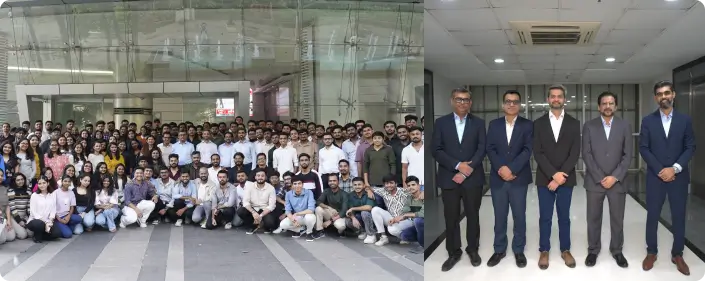
All optimization decisions are guided by keyword analytics, conversion intelligence, engagement intelligence, and competitor intelligence. We constantly track the interaction of users with the offerings of the apps and adjust the strategies to the actual data. Such a data-first strategy can position it to be the most visible and remain in a better competitive position in changing app store settings.

The ASO strategies we apply to apps continue to assist them in rising in rankings, boosting organic downloads, and enhancing user interactions in competitive segments. We specialize in transforming performance feedback into quantifiable business impact via scalable optimization systems that ensure that app growth is long-term, rather than short-term visibility bursts with low retention value.
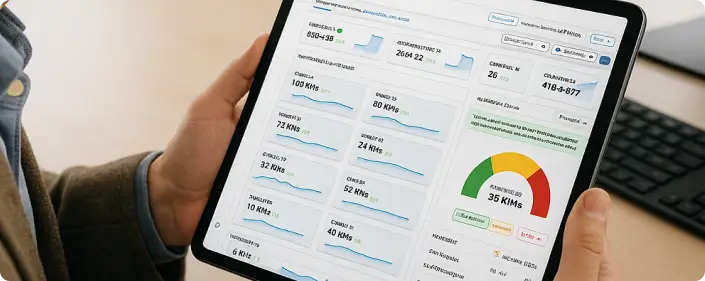
Our reporting is easy to understand, transparent, and to the point, with an emphasis on keyword rankings, install growth, conversion trends, and optimization progress, so you can always know what is working and why. With open communication and practical insights, companies will see full visibility of ASO performance and gain trust in long-term growth plans and market expandability.
Plans
Increase your app’s visibility and user reach.
Your Growth Toolkit
Optimize key factors to boost app store rankings.
Your Growth Toolkit
Advance your app’s growth with advanced optimization.
Your Growth Toolkit
Industry
Platforms


Solutions
Drive sustainable traffic and revenue growth
Optimize visibility across AI search engines
Future-proof search strategy with AI
Scale product visibility and online revenue
Turn visitors into measurable revenue growth
Increase app visibility and install growth
Dominate local search and nearby customers
Authoritative backlinks that boost search rankings
Scalable SEO solutions for large organizations
Build websites that improve engagement
Find and fix issues affecting search visibility
Drive organic growth with strategic content

Growth Manager - Superbalist
SEo Growth
The ranking algorithms, indexing behavior, and optimization signals of Google Play and the Apple App Store work very differently. Both stores are designed to enhance the discoverability and install rates of apps, but the ranking processes are very different. Apps that use an identical ASO approach on both platforms usually fail to realize the potential of taking advantage of a good ranking and business conversion. Optimization strategies to ensure effective ASO services must be platform-specific and specific to how each marketplace values visibility, relevance, and user engagement.
Google Play is more of a conventional search engine. It also extensively depends on metadata indexing, relevance of keywords, engagement, and content discoverability indicators. Keywords located in the title of the app, the short description, and the long description have a direct impact on the rankings since they are heavily indexed in Google Play. This implies that content relevance, semantic optimization, and keyword placement have significant roles to play in enhancing discoverability. Google Play also takes into account external web signals, backlinks, user retention, uninstall rates, and the quality of engagement in its ranking of apps.
Apple App Store is different. Instead of general content indexing, Apple uses structured metadata fields and user behavior cues to a greater extent. Ranking factors are important and include:
Unlike Google Play Store, Apple does not rank keywords by indexing long descriptions. That is why precision in the targeting of keywords and metadata prioritization becomes much more important in the ecosystem of Apple. Powerful creative resources such as screenshots, preview videos, or icons can also significantly affect install conversion performance in the App Store.
Optimization strategies should consequently conform to individual platforms. Google Play optimization is frequently more content-oriented, with semantic keyword targeting and broad discoverability enhancements. Optimization on the App Store focuses more on metadata accuracy, conversion optimization, and behavioral ranking signals. Effective app store optimization services strike a balance between the two strategies and maintain uniformity in branding, positioning, and user experience across marketplaces.
Another important difference between the two is the speed of indexing, and how quickly updates are reflected. Google Play usually reacts faster to changes in content and metadata, while the Apple ecosystem reacts slower to changes in optimization. This has a significant impact on the strategic management of ASO testing, iteration cycles and ranking improvements on the two platforms.
As app marketplaces become more competitive, businesses need more than basic keyword optimization to scale organic installs. A specialised app store optimization agency can ensure that your ASO plan is in line with platform-specific ranking factors, user behavioural trends, and evolving marketplace algorithms. This will make your apps more discoverable, which will help you drive up conversion rates and create sustainable install growth in both of the major app ecosystems.
AI tools







Growth Manager - Superbalist
Locations
FAQ’s
App Store Optimization (ASO) is the process of improving an app’s visibility, rankings and conversions on the Apple App Store and Google Play Store. ASO company is focused on optimising keywords, metadata, graphics, ratings and response indicators to drive organic installs, increase discoverability and enhance long term app growth.
Traditional SEO enhances the visibility of websites on search engines such as Google, whereas ASO focuses on enhancing the visibility of apps in app stores. ASO optimization relies on app titles, screenshots, ratings, install conversion rates, and store-specific ranking factors, whereas SEO services focus more on websites, backlinks, and search engine indexing.
The ASO plan depends on the competition in app categories, the scope of optimization, geographic targeting, and expansion objectives. Specific pricing schemes do not usually achieve the sophisticated ASO campaigns with keyword optimization, testing conversion, analyzing competitors and continuous monitoring of performance. It requires unique strategies.
Yes, App Store Optimization is 100% legal and safe as long as you follow ethical practices and qualify for the platform criteria. White-hat ASO includes optimization of metadata, user experience, conversion rates, keyword relevance, and engagement without violating the policies of the App Store or Google Play, thus leading to sustainable, long-term visibility and app growth.